Pouring concrete in cold weather in Zionsville, IN is routine for local crews, but it only works when you respect the thermometer, not just the calendar. Boone County's freeze-thaw winters turn a careless pour into a cracked, scaling slab by spring. This guide breaks down the real temperature thresholds, mix adjustments, and curing steps that keep a winter pour strong, including the local climate numbers most generic guides skip.
How Cold Is Too Cold? Zionsville's Real Winter Numbers
Cold weather concreting isn't defined by a single frosty morning. Under the industry standard, cold weather conditions exist when the air temperature has fallen to, or is expected to fall below, 40°F during the protection period, the time required to keep cold temperatures from damaging the concrete . That threshold matters more in Zionsville than it does in milder regions.
Local winter numbers back that up. Zionsville's daily high temperatures in winter run around 40°F, rarely falling below 20°F or exceeding 61°F , and the lowest daily average high is 35°F in late January, with the lowest average low around 21°F . Ground conditions add another layer: Boone County carries a published frost line depth of 30 inches , deeper than many homeowners assume when they're scheduling a driveway or patio pour.
Crews working Zionsville see this play out every January: a 42°F afternoon doesn't mean a safe pour if that same slab has to survive a 19°F night a few hours later. The forecast you plan around should always be the coldest stretch in the protection window, not the mildest hour. For full ACI guidance on placement temperatures and protection periods, see the <a href="https://www.concrete.org/newsandevents/news/newsdetail.aspx?f=51749189">American Concrete Institute's cold weather concreting resources</a>.
What Happens When Concrete Freezes Too Early
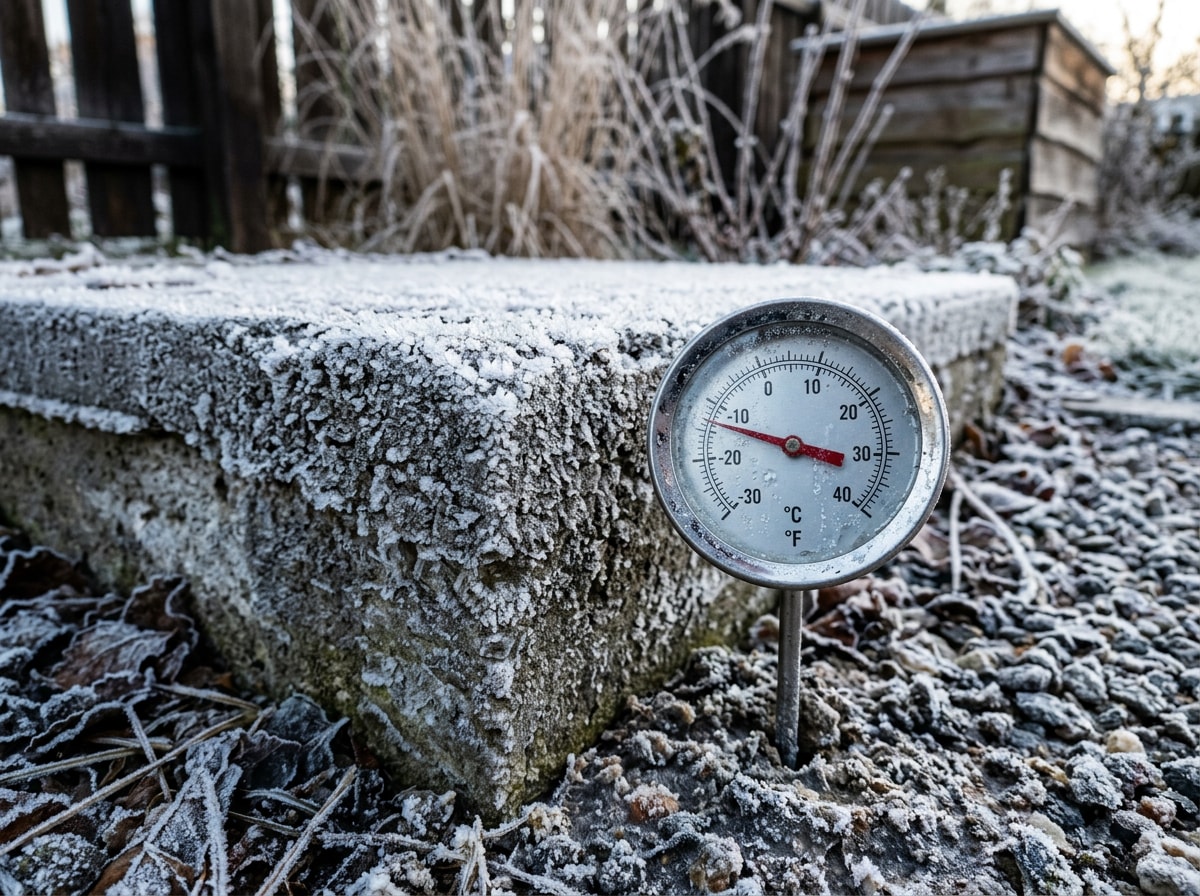
Fresh concrete is mostly water, and that water is doing chemical work. Hydration, the reaction between cement and water that builds strength, slows dramatically in the cold and can stall out before the slab is strong enough to resist freezing. If ice forms inside concrete that hasn't reached adequate strength yet, the damage is permanent.
The numbers are blunt. Concrete should be protected from freezing until it reaches a compressive strength of at least 500 psi , and any ice formation before that point can cause a 50 percent reduction in strength . That's not a minor cosmetic issue. It's the difference between a driveway that lasts decades and one that spalls, cracks, and needs replacement within a few winters.
Pre-Pour Checklist for a Zionsville Winter Pour
A successful cold weather pour is decided before the truck ever shows up. Run through this list first:
- Check the 72-hour forecast, including overnight lows, not just the daytime high.
- Order cold weather admixtures. Accelerators, including calcium chloride and non-chloride formulas, speed up set time so the mix builds strength before freezing becomes a threat.
- Lower the water-cement ratio in the mix design to reduce free water available to freeze and support faster strength gain.
- Warm the site and materials. Ground blankets or heated enclosures should thaw the subgrade for a day or two before the pour, and many ready-mix plants can supply heated mixing water on request.
- Time the pour for late morning or early afternoon, when ambient temperatures are climbing instead of falling.
For larger residential or commercial jobs, pairing this checklist with a concrete contractor experienced in the Zionsville, IN area takes most of the guesswork out of a borderline-weather decision.
Pour-Day Steps for Cold Weather Concrete
Prepare the Ground and Forms
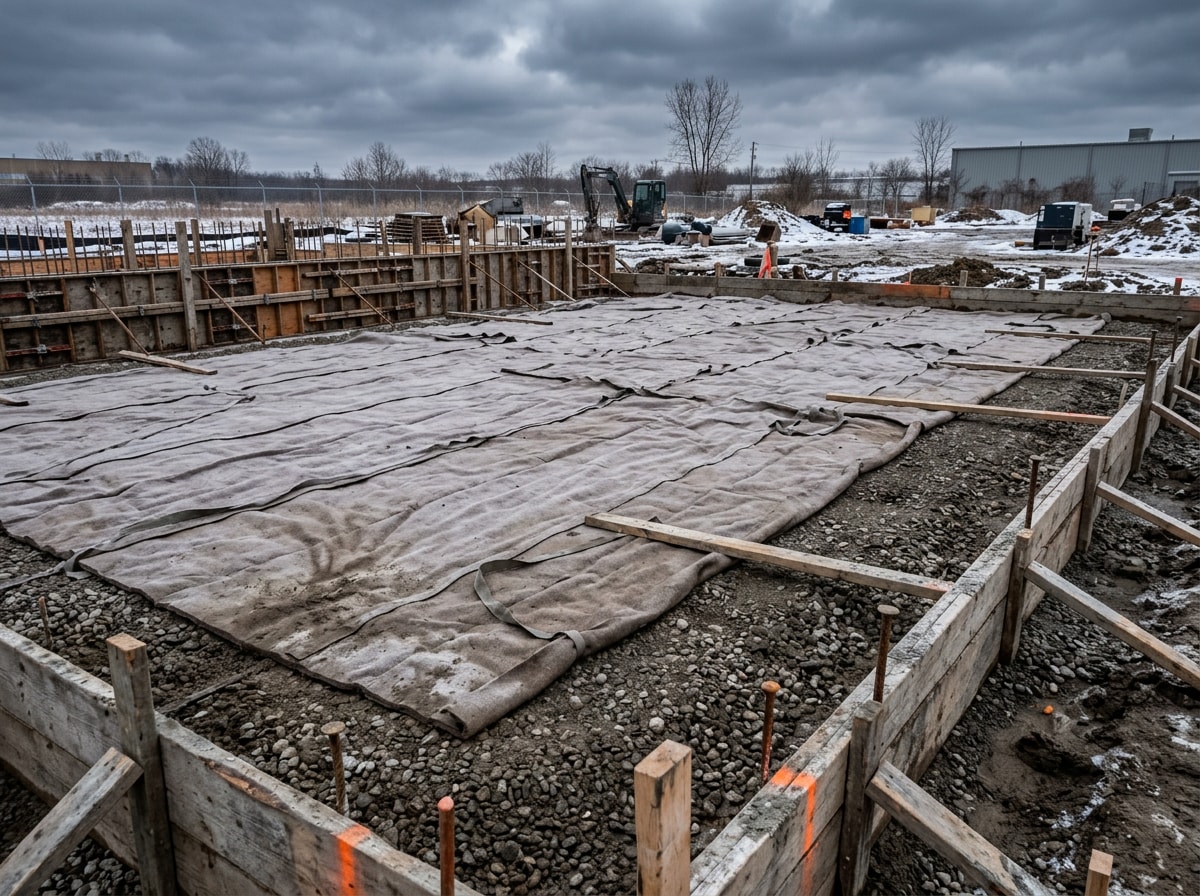
Confirm the subgrade is fully thawed and compacted, not just soft on the surface. Pouring over a frozen crust creates voids as it thaws and settles weeks later, and forms need to be free of frost or ice before concrete goes down.
Pour Quickly and Evenly
Every extra minute of exposure lets the mix lose heat. A coordinated crew places, screeds, and finishes in a steady rhythm instead of working one section at a time, which reduces the risk of cold joints forming between pours.
Insulate and Cure Immediately
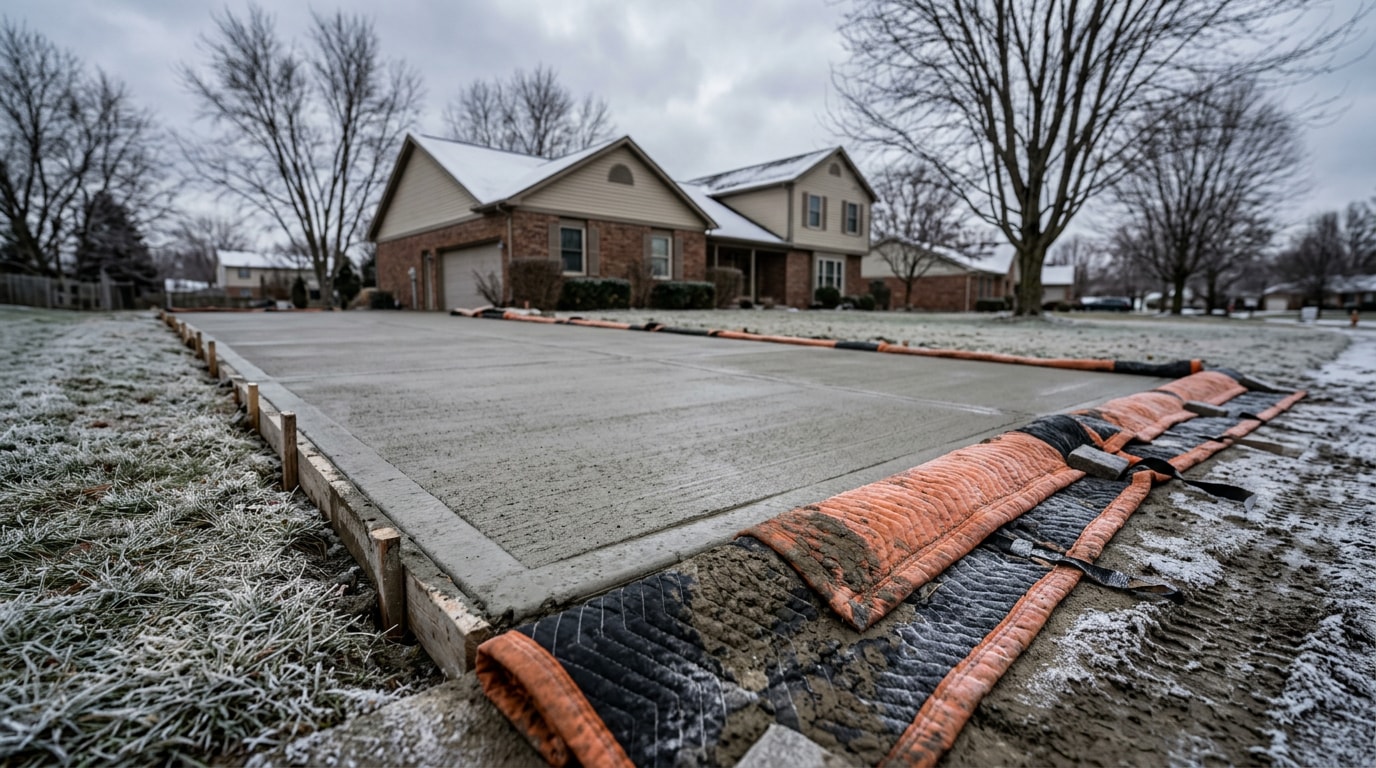
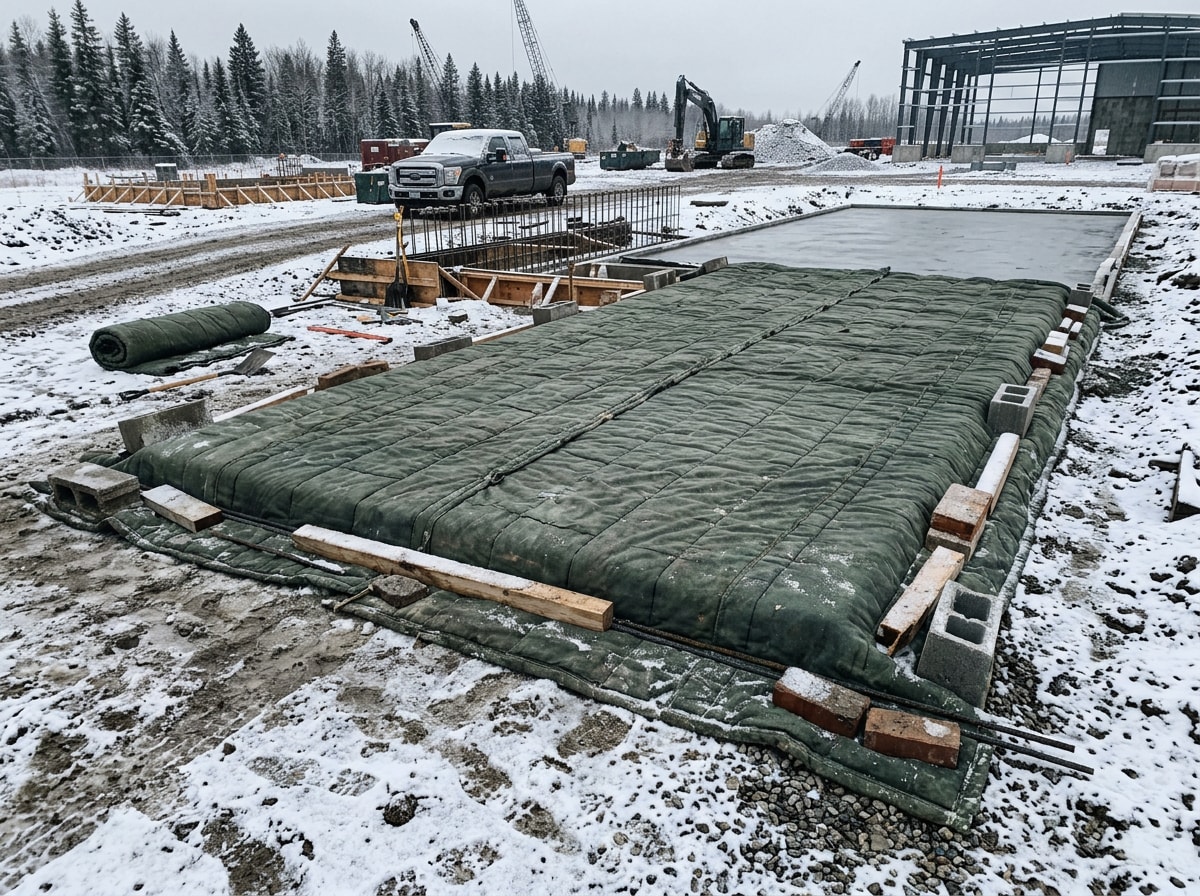
Insulated blankets go on almost as soon as finishing wraps up, trapping the heat hydration itself generates. Curing compounds help hold surface moisture, and a heated enclosure offers the strongest protection for critical pours like foundations or structural slabs.
Monitor the Concrete's Own Temperature
Track the concrete, not the air, for at least the first several days. A probe thermometer embedded near the surface tells you far more than a weather app, and it catches a cooling slab early enough to add heat or insulation before damage sets in.
Curing Timeline: How Long to Protect a Winter Pour
Curing duration in cold weather isn't a guess, it's tied to measurable temperature targets. For a typical slab placement on a freezing day, the concrete needs to be at least 65°F while mixing and then maintained at 55°F once placed , with thicker elements allowed to run cooler because the concrete's own exothermic reaction generates extra heat.
| Stage | Target Concrete Temperature | Why It Matters |
|---|---|---|
| At mixing (freezing-day pour) | 65°F or warmer | Gives the mix a heat buffer before it hits cold air |
| At placement (thin residential slab) | 55°F minimum | ACI 306 baseline for sections under 12 inches |
| First 48 hours after placement | Above 50°F |
Temperature of placed concrete should be maintained above 50°F to support continued hydration
| Until protection comes off | No freezing, 500 psi reached | Pulling insulation early is one of the most common and costly mistakes on winter jobs |
For the full technical breakdown of placement temperatures and protection periods by section size, see <a href="https://www.nrmca.org/wp-content/uploads/2021/01/27pr.pdf">NRMCA's Cold Weather Concreting guidance (CIP 27)</a>. If you're planning timelines around a specific pour, our Concrete Curing in Carmel, IN guide walks through weather-driven curing rules in more detail.
Job Site Safety in Cold Weather
Protecting the concrete is only half the job. Long winter pours put crews at risk for cold stress, and gradually introducing workers to the cold, monitoring them, and scheduling breaks in warm areas is standard practice on a well-run site. Combustion heaters inside enclosures also need proper ventilation, since an unvented heater can build up dangerous carbon monoxide levels. OSHA's published guidance on <a href="https://www.osha.gov/sites/default/files/publications/OSHA3156.pdf">protecting workers from cold stress</a> covers symptoms, dress recommendations, and emergency response in more detail. Ice patches around the pour site add a slip hazard that's easy to miss when everyone's focused on the concrete itself.
Common Mistakes That Ruin a Winter Pour
- Trusting the daytime high and ignoring the overnight low. A warm afternoon pour followed by a hard freeze is still a failed pour.
- Skipping admixtures on a "borderline" day. If the forecast is close to 40°F, treat it as cold weather, not a toss-up.
- Using thin or inadequate insulation. Lightweight tarps aren't a substitute for rated insulated blankets on a freezing night.
- Ignoring a falling-temperature trend. A mix that cures fine today may not tomorrow if daytime highs are dropping day over day.
- Pulling protection too early because the surface "looks" cured. Strength, not appearance, is what matters.
Most of the repair calls for scaled or spalled concrete that come in every spring trace back to one of these five mistakes, not a one-time fluke in the weather.
When to Delay the Pour
When conditions are genuinely marginal, the safest call is simple: wait. A short delay almost always costs less than tearing out and repouring a slab damaged by an early freeze. If you're not sure whether your project's timeline and the forecast line up, get a free estimate from a crew that handles winter pours in Boone County regularly, and if freeze damage has already scaled or spalled an existing slab, our concrete surface preparation service can assess whether it's a resurfacing fix or a full replacement. You can also browse recent work on our projects page or start from the homepage to see our full service area.
Final Thoughts
A successful winter pour in Zionsville comes down to planning, not luck. Forecast-driven scheduling, the right mix adjustments, and patience with curing timelines matter far more in January than in July. If the project is significant, working with a contractor who treats cold weather pours as a routine part of the job, not an exception, removes most of the risk.
FAQ
How cold can it be for concrete to set?
Standard mixes need temperatures above 40°F to cure properly, since colder air slows hydration significantly. With cold weather admixtures and accelerators, crews can push successful pours into the 20s and 30s, but protection and temperature monitoring become critical as readings drop.
Can you pour concrete when it's 30 degrees outside?
Yes, but only with a warm mix from the plant, a fully thawed subgrade, and insulated blankets in place for several days afterward. Without that protection, fresh concrete can freeze and lose a significant share of its strength.
Is it safe to pour concrete on a rainy day?
Rain combined with cold compounds the risk, since surface water can dilute the mix and slow curing further. Light rain in warm conditions is usually manageable, but cold rain right before or during placement is a strong signal to postpone.
What temperature destroys concrete?
Uncured concrete can suffer permanent freeze damage if it freezes before reaching roughly 500 psi, disrupting the internal structure through ice expansion. Fully cured, mature concrete is far more resistant and handles normal winter freeze-thaw cycles without lasting harm.
How long does cold weather concrete need to cure before it's safe?
Most thin residential slabs need to stay above 50°F for at least 48 hours and reach 500 psi before protection comes off, which typically takes several days of maintained warmth rather than hours. Thicker sections or structural pours may need longer, depending on the mix and accelerators used.
Can Quikrete be used in cold weather?
Most bagged mixes, including standard Quikrete, aren't rated for pouring below 40°F without added precautions like warm water or accelerators. Quikrete and similar manufacturers do offer cold-weather-specific product lines, so check the bag for a cold-weather rating before using it on a winter project.