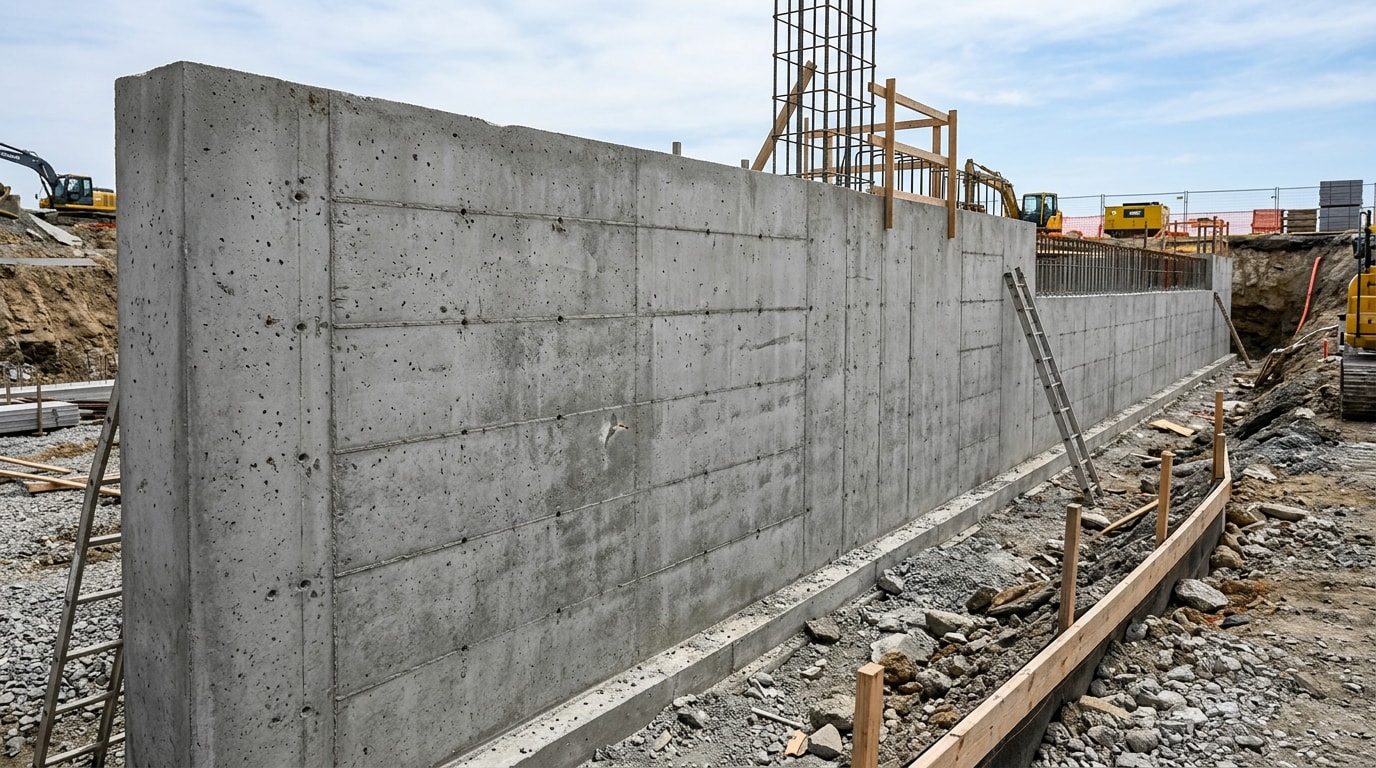
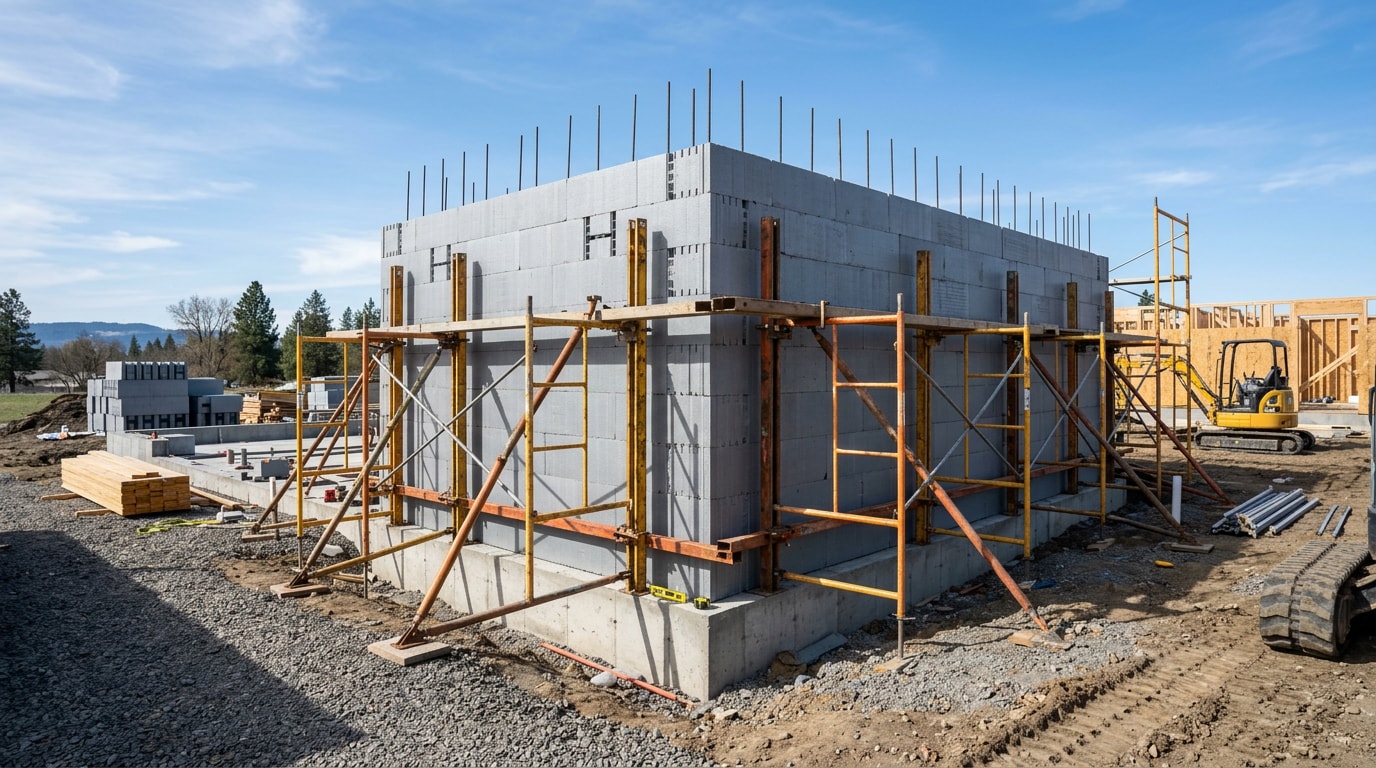
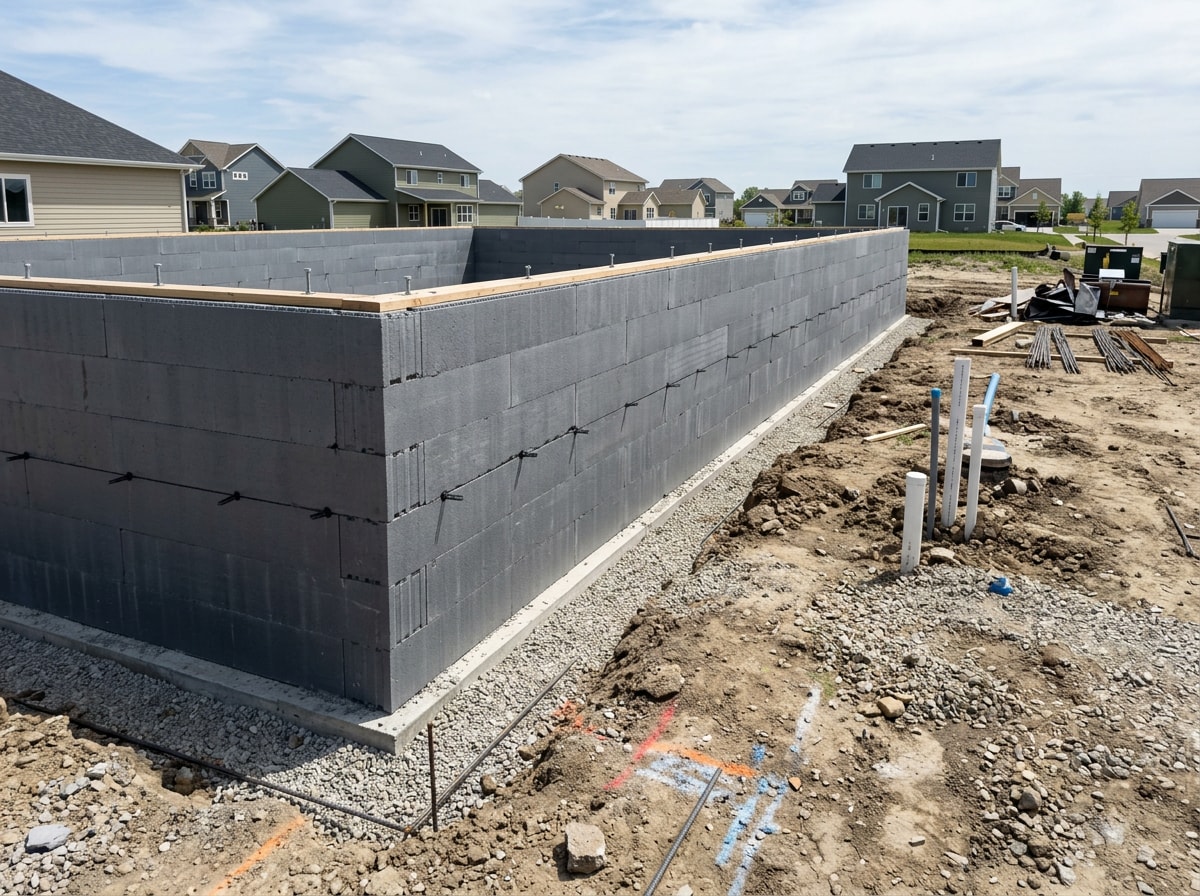
ICF concrete forms in Westfield, IN are hollow foam blocks that stack like oversized Lego bricks, hold reinforcing steel, and get filled with poured concrete to create a wall that insulates and structurally supports a building in one step. Hamilton County's hot summers and cold winters put real demands on a building envelope, and a solid concrete core sandwiched between two layers of rigid foam handles that swing better than a stud wall ever will. This guide breaks down how the system works, what it costs to build, which brands dominate the Central Indiana market, and the questions worth asking before anyone breaks ground.
How ICF Walls Work and Why They Fit Westfield's Climate
An insulated concrete form wall has three layers: foam, concrete, foam. The foam stays in place permanently, so the wall never needs separate interior and exterior insulation steps the way a framed wall does.
That continuous layer matters more than people expect. A standard Nudura form produces a wall system rated around R-24, and Fox Blocks publishes a similar R-22 to R-24 range for its standard assembly, both well above the R-value a comparably sized stud wall delivers once studs, headers, and plates are factored in. The Building America Solution Center, a Department of Energy-affiliated resource hub, documents how continuous insulation and concrete thermal mass work together to reduce heating and cooling loads in exactly this kind of mixed climate.
For Westfield specifically, that thermal mass effect smooths out the swing between a 90-degree July afternoon and a January cold snap, which means less strain on HVAC equipment year-round.
Hamilton County Frost Depth and Local Code Rules
Here's something most national ICF guides skip entirely: Indiana sets frost protection requirements by county, not by a single statewide number. Under the Indiana Residential Code, footings must extend below the local frost line or be constructed in accordance with an approved alternative method, and the rule is codified directly in the Indiana Administrative Code. Central Indiana counties, including Hamilton County, typically fall in a shallower frost tier than northern Indiana, but every ICF foundation pour still needs a footing design that an inspector will sign off on before the first block goes down.
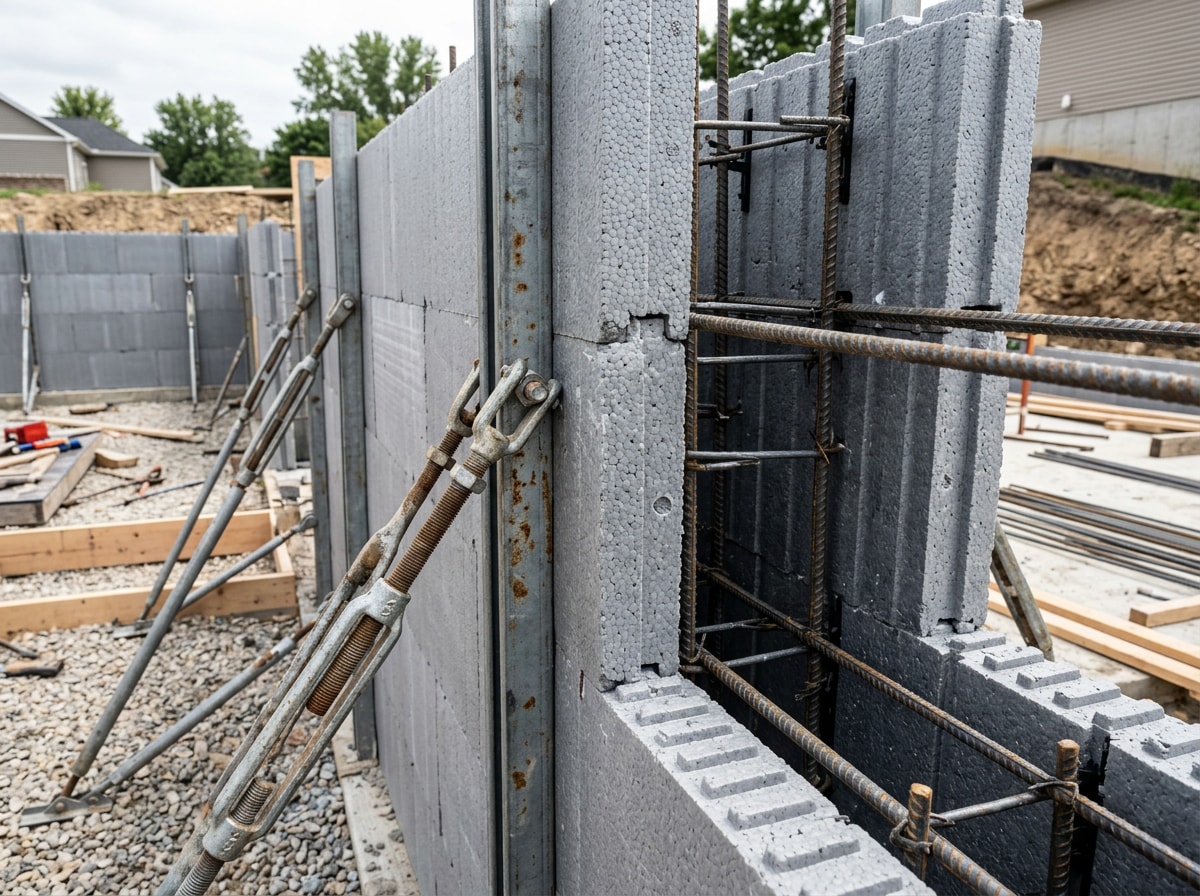
This is where a generalist contractor can get tripped up. An ICF foundation isn't just a deeper trench; it's a bracing and alignment system that has to hold its shape through a full concrete placement, and the footing underneath has to match both the frost rule and the wall load above it.
Finding an Experienced ICF Contractor in Westfield
Not every general contractor has hands-on ICF experience, and that gap shows up fast once concrete starts moving into foam forms. Before hiring anyone for ICF work, ask these questions directly:
- How many ICF structures has the crew built in the last three years, not just poured foundations?
- Are they factory-trained on the specific brand they're recommending?
- Do they understand bracing, wall alignment, and concrete placement rates unique to ICF?
- Who handles the finish work once the forms are up, including surface prep before siding, stucco, or coatings go on?
A contractor who answers these clearly, rather than leaning on a generic "we do it all" pitch, is usually the one worth hiring. In our own work preparing concrete surfaces on ICF foundations across Hamilton County, the jobs that run into trouble are almost always the ones where bracing got rushed to save a day on the schedule, and the wall bowed just enough to need costly patching before finishes could go on.
Browse our homepage for a full picture of the surface prep and concrete work we handle from foundation to finish, or jump straight to a free estimate.
ICF Services for Westfield-Area Properties
ICF construction covers more ground than new custom homes. Typical project types include:
- New home construction — full exterior walls built on ICF from footing to roofline.
- Poured foundations and basements — ICF foundations under conventionally framed homes, a common hybrid approach.
- Additions and remodels — ICF walls that tie into an existing structure without the settling and cracking issues older framed additions sometimes develop.
- Small commercial shells — ICF's fire resistance and sound dampening make it a fit for shared-wall commercial buildings.
Once concrete cures inside the forms, exposed concrete surfaces at grade, around window bucks, and on foundation walls often need cleanup before coatings, parging, or finishes go on. That's where concrete surface preparation and coating preparation come in, removing form residue, laitance, and high spots so the next material actually bonds. For foundation walls that need a clean surface before sealing, concrete sandblasting is often the fastest path to a sound substrate.
If you're also pricing the concrete slab or footing that pairs with an ICF build, the Concrete Pads in Westfield, IN guide walks through local pricing and permit standards in more detail.
Areas Served Around Hamilton County
A Westfield-based crew typically covers most of Hamilton County and reaches into surrounding Central Indiana communities, including Carmel, Fishers, and Zionsville, along with rural properties throughout the county. Confirm that a contractor actually services your specific address, rather than just listing a broad region, before committing to a quote. See the full Westfield, IN service area page for details on what's covered locally.
Comparing ICF Brands: Nudura, Fox Blocks, Quad-Lock, BuildBlock
The brand a contractor recommends affects cost, insulation value, and build timeline. Here's how the four most common systems in the Central Indiana market stack up on paper:
| Brand | Form Design | Published R-Value | Notable For |
|---|---|---|---|
| Nudura | Single-piece, full-height fastening strips | R-24 standard, up to R-48 with Plus Series | Longest standard panel per building step |
| Fox Blocks | Interlocking block, active Indiana dealer network | R-22 to R-24 standard | Wide regional availability |
| Quad-Lock | Modular, distinct web design | R-22 and higher | Flexible wall thicknesses for custom loads |
| BuildBlock | Clip-free, built-in web studs | R-23 nominal | Accessory ecosystem (bracing, corners, radius walls) |
Nudura's standard ICF series is rated at R-24 for a typical wall assembly, while Fox Blocks publishes R-value data showing R-22 for the core assembly and an overall wall rating of R-24 once the full system is evaluated. BuildBlock's published whitepaper lists a nominal R-23 rating across its standard five-inch foam depth. None of these numbers account for climate-specific thermal mass bonuses, which tend to push real-world performance higher in a mixed climate like Indiana's.
Beyond R-value, ICF walls carry a strong disaster-resistance track record. Wind-resistant safe rooms built to FEMA's P-320 guidelines are commonly built using ICF because reinforced concrete walls hold up against extreme wind and windborne debris better than framed construction, a detail worth factoring in for anyone weighing ICF against wood framing in tornado-prone Indiana.
What ICF Construction Costs
Pricing varies widely by brand, wall thickness, local labor rates, and project complexity, and that variation is wide enough that a specific number quoted online rarely matches what a Westfield job actually costs. The honest answer is that ICF typically runs higher upfront than wood framing, with the premium concentrated almost entirely in the above-grade wall system. The gap tends to close over time through lower heating and cooling bills, fewer repairs from moisture or pest damage, and in some cases lower insurance premiums for wind-resistant construction. Get a written, itemized quote from a local contractor before comparing it to any national average.
Showcases
A Westfield-area ICF contractor should be able to show completed builds across residential and commercial categories, ideally with photos from actual local job sites rather than stock imagery. Browse completed work on our Projects portfolio page, and request a free estimate to talk through your specific site, timeline, and surface prep needs before the first block goes down.
FAQ
What are ICF insulated concrete forms?
ICF insulated concrete forms are hollow, interlocking foam blocks that stay in place after concrete is poured inside them, creating a single wall that combines structure, insulation, and an air barrier.
What does ICF stand for?
ICF stands for Insulated Concrete Form, describing the foam formwork left in place around a poured concrete wall.
What is the average lifespan of an ICF house?
An ICF house commonly lasts 100 years or more, largely because the solid concrete core resists rot, pest damage, and structural fatigue better than wood framing. Actual longevity still depends on maintenance, climate exposure, and construction quality.
Is ICF worth the extra upfront cost in Indiana's climate?
For most owners planning to stay long-term, yes. The continuous insulation and thermal mass reduce heating and cooling swings through Indiana's hot summers and cold winters, and the wall system's durability against moisture, pests, and wind cuts long-run maintenance costs.
Can ICF be used for additions, or only new full-home construction?
Both. ICF works well for additions, poured basements under conventionally framed homes, and standalone structures. The key is making sure the new ICF wall ties into the existing foundation and framing correctly, which is a detail worth confirming with your contractor before the pour.
Does ICF need special surface preparation before painting or coating?
Yes. Foam surfaces need the right primer system, and any exposed concrete at grade or around window bucks typically needs cleaning to remove form residue and laitance before paint, parging, or sealant will bond properly.
What is being built in Westfield, Indiana right now?
Westfield's construction activity includes a mix of residential subdivisions, mixed-use development, and infrastructure projects tied to the city's ongoing growth in Hamilton County. Specific active projects shift often, so checking with the city's building department or recent local coverage is the most reliable way to confirm current activity.
---
This guide was written by the team at Scott's Mobile Blasting, a Hamilton County-based concrete surface preparation and sandblasting contractor serving Westfield, Carmel, Fishers, and Zionsville. For project-specific questions on ICF foundation finishing or concrete surface prep, contact us directly.