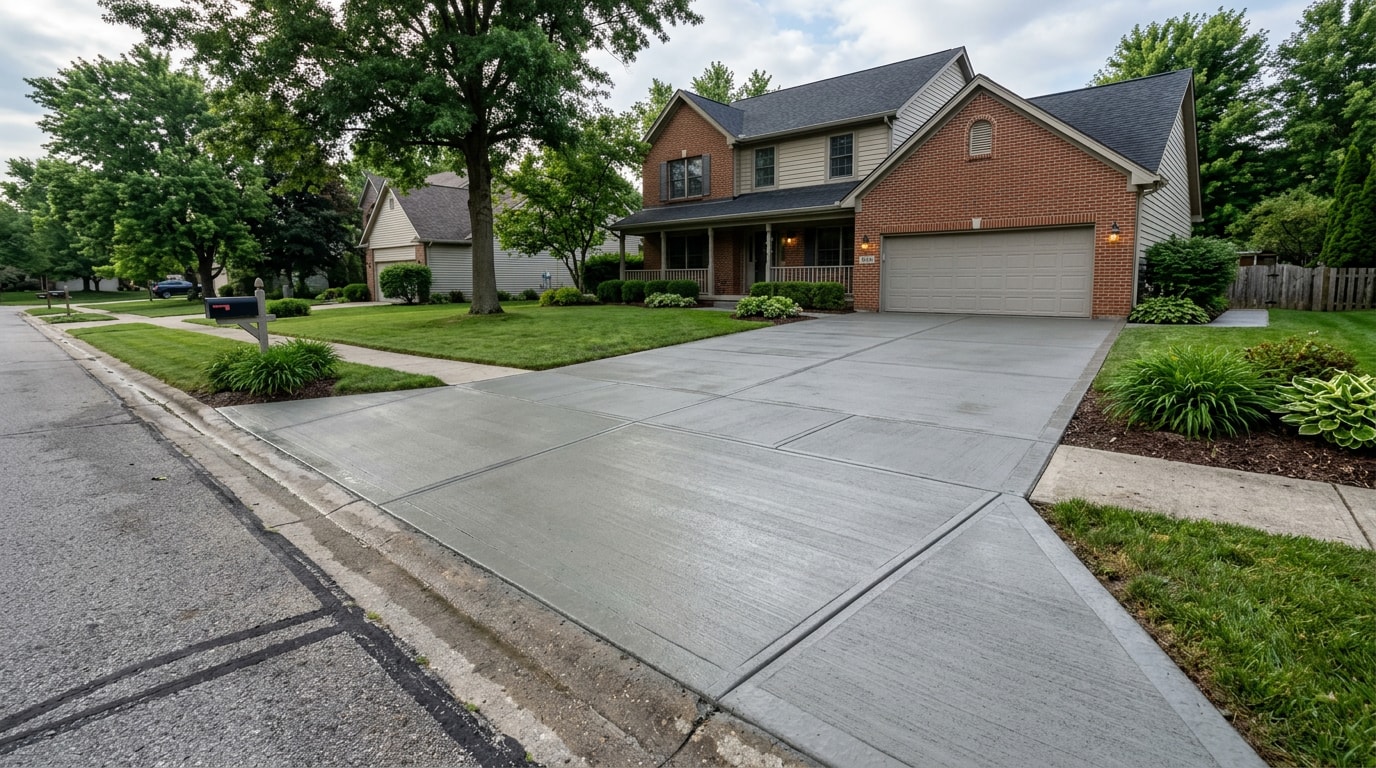
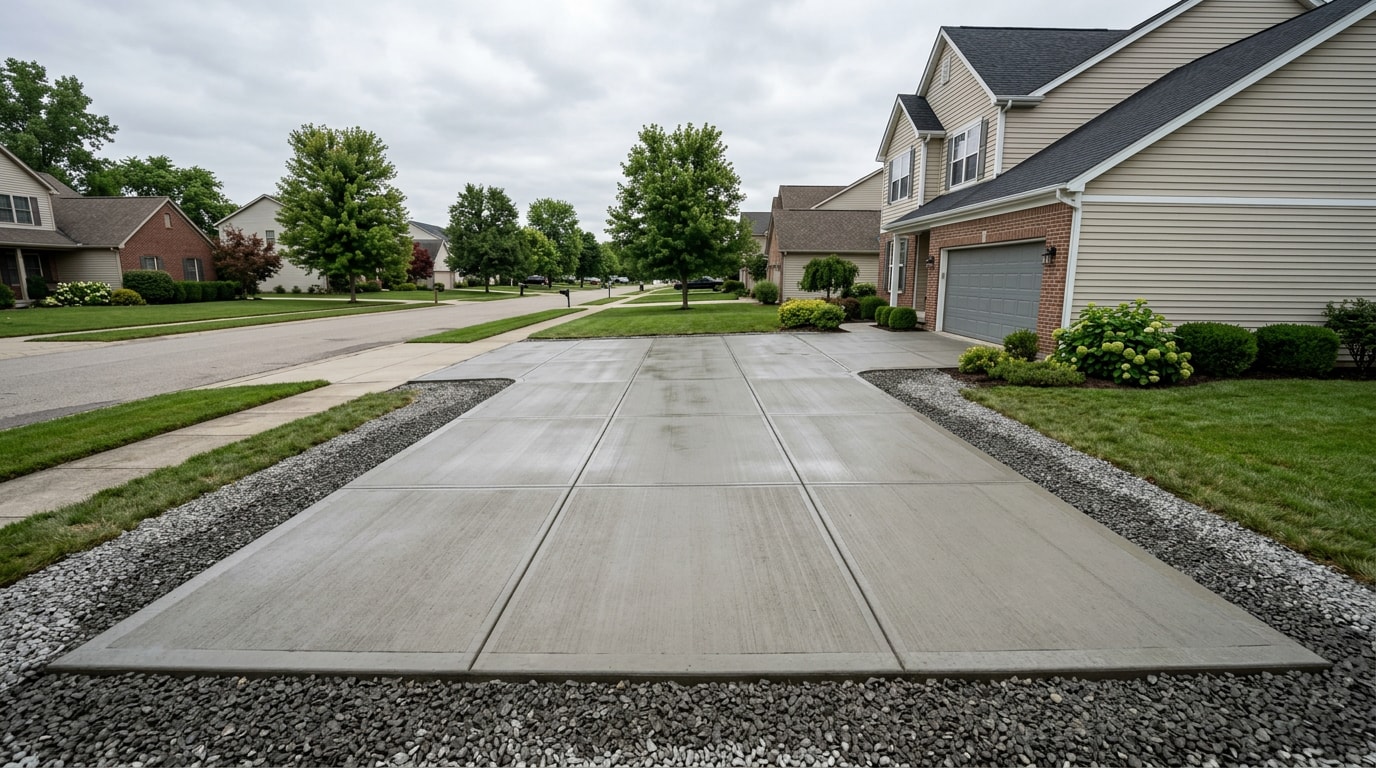
Concrete pads in Westfield, IN only perform as well as the base, mix, and prep work underneath them. Before you compare bids for a patio, RV pad, garage floor, or driveway, you need to know the thickness and PSI standards that keep a slab from cracking, the permit rules that apply (or don't), and what actually causes pads to fail in Hamilton County's clay-heavy soil. This guide covers all of it, plus the surface-prep step most pad projects skip.
Types of Concrete Pads Westfield Homeowners Build
"Concrete pad" covers any poured slab that supports a structure, vehicle, or outdoor space. The specs change a lot depending on what sits on top of it.
| Pad Type | Typical Size | Thickness | Common Use |
|---|---|---|---|
| Patio | 200–400 sq ft | 4 inches | Furniture, foot traffic |
| Garage floor | 400–600 sq ft (2-car) | 4–5 inches | Vehicles, workshop equipment |
| Driveway | Varies by lot | 5–6 inches | Daily vehicle weight |
| RV / boat pad | 12x40 ft or larger | 5–6 inches | Point loads, trailer jacks |
| Sidewalk / walkway | Varies | 3–4 inches | Foot traffic, entry steps |
| Stamped / decorative | Varies | 4 inches (same structural base) | Patios, pool decks, walkways |
A few things worth knowing about each:
- RV and boat pads need a thicker base and a slight drainage slope so water doesn't pool against tires or trailer jacks. Skipping the deeper gravel base is the most common reason these pads crack within a few winters.
- Garage floors usually get control joints cut every 10 to 12 feet to manage shrinkage cracking, with a broom finish for traction or a troweled finish for workshop use.
- Driveways carry more structural load than any other residential pad, which is why they're poured thicker with wire mesh or rebar.
- Stamped and decorative concrete is a surface treatment, not a substitute for proper thickness. The pattern sits on top of the same structural base any other pad needs.
- Sidewalks and entry steps are smaller pours but still need the same compacted base and joint spacing as larger slabs, especially where they connect to public right-of-way.
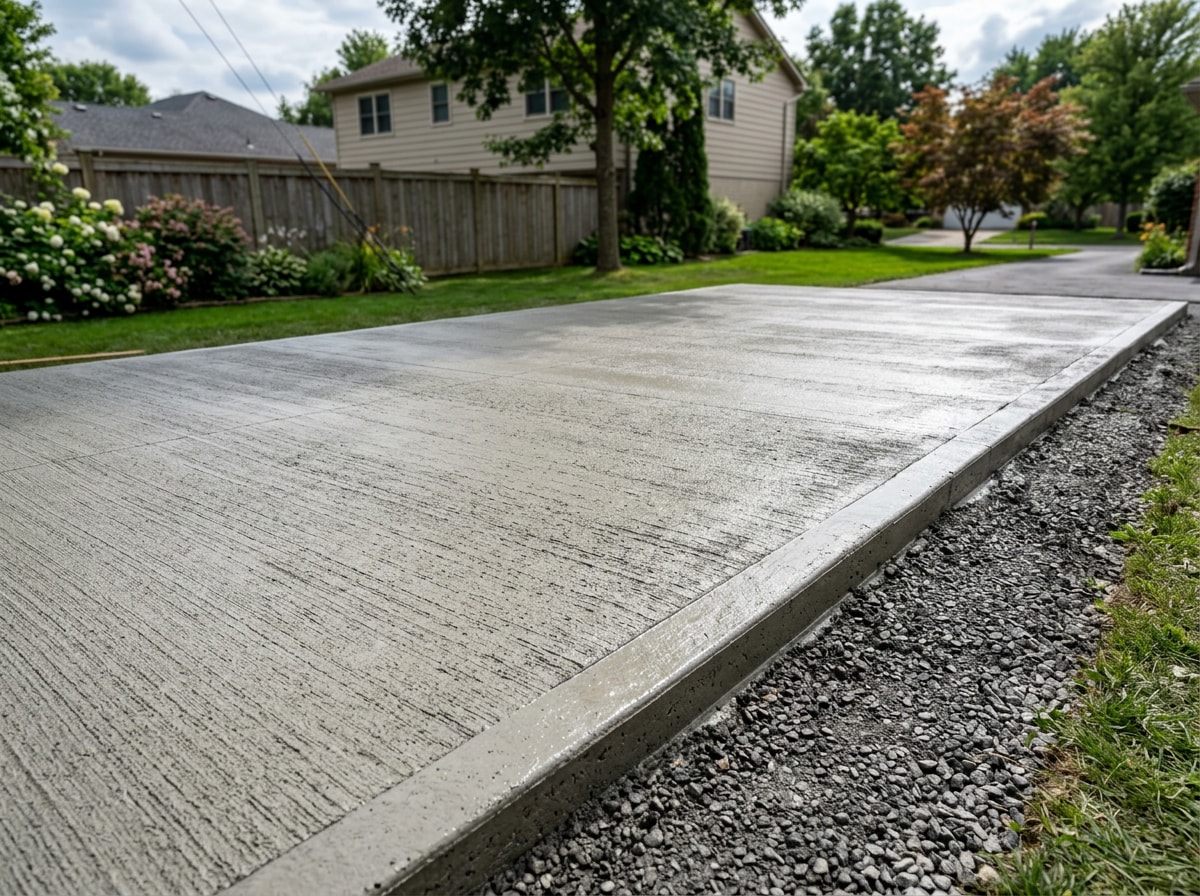
What a Concrete Pad Costs in Westfield, IN (2026)
Cost scales with thickness, reinforcement, and finish, not just square footage.
| Pad Size | Estimated Installed Cost | Notes |
|---|---|---|
| 200 sq ft | $1,800–$4,000 | Minimum job charges apply regardless of size |
| 20x20 ft (400 sq ft) | $2,400–$6,000 | Roughly $6–$15 per sq ft |
| Driveway (500–700 sq ft) | $4,000–$9,500 | Wire mesh or rebar adds cost |
| Stamped patio | +$3–$8 per sq ft over broom finish | Integral color and stamping add labor |
Basic broom-finished slabs sit at the low end of these ranges. Stamped, heavily reinforced, or oversized pads push toward the top. Small pads often cost more per square foot than large ones because mobilizing a crew, forms, and a concrete truck costs roughly the same whether the pour is 150 square feet or 1,500.
Permits for Concrete Pads in Westfield, IN
Not every pad needs a permit, but don't assume yours doesn't. Residential permits are generally required for new home construction, additions, accessory structures, pools, decks, and other improvements to residential property. Standalone backyard slabs like patios and RV pads aren't explicitly called out on that list, which is exactly why confirming first matters: when in doubt, contact the Building Division before starting work, since it's much easier to ask first than fix it later.
Driveways and sidewalks that tie into the public street are the pours most likely to need a look from the city, since they touch infrastructure the city maintains. Residential building permits are based on construction valuation and typically take two to four weeks to process. Check current rules directly with the City of Westfield's Building Division, or contact our team if you want help figuring out whether your project needs one.
Why Concrete Pads in Westfield Crack, Sink, or Spall
A well-poured pad can still move if conditions underneath it change. Two things drive most of the slab failures we see around Hamilton County.
Erosion Under the Slab
Water washes fine soil particles out from under a pad over time, leaving voids the concrete can't bridge on its own. Sections settle unevenly, which is how you end up with the dips, cracks, and trip lips that eventually show up on the surface.
Clay-Heavy Soil and Freeze-Thaw Cycles
Much of Hamilton County sits on clay soil that swells when wet and shrinks as it dries. Shrinking and swelling soils can damage homes, roads, utilities, and septic systems, and Americans spend more than $2 billion a year repairing damage from expansive soils. That cycle repeats every winter as the ground freezes and thaws, stressing whatever base sits under a pad. A properly compacted gravel base and drainage slope reduce the impact, but they don't eliminate it. Smectite-dominated soils hold more water and drain more slowly than soils with less expansive minerals, and they have a greater shrink-swell capacity than any other soil minerals found in Indiana.
Left alone, small cracks widen with each freeze-thaw cycle until a cosmetic flaw becomes a spalling or structural problem. If your slab already shows surface flaking or pitting, our spalling concrete guide breaks down repair options and costs in more detail.
Thickness and PSI Standards
Quality concrete work comes down to numbers, not good intentions.
| Pad Type | Recommended PSI | Typical Thickness | Reinforcement |
|---|---|---|---|
| Patio pad | 3,000–3,500 PSI | 4 inches | Optional wire mesh |
| Driveway slab | 4,000 PSI | 5–6 inches | Wire mesh or rebar |
| Garage floor | 3,500–4,000 PSI | 4–5 inches | Wire mesh |
| RV/equipment pad | 4,000 PSI | 5–6 inches | Rebar recommended |
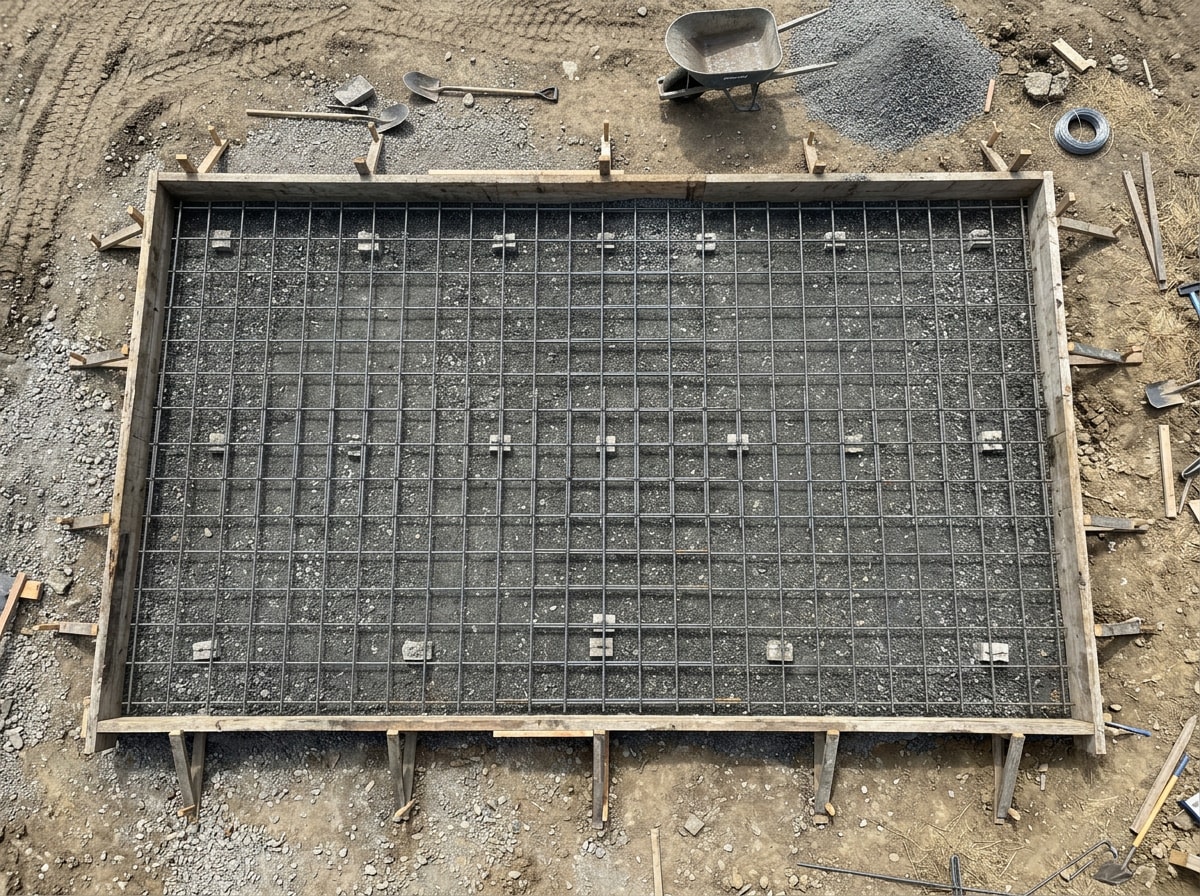
Base prep matters as much as the pour itself. Most residential pads call for 4 to 6 inches of compacted aggregate, with control joints spaced every 8 to 12 feet to manage shrinkage cracking. The American Concrete Institute's floor and slab guide covers how joint spacing, curling, and crack-width expectations interact with slab thickness, which is worth a skim if your contractor's spec sheet looks thin on detail.
Frost protection also factors in. Central Indiana's frost line typically falls in the 30-to-36-inch range, which is why structural footers need to extend below that depth, even though standalone utility pads don't carry the same requirement. The International Code Council's residential code spells out the frost-protection depth rules most Indiana jurisdictions reference directly.
Surface Prep: The Step Most Pad Projects Skip
Here's what doesn't show up on most concrete pad checklists: the pour is only half the job. Whether a pad is brand new or ten years old, surface preparation decides whether a sealer, stain, or coating actually bonds or starts peeling within a season.
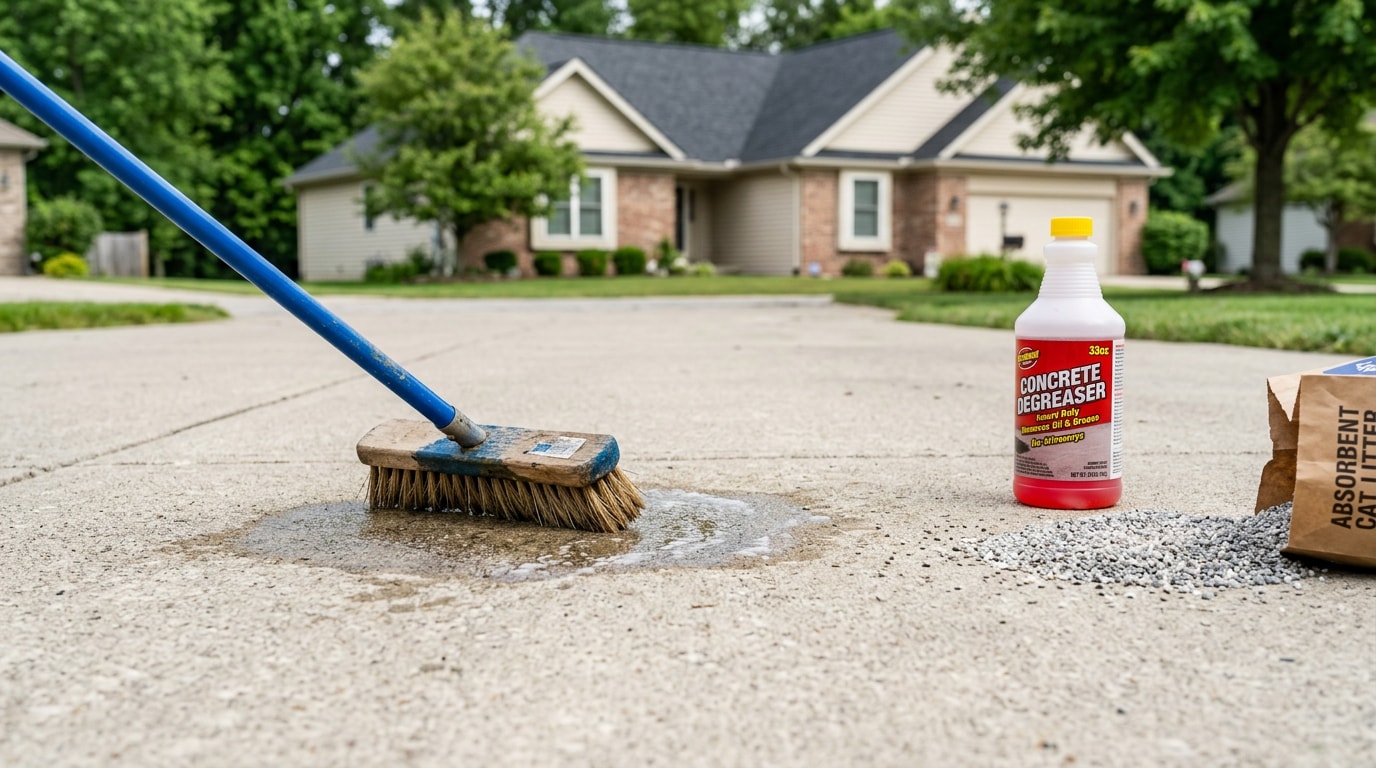
A freshly cured pad still carries form-release agents and curing compound residue on the surface. An older pad usually carries oil stains, efflorescence, or the beginnings of spalling. Either way, a sealer or coating applied over that surface without proper prep tends to fail early, no matter how good the product is.
In the field, that prep work usually means one of a few things:
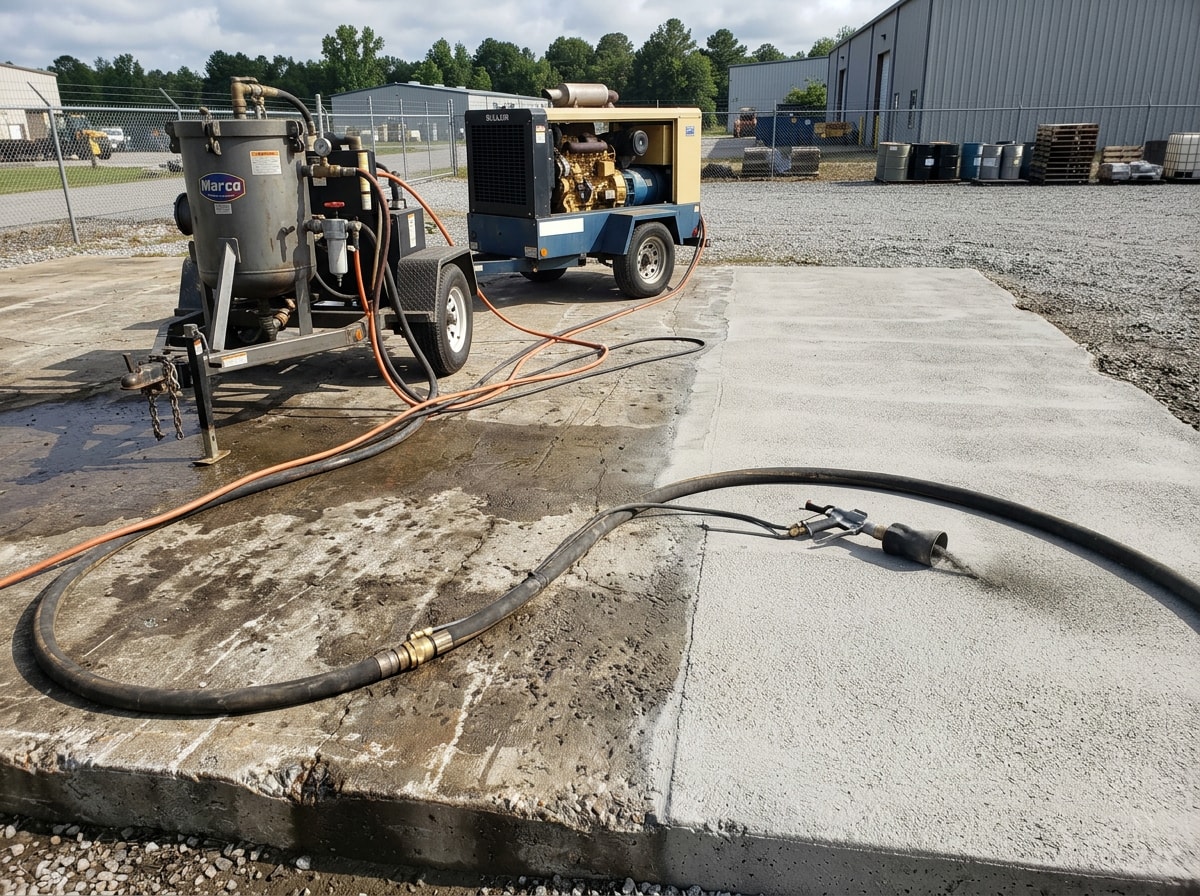
- Blast-cleaning a new pad to remove curing compound before a sealer goes down
- Profiling an older pad so an epoxy or coating has something to mechanically grip
- Stripping a failed or peeling coating before resurfacing
- Degreasing and etching a garage floor or driveway before a fresh finish
We handle this as part of our concrete surface preparation and concrete sandblasting work across Hamilton County, and it's usually the difference between a coating that lasts five years and one that lasts fifteen. If you're sealing, staining, or coating a pad soon, our coating preparation and pre-painting surface prep services cover both new and existing slabs. Get a free estimate before you book a sealer or coating job, so the prep matches what the surface actually needs.
Where We Work Across Hamilton County
We provide surface prep and concrete sandblasting services throughout Westfield, including neighborhoods near Grand Park, Chatham Hills, and Harmony, along with surrounding communities in Carmel, Fishers, and Zionsville. Local soil and grading conditions factor into how a pad holds up over time, whether it's on an older street with mature trees or a newer development still settling in. Browse our project gallery for examples of recent surface prep and blasting work, or visit our homepage for the full range of services we offer.
FAQ
How much does a concrete pad cost in Westfield, IN?
Most residential pads run $6 to $15 per square foot installed, depending on thickness, reinforcement, and finish. A 200-square-foot pad typically costs $1,800 to $4,000, and a 20x20 slab runs $2,400 to $6,000. Stamped or heavily reinforced pads sit at the higher end.
Do I need a permit for a concrete pad in Westfield, IN?
Standalone backyard pads like patios and RV pads usually aren't on the city's common permit list, but driveways and sidewalks that connect to the public right-of-way are more likely to need review. Confirm with the Building Division before you pour, since it's free to ask and costly to fix after the fact.
How thick should a concrete pad be?
Patios and walkways need about 4 inches. Garage floors run 4 to 5 inches. Driveways and RV pads need 5 to 6 inches with wire mesh or rebar, since they carry vehicle weight the lighter pads never see.
What is poor man's concrete?
It's a compacted gravel or crushed-stone base used instead of a full concrete pour. It works for temporary storage areas or low-traffic surfaces, but it isn't suitable for driveways, structural pads, or anywhere that needs consistent, level support long-term.
What causes a concrete pad to crack or sink in Westfield?
Usually it's soil erosion under the slab, inadequate base compaction during the original pour, or Hamilton County's clay-heavy soil expanding and contracting with moisture and freeze-thaw cycles. See the "Why Concrete Pads in Westfield Crack, Sink, or Spall" section above for the full breakdown.
How do I prep an existing concrete pad before sealing or coating it?
Oil stains, efflorescence, and old coating residue all need to come off before a new sealer or coating goes down, and the surface usually needs a mechanical profile so the new product can bond. Sandblasting or surface grinding handles both. Reach out and we can tell you what your specific pad needs before you buy a sealer that won't stick.