If you're searching for how to remove oil from concrete in Zionsville, IN, you've probably already scrubbed at it once and watched the stain grin right back. Concrete is porous, so oil races into those pores within hours, and Central Indiana's freeze-thaw winters only drive it deeper. The fix depends on how old the stain is and what's actually sitting on your driveway right now, so here's exactly what to try, in the order to try it.
Quick Reference: Which Method Fits Your Stain
| Method | Best For | Dwell Time | Watch Out For |
|---|---|---|---|
| Cat litter or cornstarch | Fresh, still-wet spills | 30 min to overnight | Won't touch oil that's already soaked in |
| Baking soda | Fresh to moderate stains | 30 min to overnight | Mildly alkaline; test on colored or stamped concrete first |
| Dish soap or laundry detergent | Spills under 24 hours old | 15 to 60 minutes | Ineffective once oil penetrates the slab |
| WD-40 | Fresh to moderate residue | About 30 minutes | Underperforms on stains older than a few weeks |
| Commercial degreaser | Set-in, weeks-old stains | 15 to 30 min, repeat as needed | Chemically loosens oil but doesn't break it down |
| Poultice (absorbent + solvent) | Deep-set, small stains | Several hours to 48 hours | Solvents need ventilation and gloves |
| Pressure washing | Final rinse after any method above | N/A | Alone, it can spread oil instead of removing it |
How to Remove Oil Stains From Concrete, Step by Step
Every concrete driveway eventually meets an oil stain, whether it's from an aging vehicle, a lawn mower, or a quart that tipped over mid-change. Most of what works is already sitting in a kitchen cabinet or garage shelf. Work through these steps roughly in order, from the gentlest option up to the most aggressive.
What You'll Need Before You Start
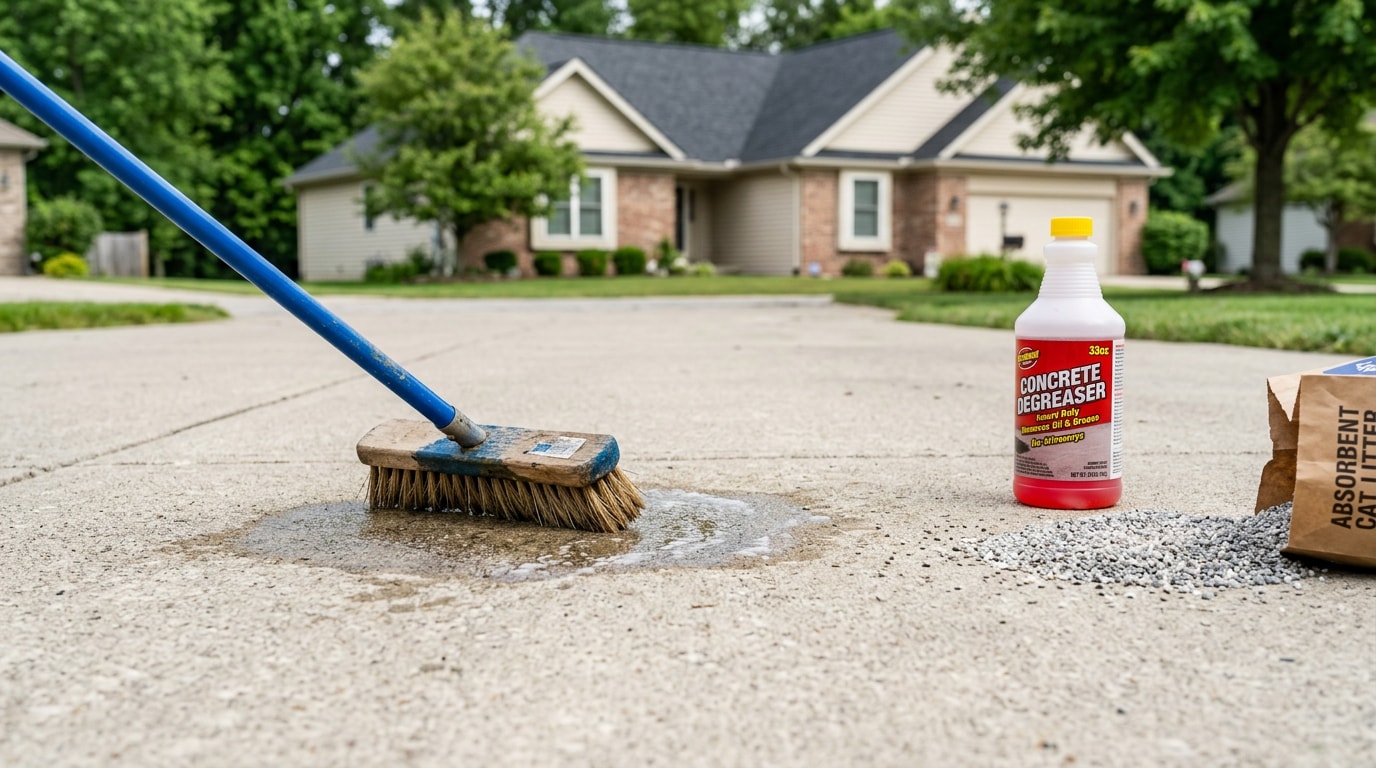
- An absorbent material: cat litter, cornstarch, or commercial oil-dry
- A stiff-bristle scrub brush
- A concrete-safe degreaser
- A pressure washer or strong hose nozzle
- Gloves and eye protection
Skip wire brushes, which can scar the surface, and skip bleach. Bleach doesn't break down oil and can discolor concrete, while dish soap alone only handles spills caught fresh.
Step 1: Absorb Fresh Oil With Cat Litter or Cornstarch
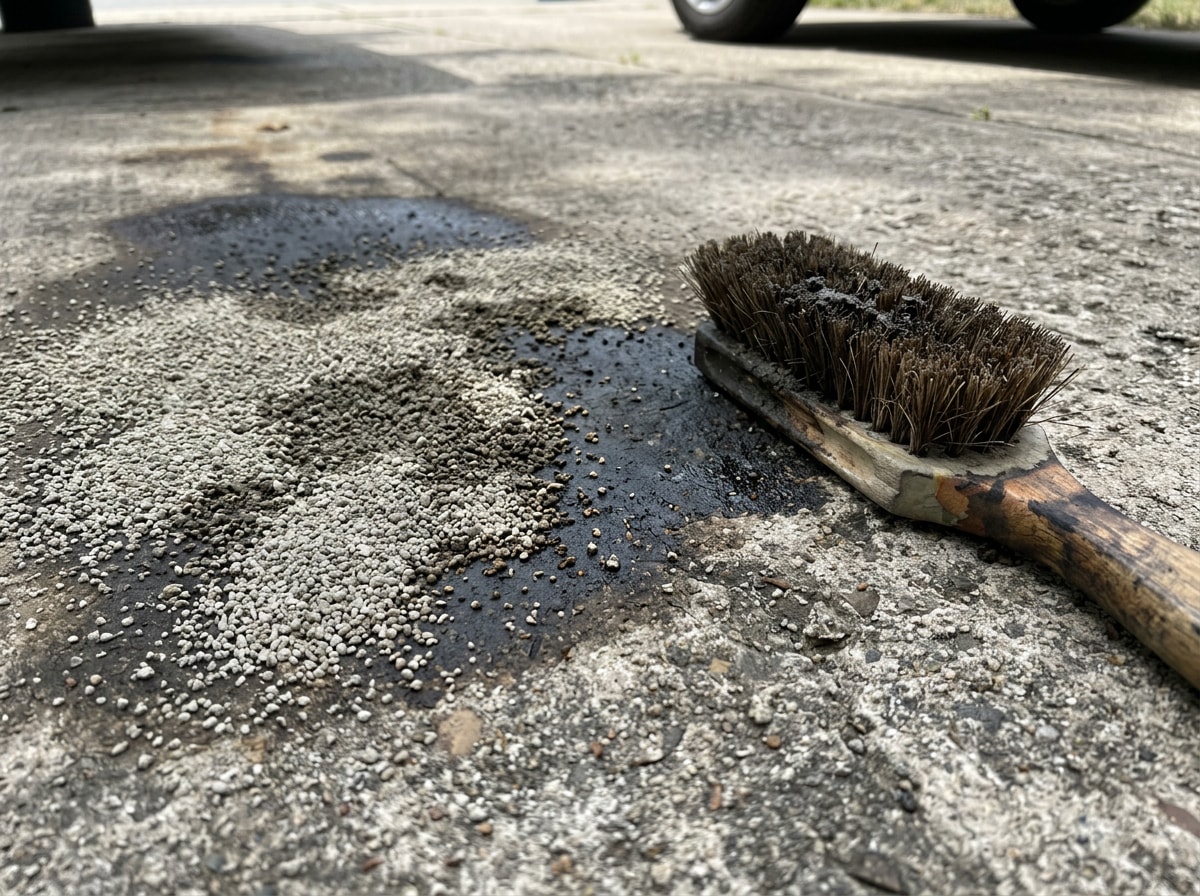
Clay-based cat litter is the first move on a fresh spill. Blot up any excess liquid, pour on a generous layer of litter, grind it in with your shoe, and sweep it up once it has absorbed the oil. Cornstarch or sawdust work as substitutes.
For small, fresh stains, let the absorbent sit about 30 minutes. For larger or older spots, leave it overnight before sweeping.
Step 2: Try Baking Soda for Light to Moderate Stains
Baking soda works on both fresh and slightly set-in motor oil. Sprinkle it generously over the spot, pat it into a paste if the oil is still wet, and let it sit 30 minutes for new stains or overnight for stubborn ones. Scrub with a stiff brush, then rinse.
Step 3: Scrub With Dish Soap or Laundry Detergent
Dish soap or laundry detergent, worked in with a scrub brush, handles light, recent oil spots reliably. Apply a few drops directly to the stain, scrub in circular motions, and rinse clean.
This method shines on surface-level spills but won't do much for oil already soaked deep into the slab.
Step 4: Spray WD-40 on Stubborn Residue
WD-40 isn't just a household solvent for squeaky doors; it also lifts fresh-to-moderate oil stains from concrete. Spray it directly on the stain, let it sit about 30 minutes, then scrub with a stiff brush and rinse with warm water. It tends to underperform on stains that have been sitting for weeks or longer.
Step 5: Apply a Commercial Concrete Degreaser
When household items don't cut it, a commercial degreaser is the next step. These products act almost like ball bearings, loosening oil from the concrete's pores so it can be scrubbed and rinsed away. Even so, typical degreasers don't chemically break down oil, so heavily contaminated or long-standing stains may need several passes.
Stains caught within 24 hours usually respond to dish soap alone. Anything older needs degreaser worked in with firm, circular motions, repeated two or three times for stains over a week old.
When comparing products, look at three things: pH type, dwell time, and biodegradability.
- Alkaline degreasers cut grease fastest but may need a longer dwell time on aged stains.
- Enzyme-based or citrus-solvent cleaners work more gently and are often labeled biodegradable, a safer pick if runoff near a storm drain or lawn is a concern.
Always check the label for concrete-safe and biodegradable claims, and follow proper ventilation and PPE guidance whenever you're working with concentrated solvents, as outlined in OSHA's solvent safety standards.
Step 6: Use a Poultice for Deep-Set Stains
A poultice is built for small, deep-set stains that other methods leave behind. Mix an absorbent, such as kitty litter, sawdust, or pool filter media, with a strong solvent like acetone or mineral spirits until it forms a thick paste. Smear it over the stain, cover with plastic, and let it sit for several hours to 48 hours so it can draw the oil out as it dries.
Work in a ventilated area and wear gloves when handling solvents.
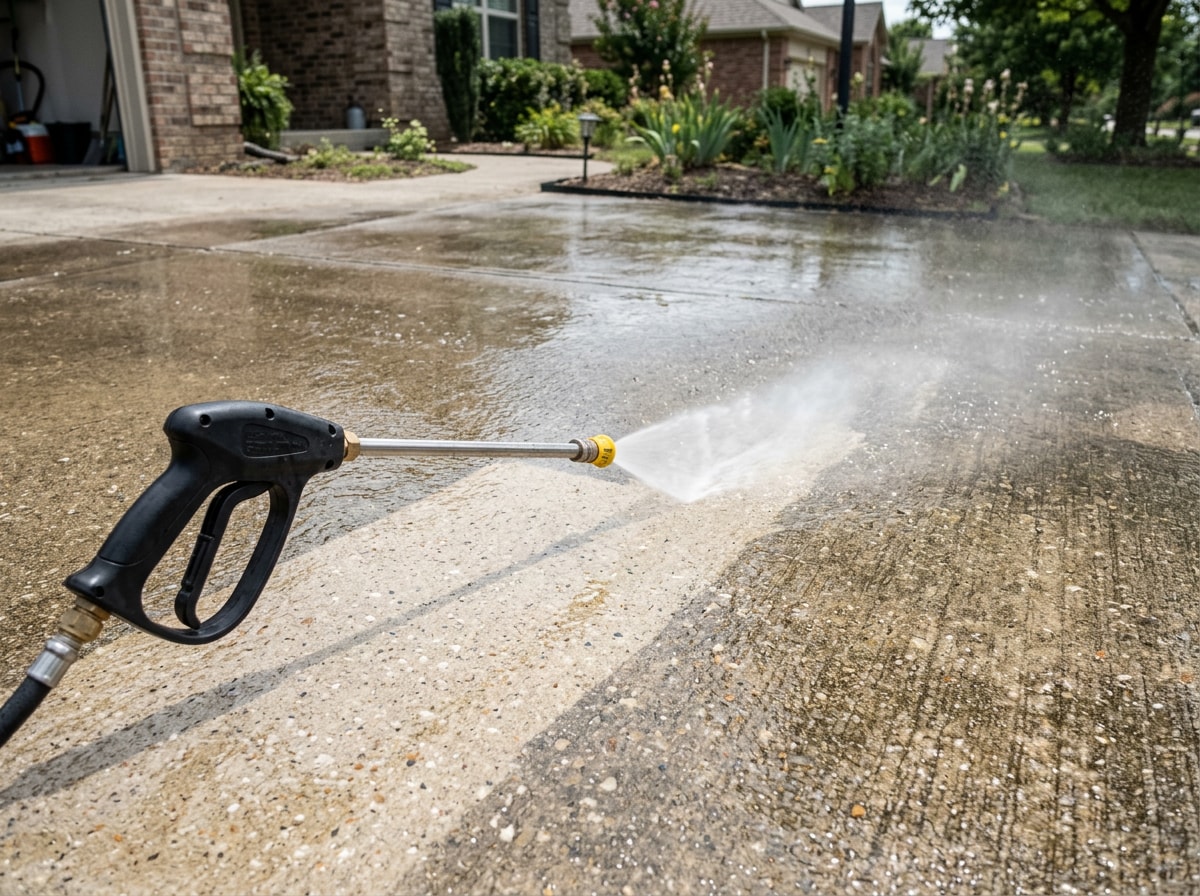
Step 7: Finish With a Full Pressure Wash
Pressure washing works best as a finishing step, not a standalone fix. Apply degreaser first, let it dwell, scrub, then flush the entire treated area, not just the stain itself, since rinsing only the spot often leaves a visible outline at the edges. A full pass also helps the repair blend into the surrounding concrete.
Why Oil Stains Get Worse on Concrete in Zionsville's Climate
Zionsville driveways deal with more than oil. Unsealed concrete absorbs oil, water, and road salt year-round with nothing to stop them, and Central Indiana's freeze-thaw winters make that worse. Water trapped in the pores expands as it freezes and contracts as it thaws, a cycle that research on Indiana pavement aggregates has linked to accelerated cracking and surface distress over repeated seasons, according to a Purdue freeze-thaw durability study. That same expansion pushes old oil stains deeper and widens the cracks they hide in.
That's part of why sealing concrete after a thorough cleaning matters. A sealed surface resists absorption and is far easier to clean the next time. Homeowners in our Zionsville service area tend to see the worst staining on north-facing driveways that stay shaded and damp longer each winter.
How to Prevent Oil Stains on Concrete
Prevention is simpler than most cleanups.
- Have your vehicle serviced regularly so it isn't dripping oil in the first place.
- Seal your concrete with a product that resists oil penetration.
- Use an oil mat under any parked vehicle with a known leak.
- Sweep up absorbent material promptly instead of hosing stains toward the street.
These habits catch most problems before they become stains. They also reduce the chance of oil and other vehicle fluids washing into storm drains, which the EPA flags as a common source of neighborhood stormwater pollution tied to everyday activities like changing motor oil.
DIY vs. Professional Oil Stain Removal
DIY oil stain removal works well when a spill is caught early and the steps above are followed closely. But older, deep-set stains, especially after a few Indiana winters, can push past what a Saturday afternoon and a bottle of degreaser can fix.
On jobs across Boone County driveways, we've seen oil stains that outlasted three seasons of DIY scrubbing lift almost completely after a single professional hot-water pressure wash paired with a concrete-safe degreaser pass. At that point, professional treatment often costs less in the long run than repeated DIY attempts that never fully clear the stain.
If you've tried the steps here without full results, our concrete surface preparation service can handle the stains that won't budge. You can also browse recent projects or learn more on our homepage. If you're also planning a broader driveway refresh, our Zionsville concrete cost guide breaks down what resealing or replacement typically runs.
Ready to get the stain gone for good? Get a free estimate and we'll tell you honestly whether DIY or a pro visit makes more sense for your driveway.
About the Author
This guide was written by the team at Scott's Mobile Blasting, a Zionsville-area concrete cleaning, sandblasting, and surface preparation contractor serving Indianapolis, Carmel, Fishers, Westfield, and Zionsville homeowners. Questions about a specific stain or driveway? Contact us directly.
FAQ
Can WD-40 remove oil stains from concrete?
Yes. WD-40 isn't just for squeaky hinges; it can also help lift excess oil from concrete. It works best on fresh-to-moderate stains and is less effective on oil that's been sitting for weeks or longer.
Does dish soap actually remove oil stains from concrete?
Dish soap works on oil stains less than 24 hours old that haven't soaked deeply into the pores. It breaks down surface-level grease but can't reach oil that's already penetrated the slab, so anything older usually needs a degreaser instead.
What is the best homemade oil stain remover for concrete?
For fresh spills, cat litter or cornstarch followed by dish soap handles most of it. For older, set-in stains, baking soda left overnight or a poultice made from kitty litter and a solvent like acetone gets closer to full removal.
Will bleach remove oil stains from concrete?
No. Bleach doesn't break down oil chemically, and it can discolor or etch the concrete surface instead of lifting the stain. Stick with absorbents, dish soap, or a concrete-safe degreaser.
Should I seal my driveway after removing an oil stain?
Yes. Sealing is worth doing once the stain is out and the concrete is fully dry. A sealer closes the pores that let oil soak in, and most Central Indiana driveways benefit from resealing every few years against oil, road salt, and freeze-thaw damage.
Can old oil stains be completely removed from concrete?
Not always. Deep, aged stains can lighten significantly with repeated treatment, but they may not disappear entirely without professional-grade extraction. It's fair to expect strong improvement rather than a guaranteed full removal on very old, set-in stains.