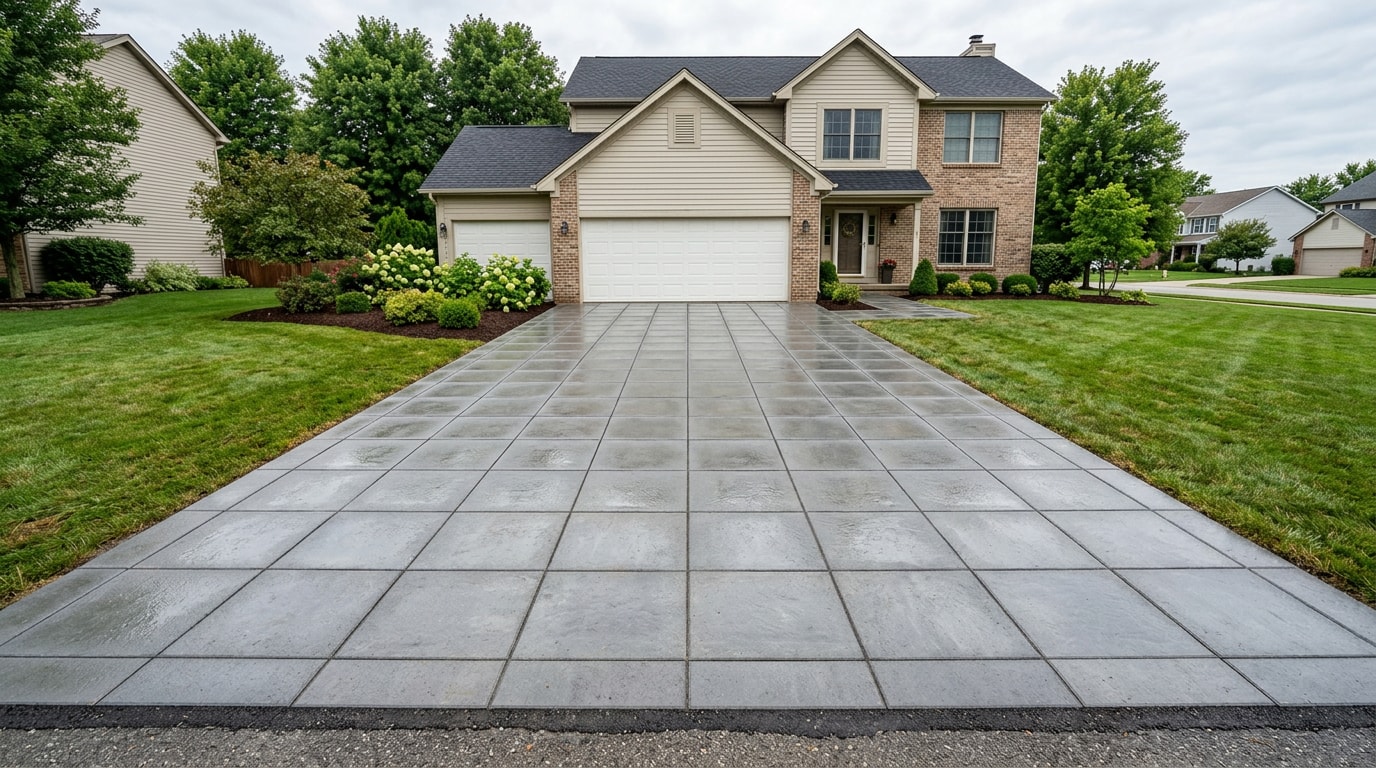
24x24 concrete pavers in Indianapolis, IN give driveways, patios, and walkways a large-format, low-joint finish that holds up to Central Indiana's freeze-thaw winters better than most national pricing charts let on. This guide covers real cost ranges, the base-depth numbers tied to Marion County's own building code, and the pattern choices that change how a slab reads once it's down. Skip the generic guides written for no particular climate: here's what actually applies to a Marion County installation.
How Much Do 24x24 Concrete Pavers Cost in Indianapolis?
A single 24x24 concrete paver commonly runs $8 to $20 per unit, depending on finish and thickness. Installed, that typically works out to $12 to $25 per square foot once excavation, compacted base, bedding sand, and labor are added in.
Decorative or architectural finishes push toward the high end. A standard gray utility paver on a flat, easy-access site lands closer to the low end.
| Project Scope | Material Cost (per paver) | Installed Cost (per sq ft) |
|---|---|---|
| Standard gray, simple site | $8–$12 | $12–$16 |
| Decorative or textured finish | $13–$20 | $17–$22 |
| Tight access, poor drainage, or demo required | $13–$20 | $20–$25 |
Sites that need old material removed, have drainage problems, or offer tight equipment access typically land at the higher end of that range. Get a free, itemized estimate before you budget off a national average.
Are 24x24 Pavers a Good Choice for an Indianapolis Driveway?
A driveway built with 24x24 pavers offers a different value proposition than a poured slab or asphalt. Poured concrete cracks with ground movement and is expensive to patch invisibly. Asphalt softens in summer heat and needs periodic resealing.
A 24x24 paver splits the difference. It has far fewer joints than small-format pavers, covers ground faster during installation, and if one slab cracks or stains, a crew can lift and replace just that piece instead of cutting into a continuous pour.
| Feature | 24x24 Concrete Pavers | Poured Concrete | Asphalt |
|---|---|---|---|
| Repair method | Replace single unit | Patch or full section replacement | Patch, often visible |
| Upfront cost | Higher | Lower | Lowest |
| Joint lines | Visible, consistent | None until it cracks | None |
| Resealing needed | Optional, extends life | Occasional | Every 2–3 years |
For most Indianapolis homeowners, that combination of durability, repairability, and lower long-term maintenance outweighs the higher upfront cost compared to asphalt. Browse completed driveway and patio work in our project gallery to see finish options.
Planning Your Project: Base Depth, Frost Line & Layout
Before choosing an installation approach, measure your space, check drainage slope, and confirm the base depth your jurisdiction requires. Indiana sets minimum footing and base depth by county rather than a single statewide number.
<br>
Marion County falls into the state's 30-inch frost-depth band under the Indiana Administrative Code's county-by-county table, which jurisdictions use in lieu of site-specific geotechnical information to set minimum excavation depth. A 24x24 paver layout also needs accurate up-front measuring, since partial slabs at the edges require cutting.
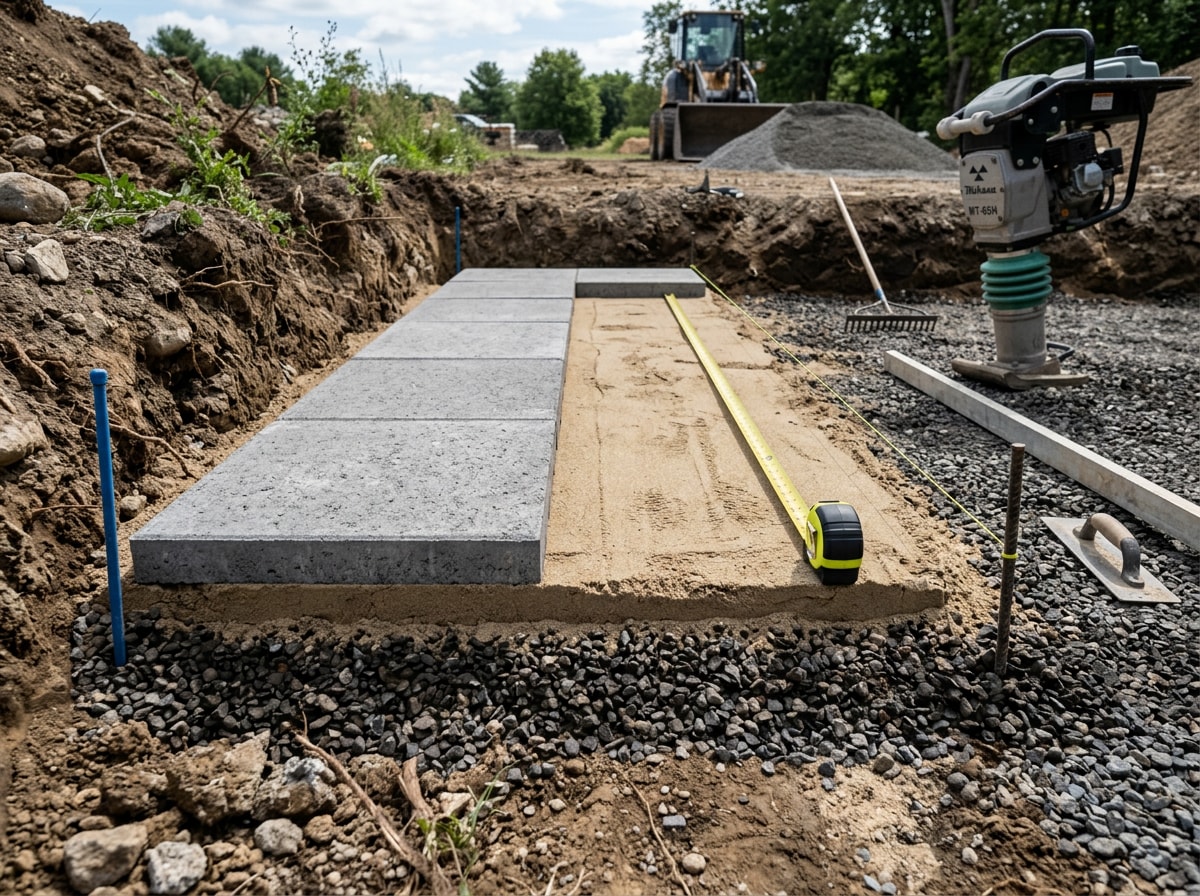
New Installation Steps
A from-scratch 24x24 paver driveway or patio generally follows this sequence:
- Excavate to the required base depth, accounting for soil type and drainage slope.
- Compact a crushed-stone base in lifts, testing for soft spots before moving on.
- Screed a sand setting bed to a consistent thickness.
- Place pavers one at a time, maintaining even joint lines.
- Sweep in joint sand and compact the surface again to lock everything together.
Base preparation matters more with a 24x24 format than with smaller pavers. A larger slab has less flex tolerance, so any soft spot or uneven compaction underneath shows up as rocking or cracking sooner than it would with a 12x12 unit. Crews installing at this scale typically spend proportionally more time on compaction testing before a single paver goes down.
Extending or Widening an Existing Driveway
Homeowners often extend or widen an existing drive to create extra parking or room for a trailer or RV. Using 24x24 pavers for this work means tying the new base into the old one and matching grade so there's no noticeable seam.
Matching an existing surface also means accounting for color and texture differences if the original has weathered for several years. A good extension plan addresses drainage at the tie-in point first, since that's where standing water problems usually start if the grades don't line up.
Patios, Walkways & Pool Decks
24x24 slabs work well beyond driveways. Their flat, minimal-joint surface is a common choice for patios, pool surrounds, and wide garden walkways. If a patio rather than a driveway is the goal, our concrete patio design guide covers style and permit details specific to patio slabs.
Choosing a Pattern and Joint Width
Pattern choice changes the entire look of an installation even though the paver size stays the same.
- Running bond: each row offsets by half a paver, reading as linear and formal.
- Basketweave: pavers pair in alternating horizontal and vertical sets, adding texture at no extra material cost.
- Simple grid: pavers stacked in straight rows and columns, giving the cleanest, most modern look but showing joint lines most clearly.
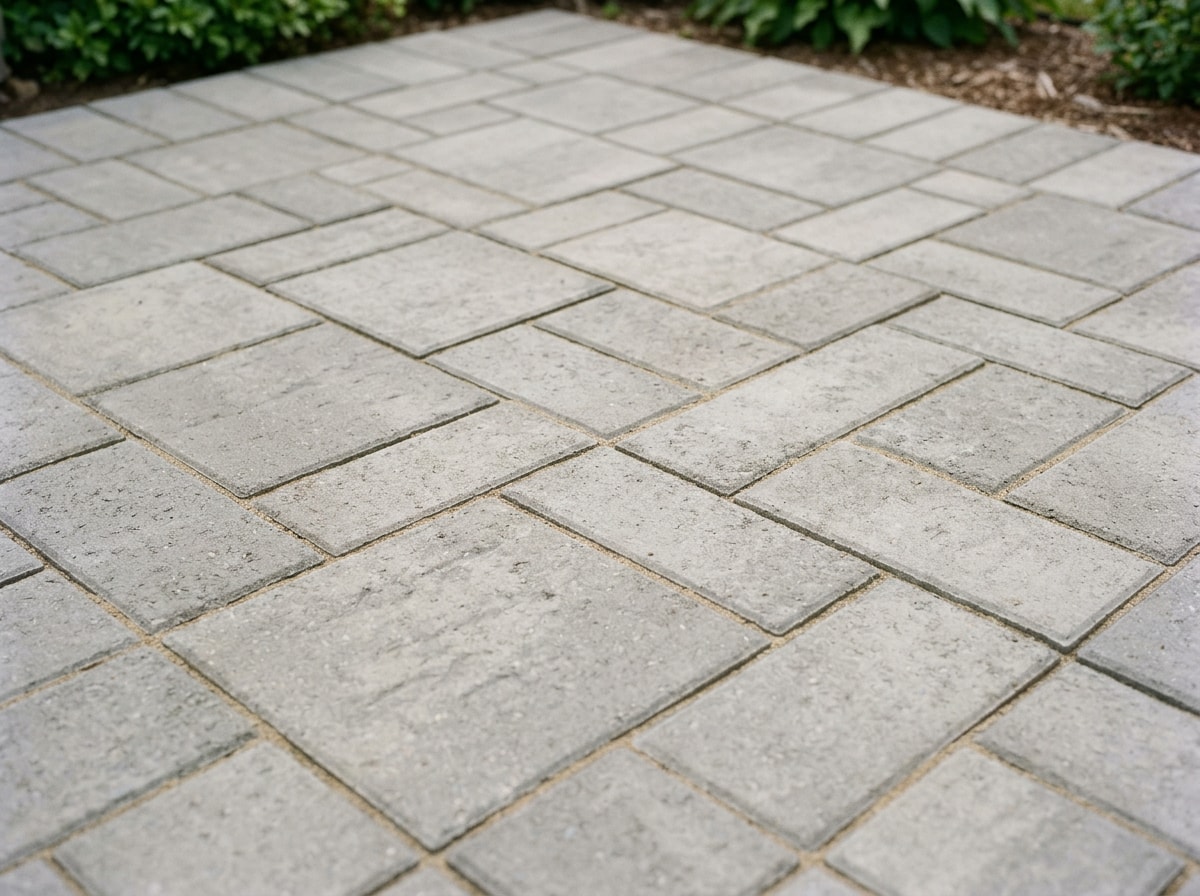
Joint width also matters. Industry guide specifications call for joints between pavers between 1/16 in. and 3/16 in. wide, with no more than 5% of joints exceeding 1/4 in. to achieve straight bond lines . Narrower joints create a tighter, more monolithic look; wider joints emphasize each individual slab.
Permits and HOA Approval in Indianapolis
Driveway and patio paver projects in Indianapolis often require a permit, especially when the work changes drainage patterns or sits near a property line. The city's infrastructure office notes that the City of Indianapolis has jurisdiction over public thoroughfares in Marion County, and all driveways, including approaches, require a permit under the access control policy .
HOA communities frequently layer their own design-review requirements on top of city rules. Confirm specifics with your jurisdiction before starting, and check our Indianapolis, IN service area page for local project notes.
Maintenance, Lifespan & Restoring Stained Pavers
A properly installed 24x24 concrete paver driveway or patio can typically last 25 to 40 years. Lifespan depends heavily on base quality, routine joint sand top-ups, and periodic sealing; skipping these steps shortens the surface's effective life.
Oil drips, rust, and years of grime build up in joints and on the paver face over time, and pressure washing alone doesn't always lift it. That's where mechanical surface prep comes in: our concrete sandblasting and concrete surface preparation services strip stains and old sealer without replacing the slab, so a worn paver surface can often be restored instead of torn out.
At Scott's Mobile Blasting, we handle both the restoration side of existing paver surfaces and the prep work that goes into getting a surface ready for sealing or coating. If you're in Carmel, Fishers, Westfield, or Zionsville, we cover those areas too.
FAQ
How much do 24x24 concrete pavers cost installed in Indianapolis?
Expect $12 to $25 per square foot installed, depending on finish, site access, and how much base prep is needed. A single paver alone runs $8 to $20.
Are concrete pavers good for driveways?
Yes, for most Indianapolis homes, particularly where repairability and appearance matter alongside durability. They handle vehicle loads well and let you swap a single damaged slab instead of patching an entire pour. The trade-off is higher upfront cost and visible joint lines compared to a fresh poured slab.
How many 24x24 pavers do I need per square foot?
Each 24x24 paver covers 4 square feet (2 ft x 2 ft). A 400-square-foot patio needs roughly 100 pavers before accounting for cuts along the edges, so order extra for waste.
Can I install 24x24 concrete pavers myself?
It's possible but demanding. The paver's size and weight (often 70 to 90 lbs per unit) make precise base compaction and joint alignment harder to manage solo, and a soft spot under a large-format slab shows up as rocking faster than it would with smaller units. Most homeowners hire a crew for anything beyond a small stepping-stone path.
What concrete strength should patio pavers meet in this climate?
Look for units rated for freeze-thaw durability. The ASTM specification for solid concrete interlocking paving units requires an average compressive strength of at least 8,000 psi, with no individual unit testing below 7,200 psi . Central Indiana's repeated freeze-thaw cycles stress lower-strength material faster, leading to surface flaking within a few seasons.
Do I need a permit for a paver driveway or patio in Indianapolis?
Often, yes, especially for driveway work that touches the public right-of-way or changes drainage. Confirm with the city before you dig; permit rules shift based on scope and property line proximity.
How long will a 24x24 paver driveway or patio last?
Typically 25 to 40 years with proper base work, periodic joint sand maintenance, and sealing. Skipping maintenance shortens that window considerably.
Ready to plan your project with real numbers instead of a national average? Get a free estimate from a crew that knows Marion County's base-depth and permit requirements.