Concrete patio designs in Carmel, IN range from stamped flagstone and acid-stained finishes to plain broom-textured slabs built for pool decks. The right choice depends on your budget, your home's style, and how Hamilton County's clay soil and freeze-thaw winters treat the slab over time. This guide breaks down the design options, what a proper build looks like underneath the surface, and a 2026 permit change that catches a lot of homeowners off guard.
Popular Concrete Patio Designs in Carmel, IN
Most Carmel homeowners choose between three finish categories: stamped, stained, or textured concrete. Each delivers a different look and a different price point.
Stamped Patterns: Flagstone, Slate & Brick
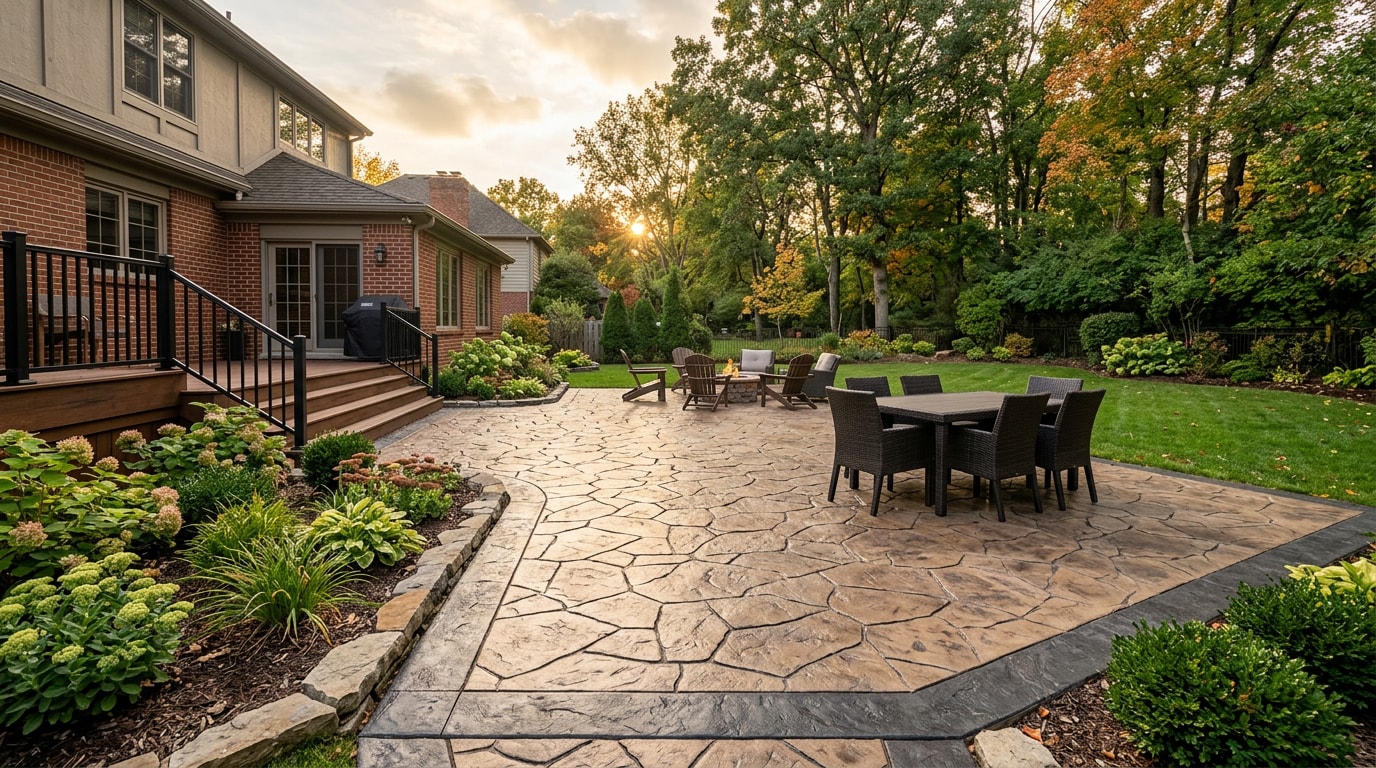
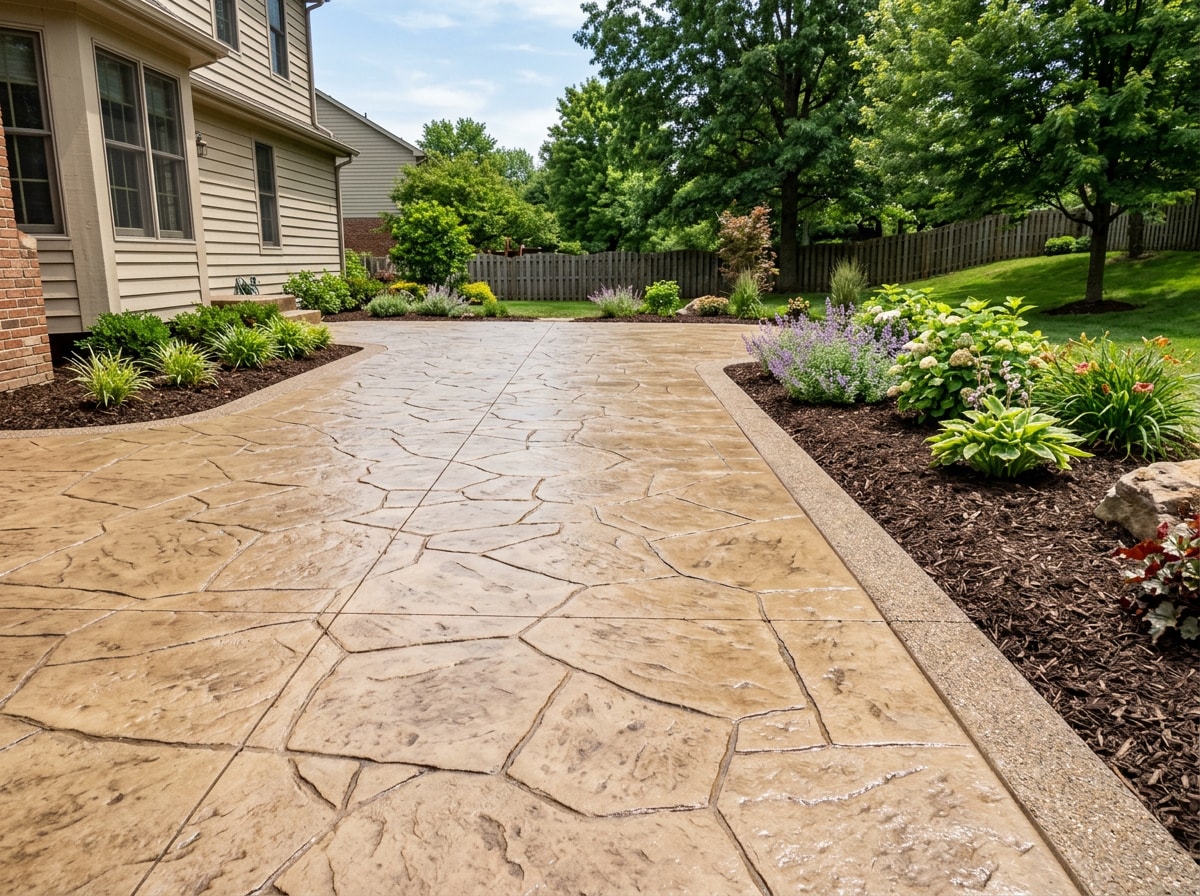
Flagstone, slate, and brick are the three most-requested stamp patterns in Carmel. Flagstone's irregular shapes suit traditional and craftsman homes. Slate's tighter, angular lines read as modern. Brick patterns pair naturally with homes that already have brick accents or a colonial facade.
All three patterns can be combined with a contrasting border or a secondary color band for a more custom look.
Integral Color vs. Acid Staining
Integral color is mixed into the concrete before the pour, so the color runs through the entire slab and won't wear off even if the surface chips. Acid staining is applied after the pour and reacts chemically with the concrete to produce a mottled, variegated look that integral color can't replicate.
Acid-stained surfaces tend to fade faster under direct sun, so a tighter resealing schedule matters more if you're leaning toward a heavier acid-stain treatment.
Exposed Aggregate & Broom Finishes
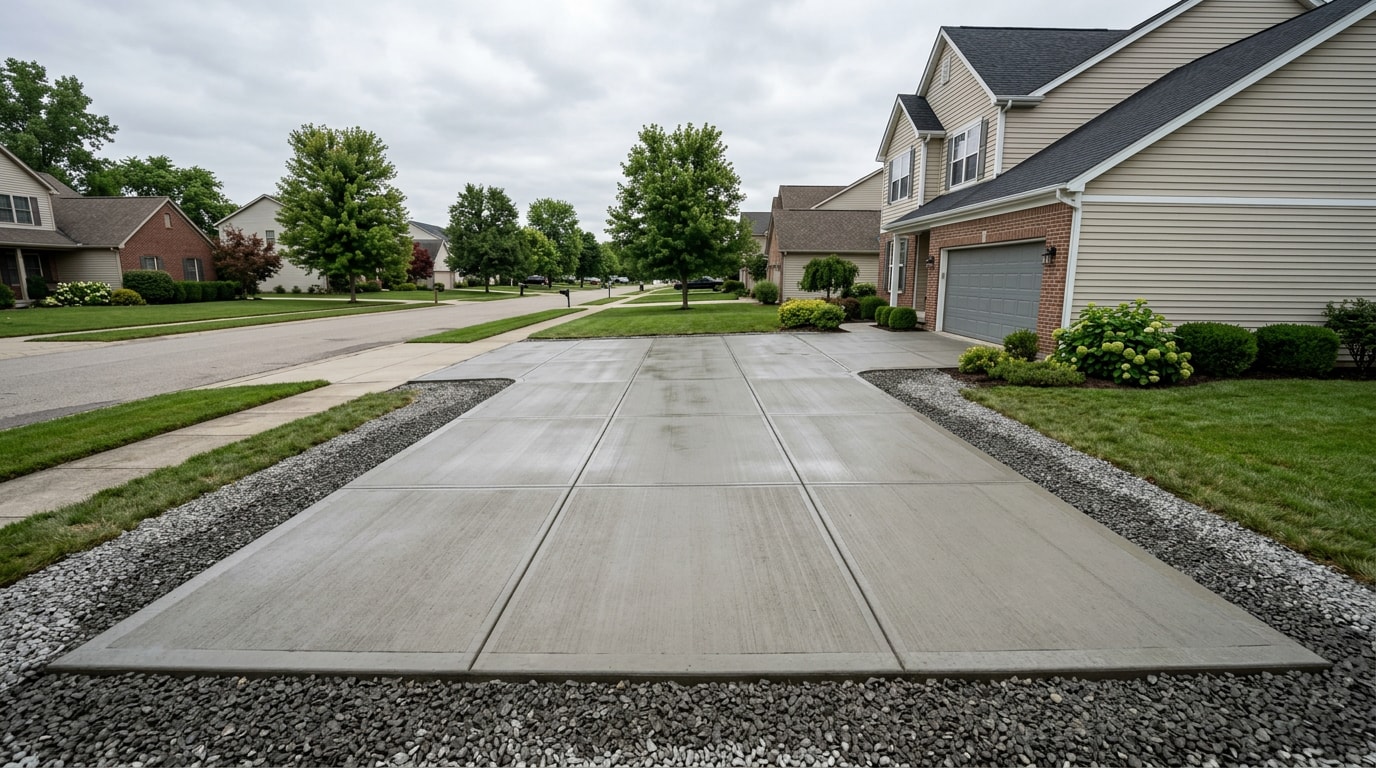
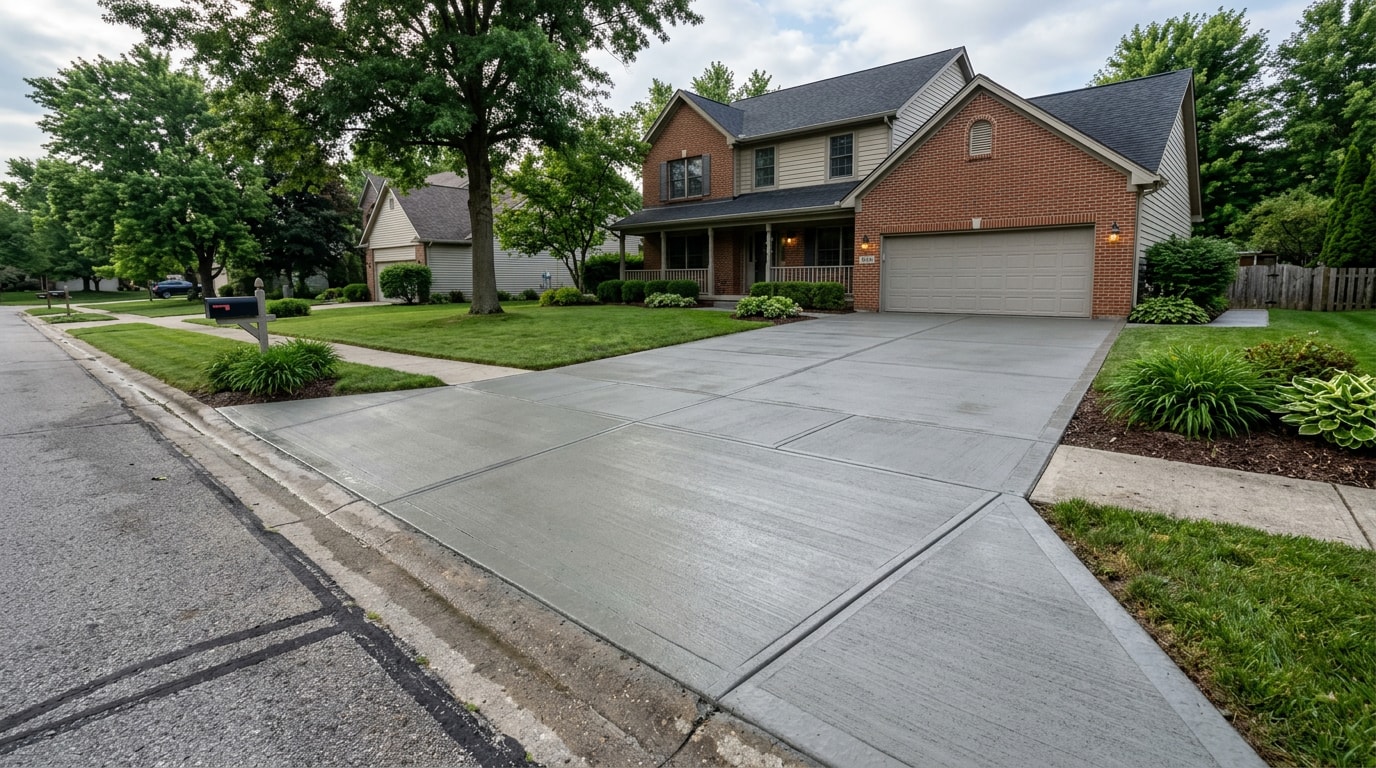
Exposed aggregate and broom finishes cost less than stamped concrete and offer better slip resistance, which makes them a practical choice for pool surrounds and high-traffic walkways. Exposed aggregate reveals the natural stone within the mix for a speckled, textured look. A broom finish drags a stiff-bristled broom across wet concrete to create light traction grooves.
Neither delivers the decorative punch of a stamped pattern, but both hold up well in wet, high-use areas.
| Finish Type | Relative Cost | Slip Resistance | Best For |
|---|---|---|---|
| Stamped concrete | Highest | Moderate (needs textured sealer) | Patios, entertaining areas |
| Acid stain | High | Moderate | Covered patios, low-traffic zones |
| Exposed aggregate | Moderate | High | Pool decks, walkways |
| Broom finish | Lowest | High | Pool decks, utility areas |
Concrete Patio Services in Carmel, IN
Most homeowners fall into one of three categories: building a new patio, upgrading an existing slab with decorative concrete, or repairing an aging one.
New Concrete Patio Installation
A new installation starts with a consultation covering layout, square footage, and intended use. From there, the crew stakes the area, forms the perimeter, and schedules the pour around the weather window. Installation typically runs one to two weeks from design approval to a fully cured, usable surface.
Patio Repairs, Resurfacing & Extensions
A slab with surface-level cracking or discoloration is often a good candidate for resurfacing rather than full replacement. Deeper structural cracks or heaving usually call for a rebuild instead.
Patio extensions and multi-level patios are common on Carmel's sloped lots, where one flat pour isn't practical. Stepped or tiered designs add usable square footage and separate dining, lounging, and fire-pit zones. You can browse examples of this kind of work on our projects page.
Outdoor Living Spaces & Pool Decks
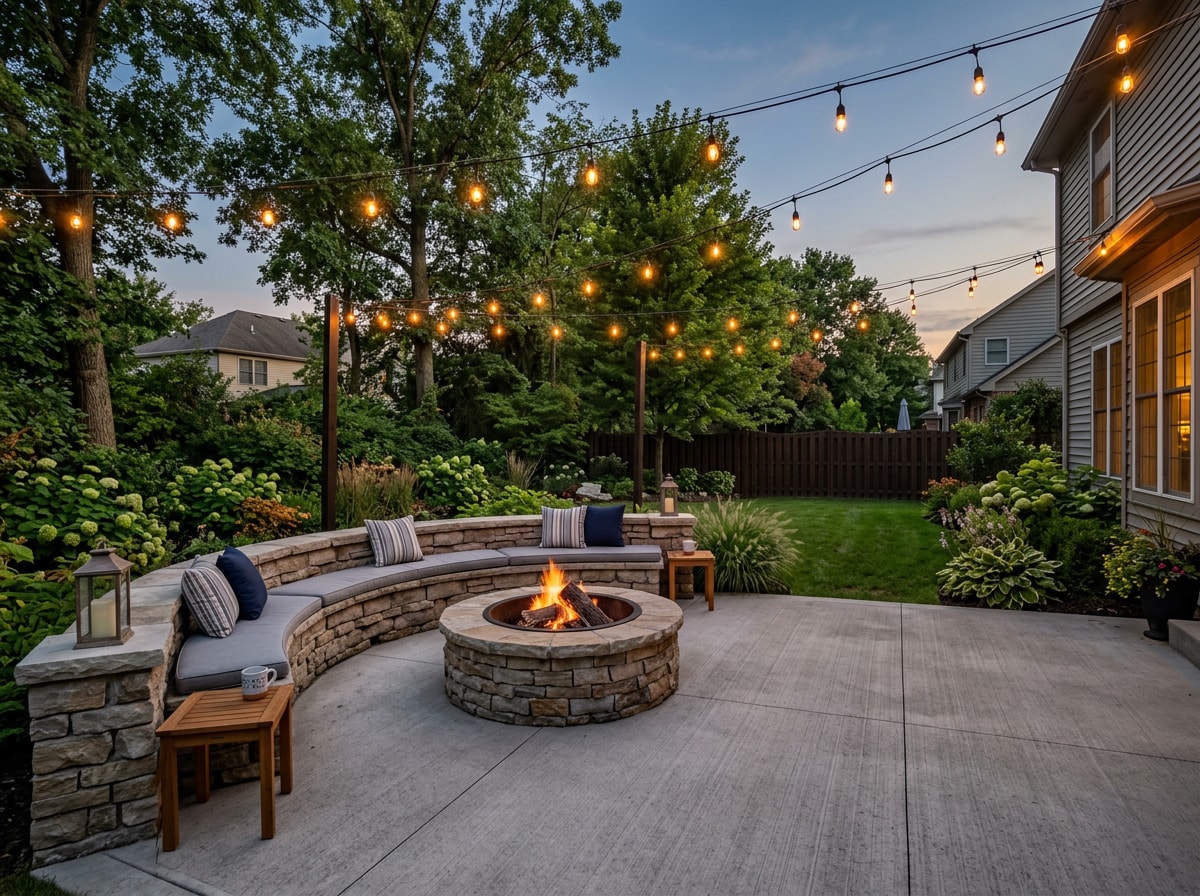
A patio rarely stands alone anymore. Most Carmel homeowners treat it as the anchor of a larger outdoor living space, adding seating walls, fire features, or an outdoor kitchen over time.
Pool decks need their own consideration. The surface requires more slip resistance and lower heat reflectance than a standard patio during peak summer sun, which is why exposed aggregate and broom finishes show up around pools more often than stamped patterns. Steps and stoops frequently connect these zones, tying a raised patio to a lower pool deck or side yard.
Carmel's 2026 Patio Permit Rule (What Most Contractors Won't Tell You)
Here's something that catches a lot of homeowners off guard: Carmel changed its permit rules for patios in 2026. A residential patio over 120 square feet now requires a permit, effective April 27, 2026, with fees of $.10 per square foot for filing and review, $100 for each required inspection, and $100 for the certificate of occupancy.
That's a real shift from the old assumption that ground-level patios are automatically exempt. Before you finalize a design or get quotes, confirm with your contractor whether your planned square footage crosses that 120-square-foot threshold, and ask whether the quoted price includes permit filing and inspection fees. If it doesn't, build that into your budget.
Patio Thickness, Base & Drainage
This part of the project rarely shows up in photos, but it determines whether a patio lasts five years or twenty-five.
Standard Slab Thickness
A standard residential patio slab is typically poured 4 inches thick, though hot tubs, heavy furniture, or Hamilton County's clay-rich soil can call for extra depth.
| Use Case | Recommended Thickness |
|---|---|
| Standard patio, foot traffic only | 4 inches |
| Hot tub or heavy furniture | 5–6 inches |
| Clay-heavy or poorly draining soil | 5 inches + extra base |
Residential building code also sets minimum concrete strength requirements for exterior work. Porches, carport slabs, and steps exposed to the weather require higher-strength concrete than interior slabs under the International Residential Code , which matters in a climate that cycles through freeze-thaw conditions every winter.
Base Preparation for Clay Soil
Hamilton County's soil is largely clay-rich glacial till. Indiana's parent soil material was left behind by a retreating glacier, a mixture of sand, silt, and clay deposited across irregular hills. That clay content expands and contracts with moisture and temperature swings, which is exactly what pushes a poorly prepared patio slab out of level within a few years.
A compacted gravel base of at least 4 inches, graded and tamped in layers, keeps the slab stable as the soil underneath moves. Skipping this step is one of the most common reasons patios crack or settle, regardless of how clean the finish looks on day one.
Drainage & Grading Away From the Home
Proper grading directs water away from the foundation instead of letting it pool against the house. Because no waterproofing system is completely foolproof, the best defense against water intrusion is preventing the soil around the foundation from becoming saturated in the first place, which means grading the site so water drains away from the house on all sides.
Indiana's freeze-thaw cycles make this non-negotiable. Trapped water can freeze, expand, and push concrete out of place over a single winter. Most contractors aim for roughly a quarter-inch of slope per foot on a patio slab, rechecking it every few years since soil settles and slopes can flatten out over time.
Why Hire a Local Concrete Contractor in Carmel
A contractor unfamiliar with Hamilton County's soil can underestimate how much base prep a patio really needs, and that shortcut doesn't show up until a few winters later. A local builder also knows Carmel's permitting process, including the 2026 patio rule above, and which finishes actually hold up through humid summers and icy winters.
Before hiring, confirm licensing, insurance, and whether the contractor offers a written warranty against cracking or settling. We've handled concrete surface work across Hamilton County long enough to see which patios fail at year three and which ones are still flat at year twenty, and the difference almost always traces back to base prep, not the stamp pattern on top.
If you're also dealing with an existing slab that's chipped, discolored, or peeling before you build out a new patio area, our concrete surface preparation service can get it ready for resurfacing or staining. For a related project type nearby, see our guide on concrete driveway repair in Carmel, since driveways and patios share the same clay-soil and freeze-thaw challenges.
Ready to talk through your layout, finish options, and the current permit requirements? Get a free estimate and we'll walk the site with you before you commit to a design. You can also see more of our work on the homepage or browse our Carmel service area page for local project examples.
FAQ
How much does a stamped concrete patio cost in Carmel, IN?
Stamped concrete patios in the Carmel area typically run $12 to $22 per square foot, depending on pattern complexity, color treatments, and site prep needs. Larger patios often cost less per square foot than small ones, while multi-color work and heavy excavation push prices toward the higher end.
Do I need a permit for a concrete patio in Carmel, IN?
As of April 27, 2026, yes, if the patio is over 120 square feet. Smaller patios generally fall outside the permit table, but always confirm with the City of Carmel's Department of Community Services before you pour, since fees and inspection requirements apply to anything above that threshold.
How long does stamped concrete last?
A properly installed and sealed stamped concrete patio can last 25 years or more before needing significant repair. Lifespan depends heavily on base prep, resealing frequency, and how well the slab handles Indiana's freeze-thaw cycles. Resealing every two to three years helps preserve both color and surface durability.
Is stamped concrete better than pavers for a patio?
Neither option is universally better. Stamped concrete usually costs less upfront and offers a seamless, joint-free surface, but repairing damage means patching or re-staining, which can be visible. Pavers cost more initially and show visible joints, but individual units can be swapped out if damaged and they tolerate ground movement slightly better. Homeowners prioritizing lower upfront cost tend to choose stamped concrete; those wanting easy spot repairs often prefer pavers.
What's the best base for a concrete patio on Carmel's clay soil?
A compacted gravel base of at least 4 inches, placed in tamped layers, is the standard recommendation for Hamilton County's clay-heavy glacial till. Skipping or skimping on this step is the most common cause of early cracking and settling, regardless of the finish on top.