Concrete driveway repair in Carmel, IN usually comes down to one choice: lift and patch, or tear out and replace. Hamilton County's clay soil and Indiana's freeze-thaw winters push driveways toward cracking and sinking faster than concrete sees in milder climates. Most slabs can still be fixed in a day once the actual cause is diagnosed correctly, not guessed at.
This guide covers why Carmel driveways crack and sink, the repair methods that actually work, Carmel's permit rules, what the work costs, and why the surface prep step is the part most patch jobs skip, and the reason they fail.
Visit Scott's Mobile Blasting to see our services and request a free estimate.
Common Concrete Driveway Problems in Carmel
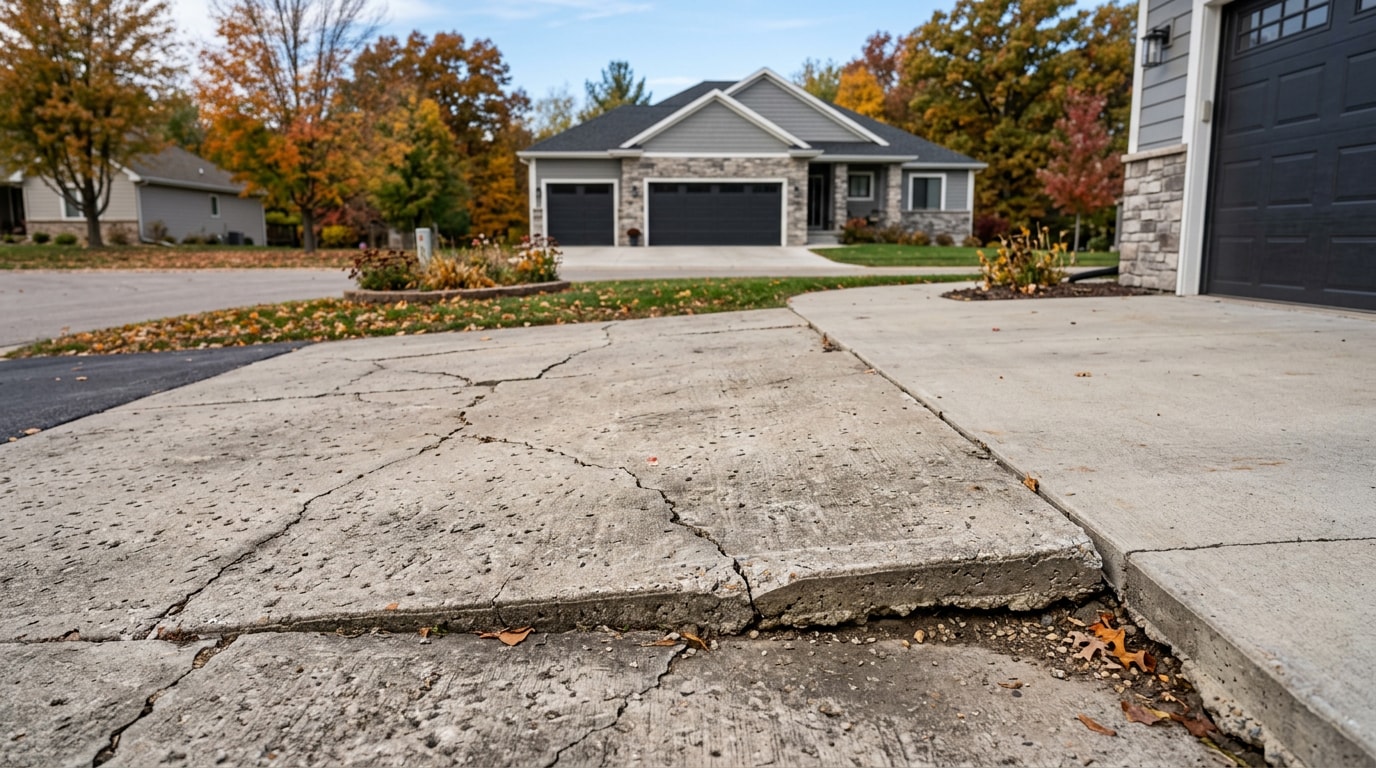
Most calls we field start with one of five symptoms. Indiana's freeze-thaw cycles, heavy spring rain, shifting clay soil, and daily vehicle traffic drive nearly all of it.
- Cracked driveway surfaces — usually fixed with crack injection or resurfacing
- Sinking or settled slabs — corrected with polyurethane lifting or mudjacking
- Spalling concrete and surface flaking — need surface repair, or panel replacement in severe cases
- Uneven sidewalk-to-driveway transitions — leveled through slabjacking
- Hairline-to-structural cracking — ranges from cosmetic to a sign the sub-base failed
Left alone, surface flaking and spalling rarely stay cosmetic. For a deeper look at how that damage progresses and what it costs to fix at each stage, see our breakdown of spalling concrete causes, repair options, and costs.
Why Concrete Driveways Crack and Sink in Carmel
Slab movement in Carmel almost always traces back to two things working together: what's happening in the soil underneath, and what Central Indiana's climate does to that soil year after year.
Erosion and Drainage
A slab sinks when the soil beneath it washes away. Rainwater saturates the ground, drains off, and carries soil with it, leaving a void beneath the concrete. Gravity does the rest, producing a sunken driveway or a lifted, trip-prone edge.
If erosion seems to be moving fast, check your gutters and plumbing first. A downspout or leaking pipe dumping water under the slab can hollow out soil far quicker than rainfall alone.
Clay Soil and Freeze-Thaw Stress
Hamilton County sits on clay-heavy soil, and swelling clays are a well-documented problem across Indiana. Shrinking and swelling soils damage homes, roads, utilities, and septic systems, and Americans spend more than $2 billion a year repairing that damage. That same swell-and-shrink cycle works against a driveway slab every season.
Add in winter freeze-thaw cycling and summer drought, and the ground beneath the slab is rarely static. The result is a driveway that moves even when nothing above ground has changed.
Repair vs. Replacement: Which Is Right for Your Driveway?
A reputable contractor weighs the concrete's age, crack severity, structural stability, drainage conditions, and sub-base health before recommending a path.
Repair where possible, replace only when it's truly necessary, is the right default. A slab with widespread structural cracking, repeated settling after a previous repair, or a failed sub-base usually isn't a good patching candidate. If you're also budgeting a full rebuild, our concrete cost calculator guide breaks down 2026 pricing by project type.
Not sure which camp your driveway falls into? A short on-site look usually settles it faster than guessing from photos. Request a free estimate and we'll tell you straight whether it's a repair or a rebuild.
Concrete Driveway Repair Methods That Actually Work
Once the cause is clear, repair falls into one of a few proven categories.
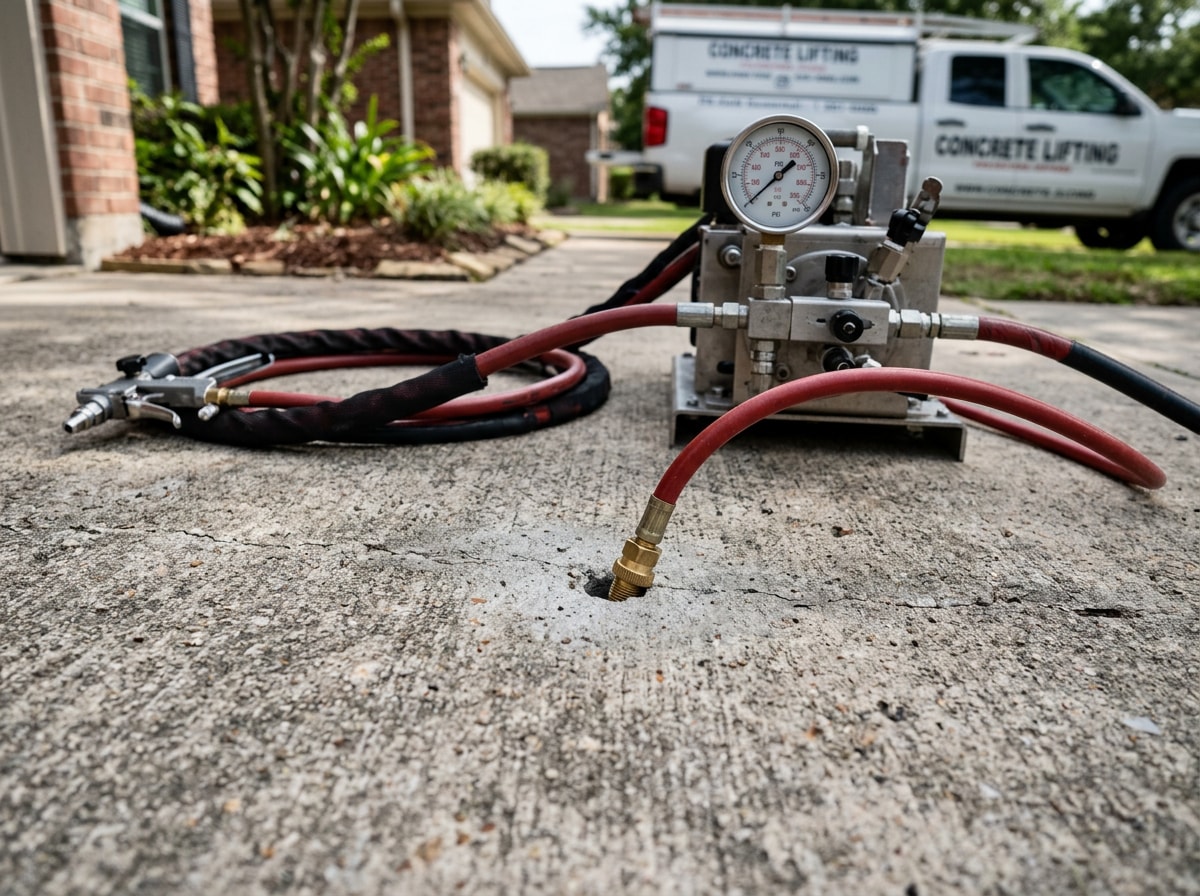
Polyurethane injection (sometimes marketed as PolyLevel) is the fastest fix for a sinking slab. A contractor drills small holes, injects high-density foam that spreads beneath the concrete and lifts it back into place, then patches the holes and seals surface cracks. Most driveways are drivable again within a day.
Crack injection and partial-depth mortar patching handle cracked or spalled surfaces without a full lift. Panel replacement is reserved for sections too far gone to patch.
DIY patch kits exist, but they're messy, need specialized tools, and can leave a driveway unusable for weeks while material cures, compared to about a day for professional lifting.
| Method | Typical Cure Time | Relative Cost | Expected Lifespan |
|---|---|---|---|
| Polyurethane injection | ~1 day | $$ | 10–15+ years |
| Mudjacking | 1–2 days | $ | 5–10 years |
| Crack injection | Same day | $ | 5–8 years |
| Full slab replacement | 3–7 days | $$$$ | 20–30 years |
Why Most Patch Repairs Fail Within a Year: The Surface-Prep Problem
Here's what most driveway repair articles skip: the repair material almost never fails on its own. It fails because the concrete underneath it wasn't prepared to accept it.
Concrete surface preparation standards set the rules for how clean, dry, and rough a slab needs to be before any coating, overlay, or flooring system goes down on top of it, with the ICRI Concrete Surface Profile scale rating surface roughness on a 1-to-10 scale.
Thin sealers and low-build coatings bond well to a CSP 1 or 2, while high-build epoxy or urethane coatings typically require a CSP 3 to 5. Patch a smooth, troweled driveway surface without opening that profile up first, and the repair material has nothing to grip.
On more than one Hamilton County job, we've been called out to re-prep a driveway where a previous patch had already popped loose, sometimes within a single winter, because it was troweled directly onto the original smooth surface with no mechanical profile at all. Our concrete surface preparation service exists specifically to fix that step: we blast the damaged area to the correct CSP profile before anyone applies crack filler, resurfacer, or a new coating on top.
If the plan after repair includes sealing or a coating system, coating preparation matters just as much as the coating product itself.
Benefits of Professional Repair Over DIY
Beyond technique, who does the work changes how it affects your property and your budget.
Cleaner and Less Invasive
Lifting, injection, and blasting equipment typically fits in a standard service truck that parks right in the driveway or street. There's no heavy machinery tearing up the yard. Our mobile sandblasting setup, for example, comes to your Carmel property and preps the surface on site, so the job stays contained to the driveway itself.
Lower Cost Than Full Replacement
Because leveling and patching work with the slab that's already there, cost depends more on slab size and void size than on demolition and a new pour. Resurfacing concrete driveways averages $3 to $10 per square foot nationally, and pricing depends on the repairs needed, project size, and geographic location. Full replacement runs higher once demolition, hauling, and new material enter the equation, which is why repair is almost always the first option worth checking.
Carmel's Driveway Permitting & Right-of-Way Rules
Carmel enforces specific rules at the street-facing edge of a driveway, and they apply even to repairs that touch the right-of-way.
The City of Carmel's standard residential driveway width is a minimum of 12 feet and a maximum of 20 feet at the limit of the right-of-way, and the Engineering Department will not support driveway configurations that fall outside those standards. Widening an apron, or replacing a driveway that crosses the right-of-way, generally requires a Right-of-Way permit and, in some cases, Board of Public Works and Safety approval.
Right-of-Way permit bonds are payable to the City of Carmel with a minimum coverage of $5,000, and larger bond coverage may be required depending on the project scope. Most repair work that stays within the existing footprint, like crack injection or polyurethane lifting, doesn't trigger these requirements, but anything that changes the slab's width or crosses into the right-of-way does.
Many of Carmel's newer neighborhoods also carry HOA design standards covering finish and color. Before starting any work that touches the right-of-way, confirm current thresholds on the City of Carmel Engineering Department's permit page, since fees and requirements get updated periodically.
Our Work Across Hamilton County
One recent Carmel-area call involved a driveway where a prior crack repair had already failed twice. Both times, the filler had been pressed into a smooth, unprepped surface and popped loose within a season. We blasted the damaged section to an open profile before the final patch went in, the same approach behind every concrete surface preparation job we run.
Projects like that are why an on-site look matters more than a one-size-fits-all estimate. Soil conditions, slab age, and drainage patterns vary block to block across Hamilton County. You can see more of our completed work on the projects page, and check our Carmel, IN service area page for coverage details.
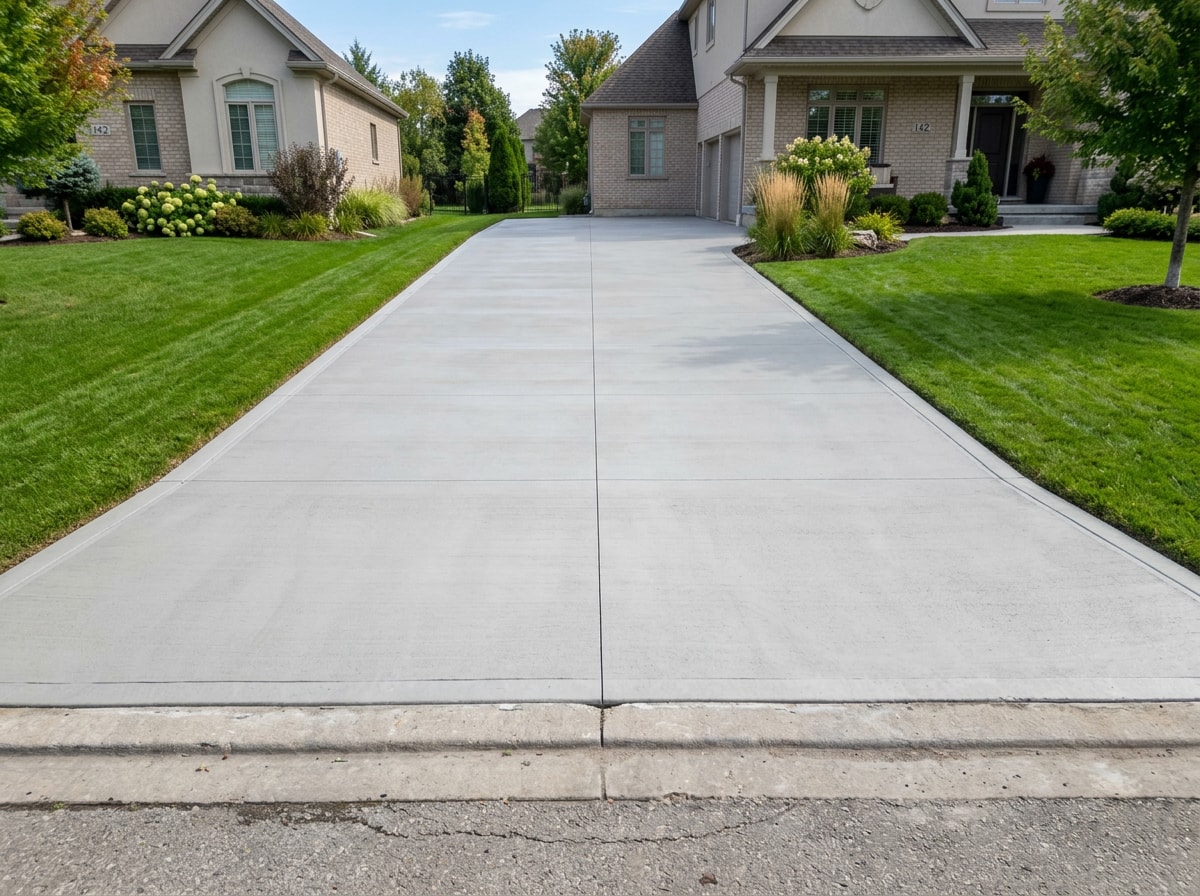
Scott's Mobile Blasting also covers Fishers, Westfield, and Zionsville, so if your driveway sits just outside Carmel, the same surface-prep approach still applies.
FAQ
How much does concrete driveway repair cost in Carmel, IN?
Resurfacing concrete driveways averages $3 to $10 per square foot nationally, with pricing depending on the repairs needed, project size, and location. Actual cost in Carmel depends on slab size, number of lift points, and site access. Most contractors, including us, offer a free on-site assessment and written quote before any work starts.
What causes a driveway slab to sink or crack?
Soil washout, poor compaction during the original pour, and clay soil that shrinks and swells with moisture all create voids beneath concrete. Once that support disappears, the slab settles unevenly and can become a trip hazard.
Will a repaired driveway crack or settle again?
It can, if the underlying cause wasn't fixed or the surface wasn't prepped correctly before patching. Watch for new cracks near the repair, sticking doors or windows nearby, or fresh unevenness. Any of these are worth a free inspection before you assume the fix failed on its own.
Is it cheaper to repair or replace a concrete driveway?
Repair is almost always cheaper upfront and works well when the slab is still structurally sound. Replacement costs more because it adds demolition, hauling, and a new pour, but it makes sense for driveways with widespread cracking or repeated settling.
Do I need a permit to repair my driveway in Carmel?
Usually not, if the repair stays within the existing driveway footprint. A right-of-way permit must be obtained prior to performing any work within the City's right-of-way , which applies when a project widens the apron or crosses the public right-of-way. Check with Carmel's Engineering Department before work starts if you're unsure.
How long does concrete driveway repair take?
Polyurethane injection and crack repair are typically done in a single day. Mudjacking usually takes one to two days. Full slab replacement runs three to seven days depending on weather and cure time.
Ready to find out which repair fits your driveway? Get a free estimate from Scott's Mobile Blasting and we'll walk the slab with you before recommending anything.