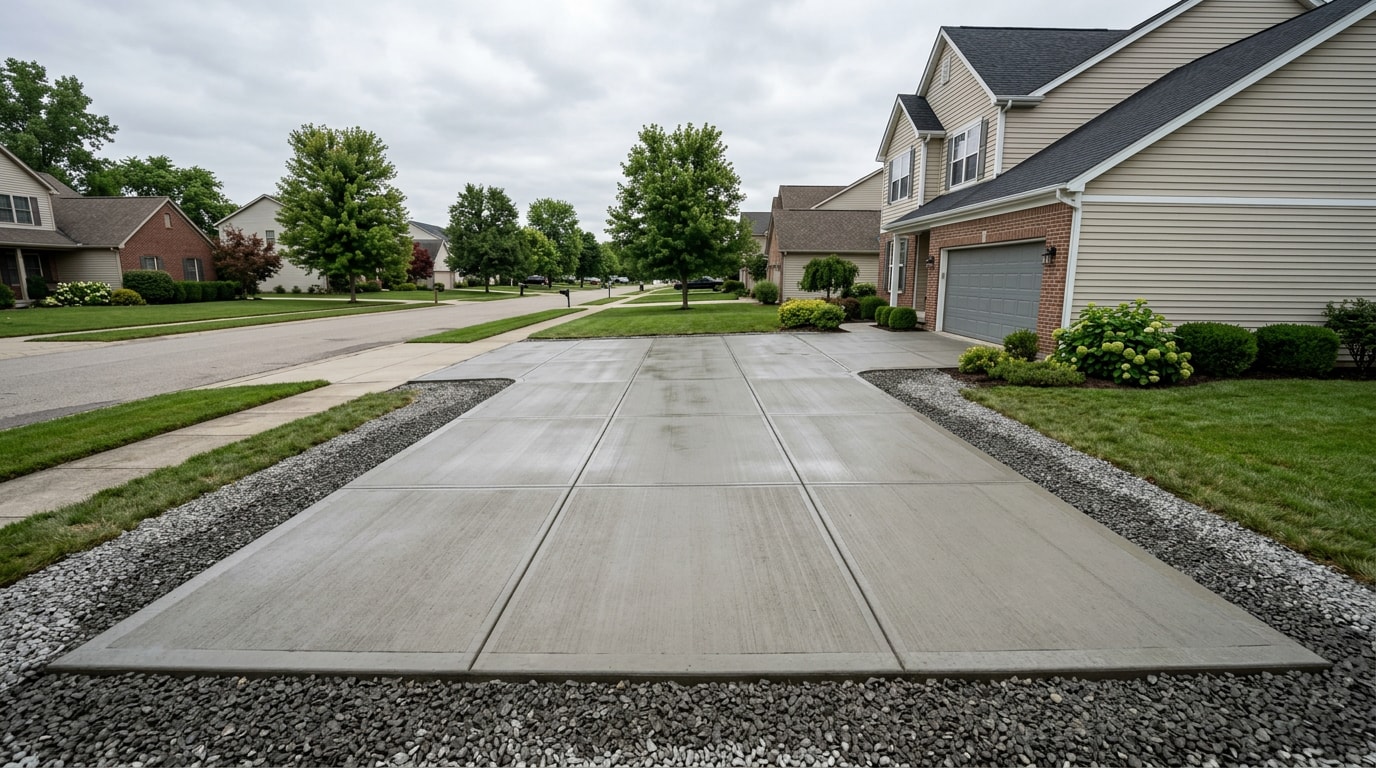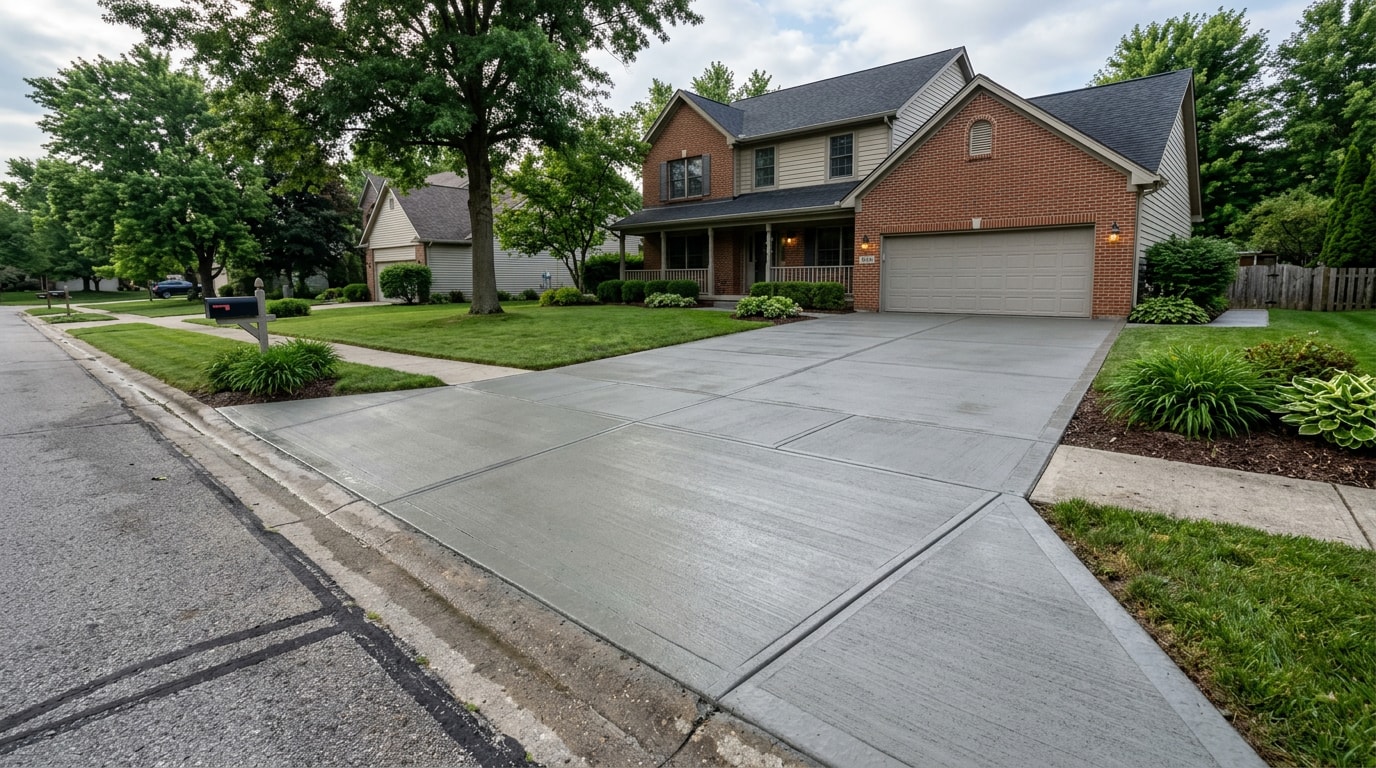
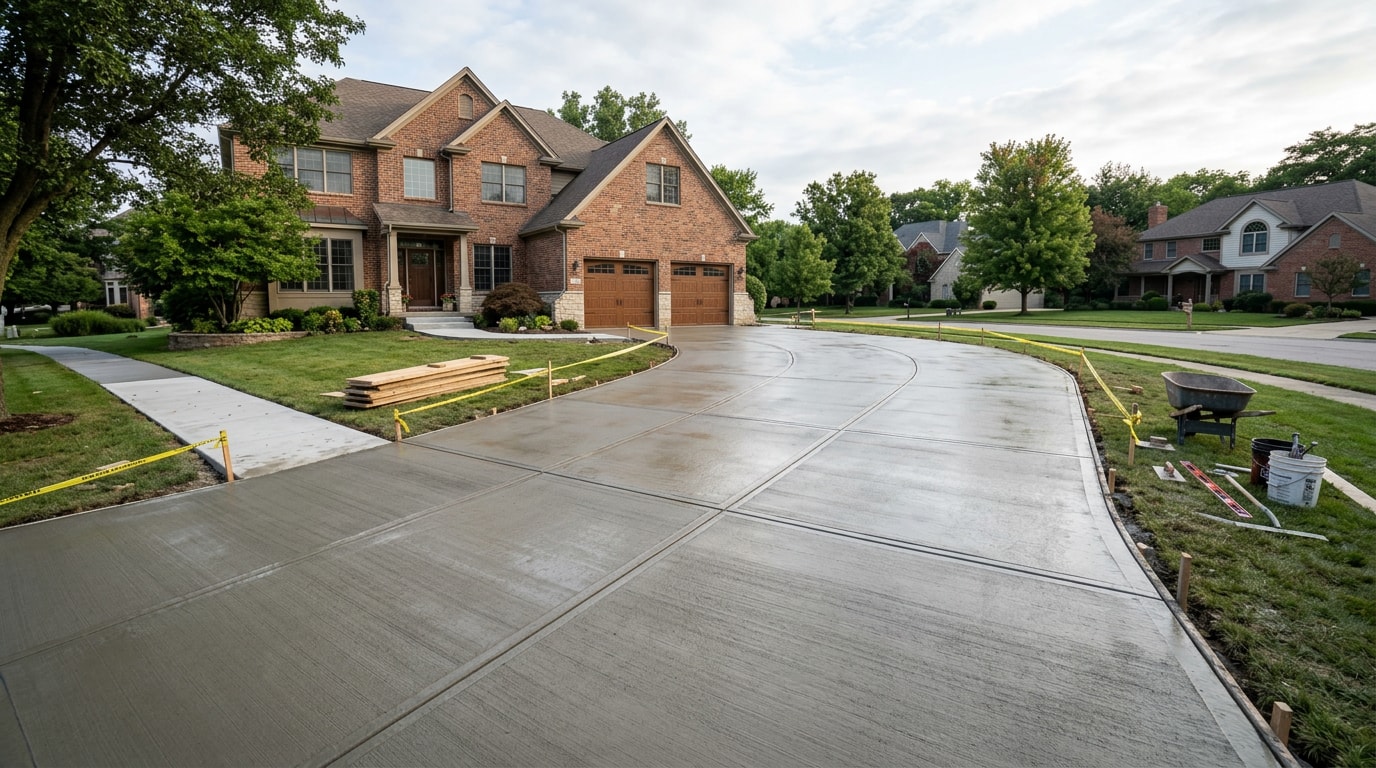
Concrete slabs in Fishers, IN have to survive something most of the country doesn't deal with: a hard freeze-thaw winter sitting on top of Hamilton County's expansive clay soil. That combination is why a patio or driveway that looks fine in June can spall or crack by the following March if it wasn't built, sealed, or repaired the right way. This guide covers what a slab actually costs here in 2026, what Fishers' permit office expects, and how to vet a contractor before you sign anything.
At Scott's Mobile Blasting, we see the aftermath of rushed slab work constantly: coatings peeling off floors that were never properly profiled, spalled driveways that got sealed over instead of repaired, and garage slabs that failed inspection because nobody checked the vapor barrier. That hands-on view of what goes wrong shapes everything below.
What Services Keep a Concrete Slab Working Long-Term?
A poured slab is just the starting point. Patios, garage floors, shed pads, and driveways all go through the same lifecycle: pouring, cleaning, sealing or coating prep, reinforcement, and eventual repair. Knowing each stage helps you ask sharper questions when you call a contractor.
Concrete Pouring
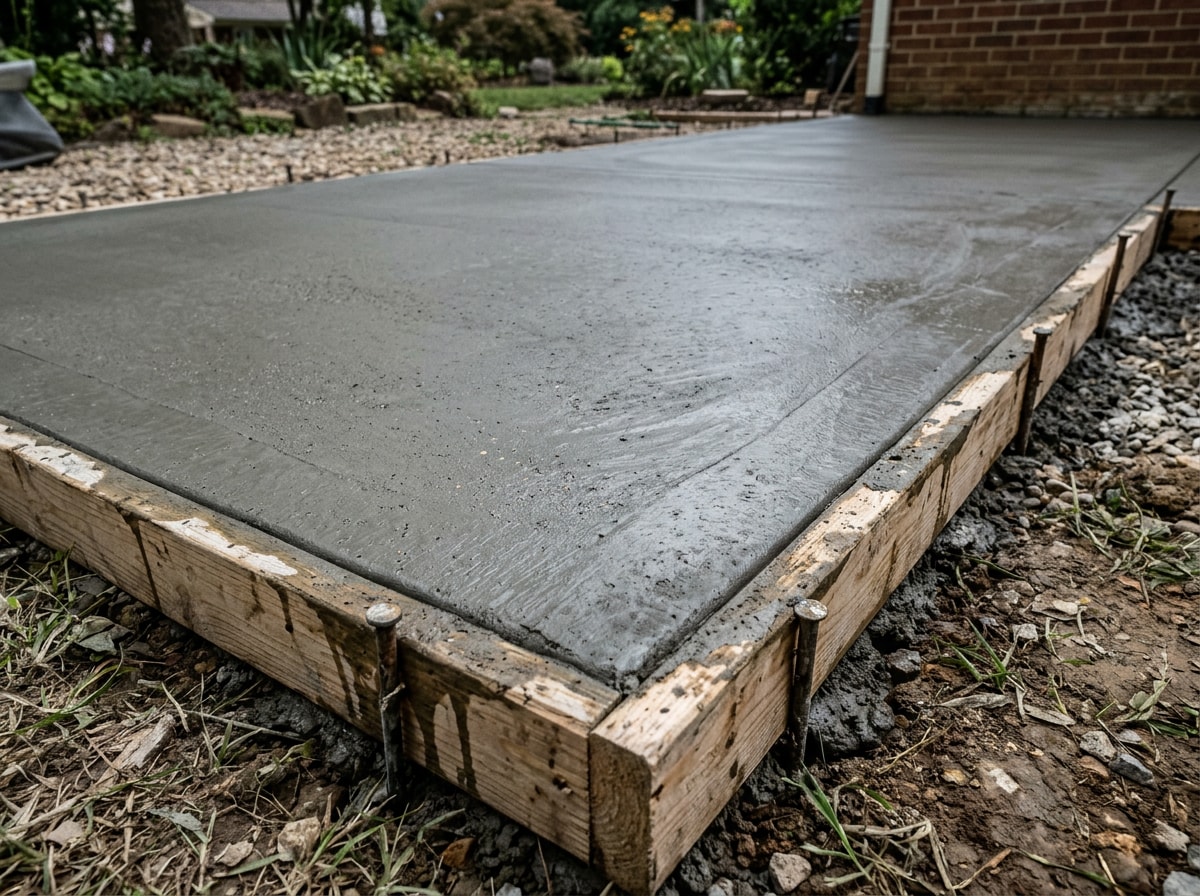
A standard pour happens in four stages: site preparation, forming, pouring, and finishing. A crew excavates and grades the area, builds forms to hold the mix, pours the concrete, then screeds and trowels the surface before it cures.
Site prep matters more here than in most regions. Hamilton County's clay soil shifts with moisture, so compaction before the pour is what prevents settling later. Under the 2024 International Residential Code, slab-on-ground floors must be not less than 3½ inches thick , and a minimum 10-mil vapor retarder has to be placed between the slab and the base course or prepared subgrade in most cases. Residential slab-on-ground work is built to IRC Section R506, which allows design and construction in accordance with the code's own provisions or ACI 332 , not the ACI 318 standard that governs larger structural concrete. That distinction trips up more quote comparisons than it should.
Concrete Cleaning and Coating Prep
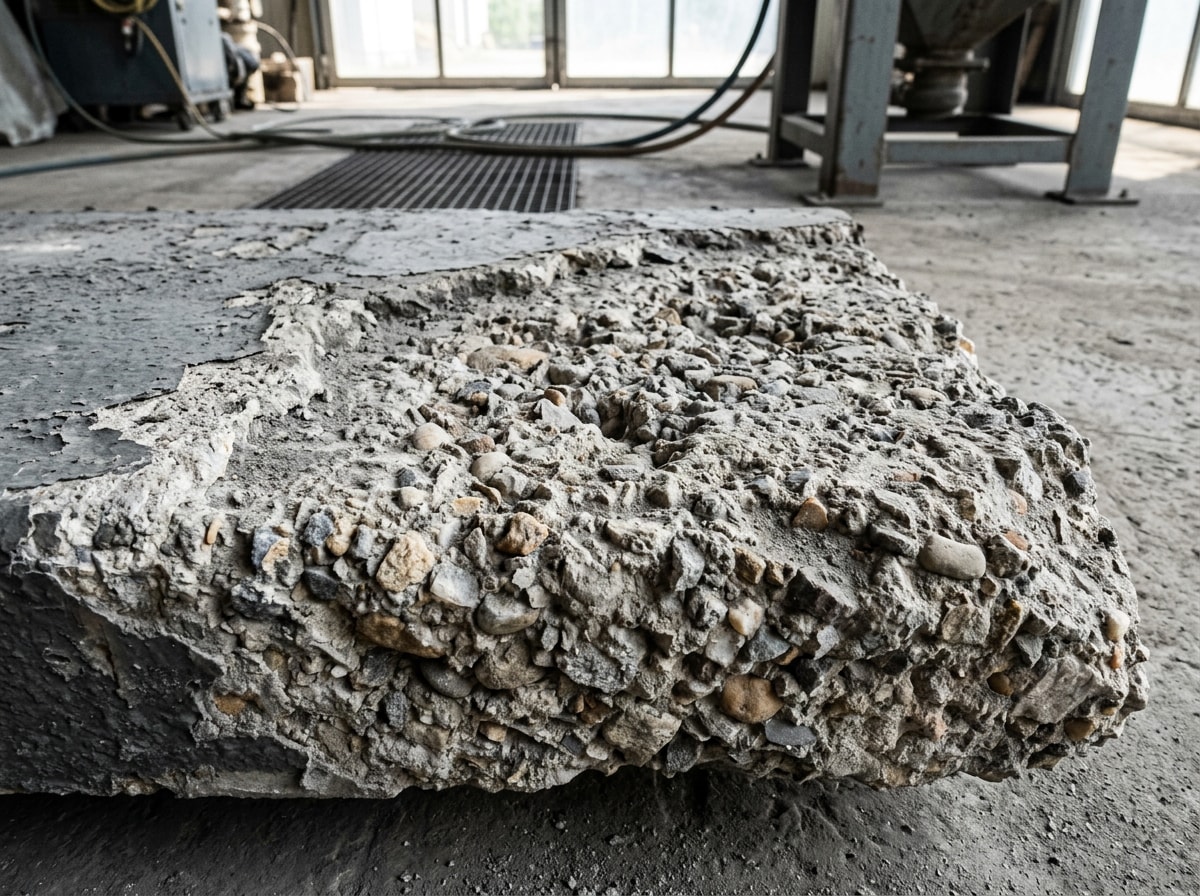
Routine cleaning keeps a driveway or patio from trapping moisture against the surface, which is exactly the kind of thing that accelerates freeze-thaw damage. Pressure washing removes surface dirt and mildew, but it does not remove old sealers, paint, or oil-soaked concrete that a new coating needs to bond to.
That's where abrasive blasting comes in. Mobile sandblasting strips failed coatings and contamination down to clean, profiled concrete without the mess of a full demolition. If your slab is headed for a new sealer, epoxy, or coating system, concrete sandblasting is usually a faster, cleaner prep step than grinding alone.
Concrete Sealing
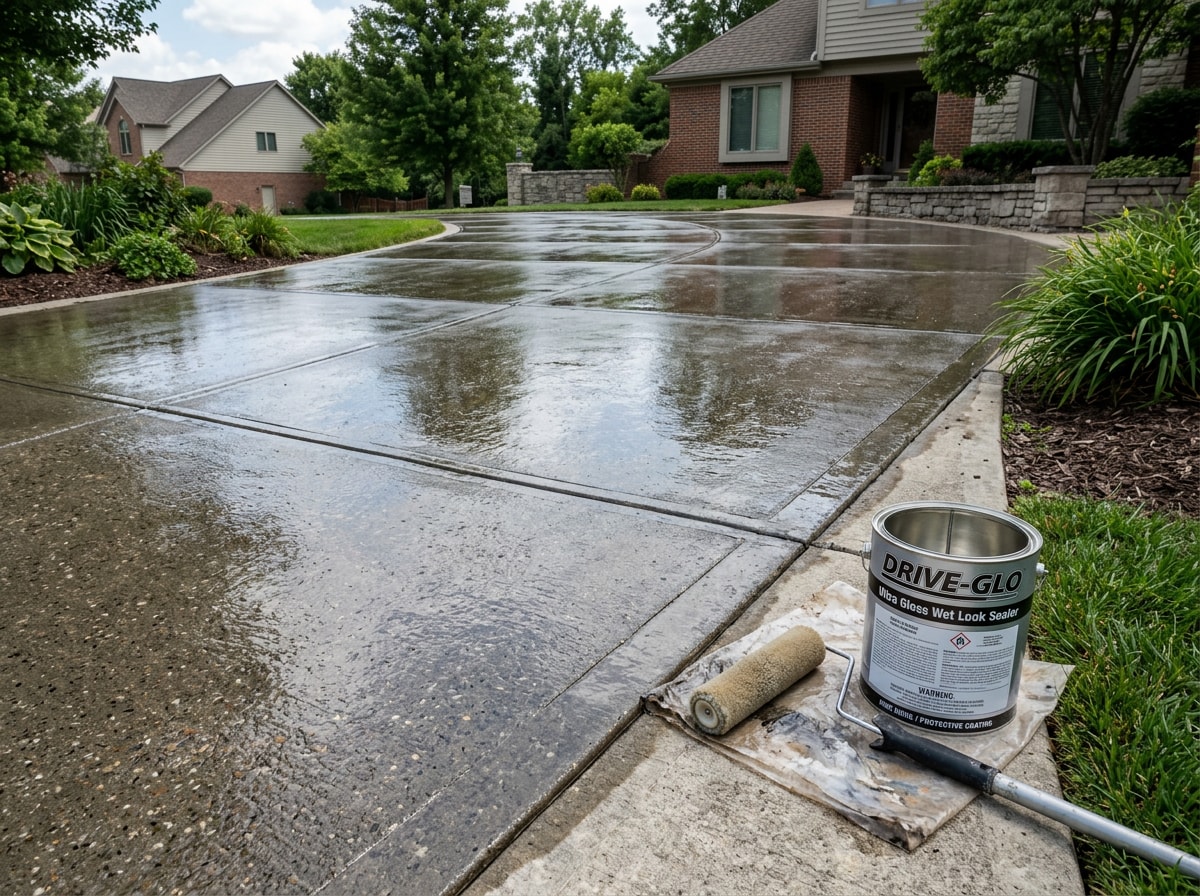
Sealing matters more in Indiana than in milder climates because of freeze-thaw cycling. Water that gets into unsealed concrete expands when it freezes, which causes the surface flaking known as spalling over time. A quality sealant blocks that moisture before it has a chance to freeze inside the slab.
Most sealed slabs need reapplication every two to five years, depending on sealant type and traffic. Proper surface preparation before sealing, removing laitance, old coatings, and surface contaminants, has more to do with how long a sealer lasts than the sealer brand does. For a deeper look at product types and application timing, see our guide on waterproof concrete sealers in Indianapolis.
Concrete Reinforcement
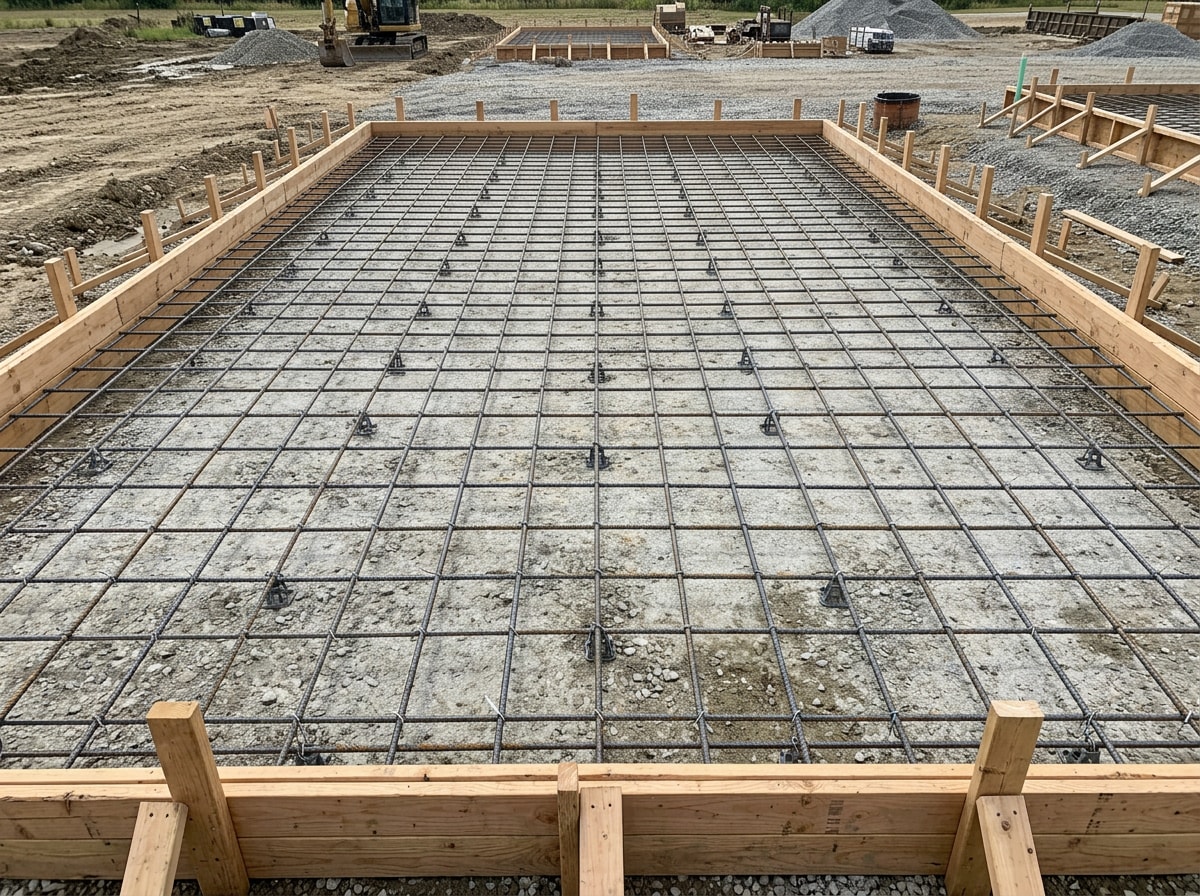
Reinforced slabs resist cracking far better than plain concrete, which matters where clay soil expands and contracts with seasonal moisture. Contractors typically choose between rebar, wire mesh, and fiber mesh depending on the slab's job.
A driveway or garage floor carrying vehicle weight usually calls for a rebar grid, often spaced 12 to 18 inches apart. A patio or walkway may only need wire mesh for crack control under foot traffic. Fiber mesh, blended directly into the mix, adds some crack resistance to thinner slabs like shed pads. On compressive strength, the IRC sets a minimum of 2,500 psi for basement and interior slabs, rising to 3,000 to 3,500 psi for garage floors and exterior slabs exposed to weathering , with air entrainment required in that higher range. Ask your contractor which psi and air-entrainment spec they're actually pouring to, not just "4000 PSI" as a marketing line.
Concrete Repair
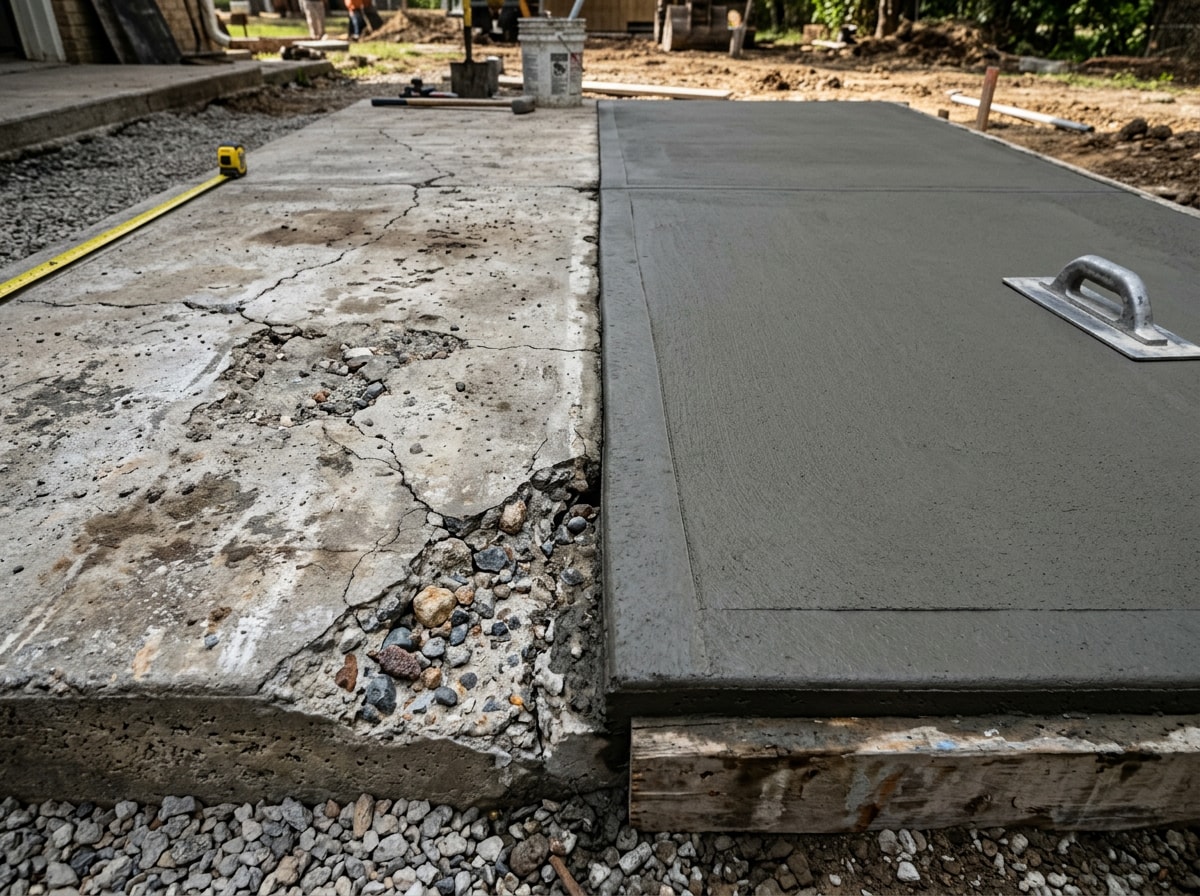
Cracked slabs, settling, spalling, and uneven concrete are the most common problems homeowners call about. Small surface cracks are often cosmetic, while wider structural cracks can point to a problem underneath, like poor original compaction.
Slab leveling, sometimes called mudjacking or slabjacking, raises sunken sections by injecting material underneath to fill the gap left by settled soil, and it's usually far cheaper than replacement. For spalled or scaled concrete, the deteriorated top layer often needs to be blasted or ground away before any patch material will actually bond, which is why repair and surface prep are usually a package deal rather than separate line items.
Permits, HOA Rules, and Hamilton County Requirements
This is the part most pricing guides skip, and it's the part that actually delays Fishers projects.
Indiana leaves frost depth up to local jurisdictions rather than setting one statewide number, and Indiana's footing depth requirement of roughly 30 inches below finished grade applies to prevent frost heave as moisture in the soil freezes and expands during cold winters . That 30-inch figure is why footed slabs for garages or additions in Fishers need real excavation depth, not a shallow dig that looks sufficient in the fall.
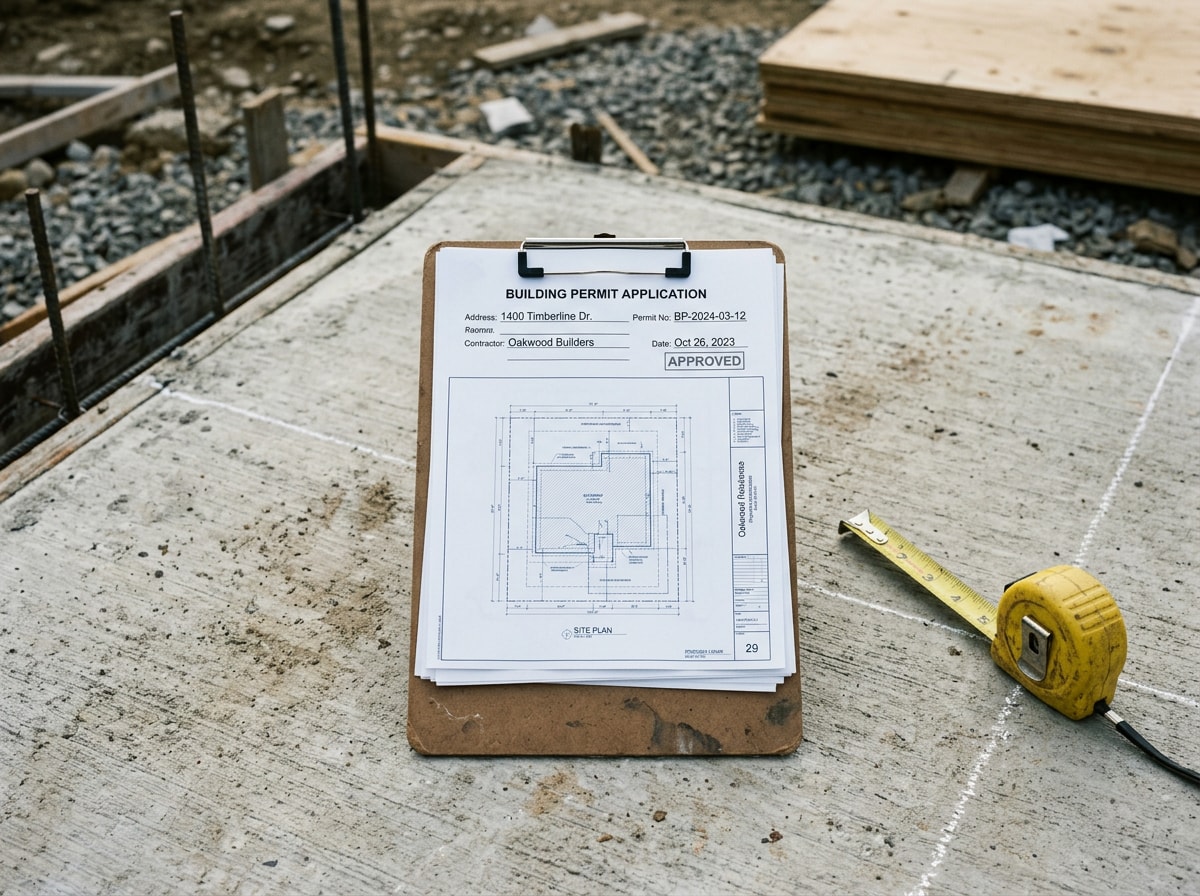
Permitting itself runs through the city, not the county. Fishers processes building permits and inspections through its online ViewPoint Cloud system, and the department also handles contractor registration and plan review . In general Indiana practice, a ground-level concrete patio built at grade with no roof or structural elements typically doesn't need a building permit in most cities, while pouring a slab that touches a right-of-way or supports a covered structure usually does . Fishers' own permit office is the only reliable source for your specific lot, especially if an HOA is also involved, so confirm before you schedule a pour.
Cost of Concrete Slabs in Fishers, IN
Slab cost depends on far more than the raw material price. Size, thickness, site access, reinforcement, and finish all shift the final number, which is why two patios of the same square footage can carry different price tags.
Ready-mix concrete generally runs $119 to $147 per cubic yard delivered, with installed pricing landing around $6 to $12 per square foot once labor, forming, and finishing are added. Indiana's freeze-thaw climate pushes most residential pours toward the higher end of that range because standard 3,000 PSI mix costs roughly $120 to $150 per cubic yard while the higher-strength, air-entrained mixes needed for exterior slabs run $140 to $200 . These are material benchmarks, not Fishers-specific quotes, actual pricing still depends on your supplier and delivery distance.
| Project Type | Typical Thickness | Estimated Installed Cost |
|---|---|---|
| Shed pad | 4 inches | $5-$8 per sq ft |
| Patio | 4 inches | $6-$9 per sq ft |
| Standard driveway | 4-5 inches | $7-$11 per sq ft |
| Heavy-duty driveway/garage floor | 5-6 inches, rebar reinforced | $9-$14 per sq ft |
| Crack/spall repair | N/A | $400-$1,500 per section |
These ranges are estimates, not quotes. Your actual price per square foot depends on site access, soil condition, and how much demolition or excavation the job needs.
A few factors drive most of the cost swing between jobs:
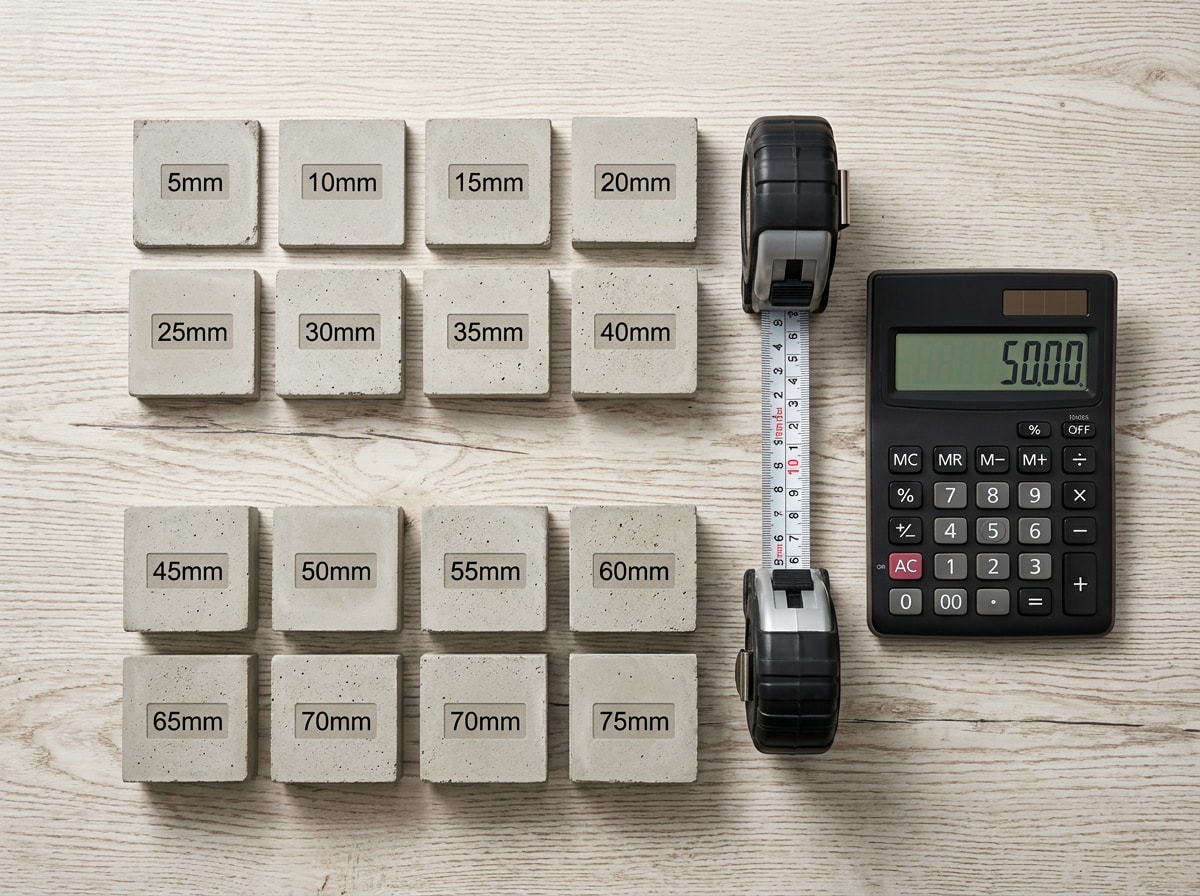
- Thickness. A 6-inch driveway slab uses roughly 50% more material than a 4-inch patio.
- Reinforcement. Rebar grids cost more upfront than wire mesh but reduce long-term crack risk.
- Site prep and excavation. Removing an old slab, regrading, or hauling debris adds labor hours before the pour even starts.
- Decorative finishes. Stamped, stained, or exposed-aggregate surfaces add material and labor cost over a plain broom finish.
Pricing also shifts seasonally in central Indiana, spring and early summer are the busiest months for local suppliers and crews, which affects both availability and price. For a project-specific number, request a free estimate based on your slab's size and site conditions.
How to Choose a Concrete Professional in Fishers
Price shouldn't be the only factor in choosing who works on your slab. A crew that cuts corners on reinforcement, curing time, or surface prep can leave you with a cracked slab or a peeling coating within a few years. Walk through these checks before signing anything.
Review Past Work, Not Just Photos
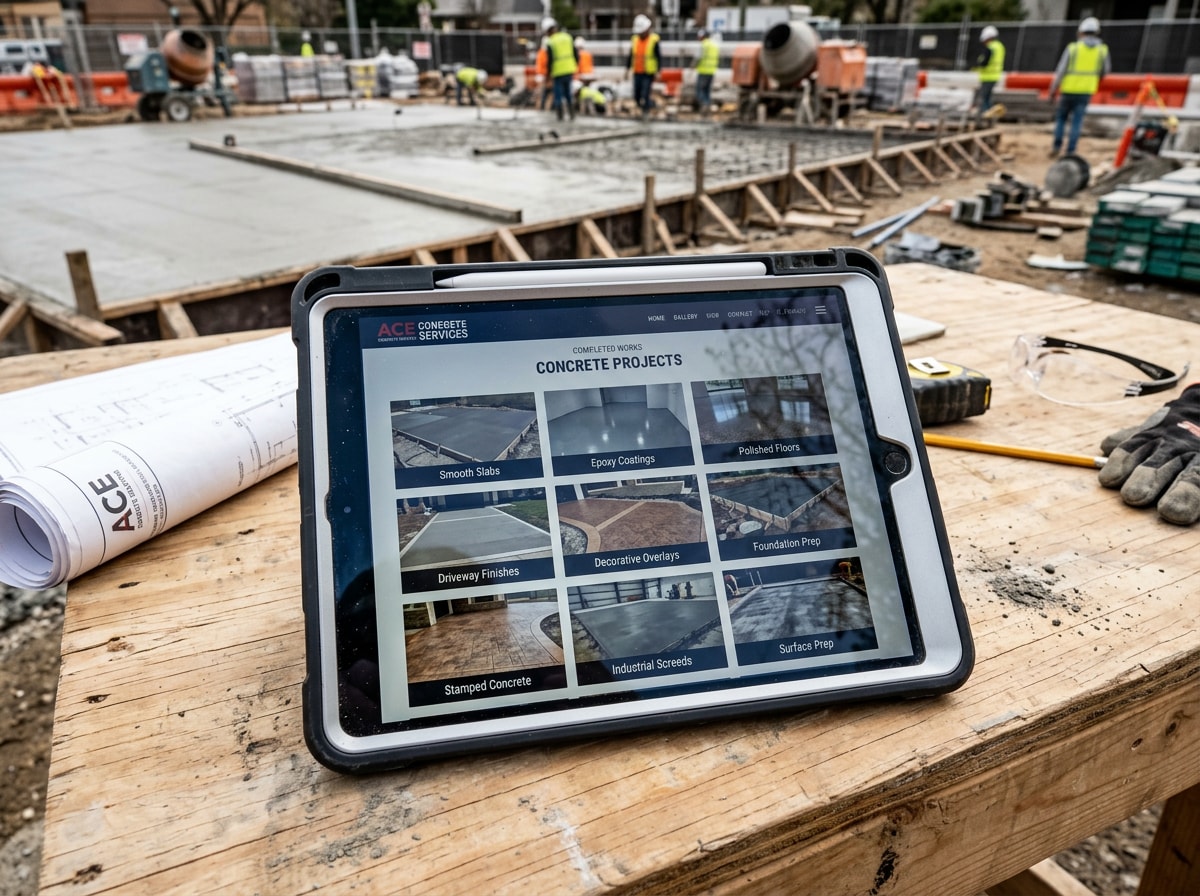
A contractor's portfolio should show more than a handful of flattering shots. Check joint spacing, how clean the edges are, and whether crack-control patterns look intentional rather than accidental. Consistent finish quality across multiple projects, not one hero photo, is the real signal. You can see examples of completed surface prep and blasting work on our projects page.
Confirm Local Registration and Insurance
Here's something most pricing guides get wrong: Indiana doesn't issue a statewide general contractor license. Indiana does not require a state-level license for general contractors; specific local jurisdictions may have their own licensing requirements instead . In practice, that means "licensed" in Fishers usually means registered with the city's building department, not holding a state-issued credential. Ask for proof of local registration and current liability coverage, and request copies rather than a verbal assurance. When you contact us for an estimate, we'll provide ours without hesitation.
Read Reviews for Patterns, Not Just Stars
Reviews reveal patterns photos can't. Look for mentions of how a crew handled timeline delays, whether cracks appeared in the first year, and how thoroughly the site was cleaned up afterward. A string of reviews praising communication is worth more than one five-star post with no detail.
Compare at Least Three Itemized Quotes
Getting estimates from three or more contractors exposes outliers on both ends. Make sure each quote breaks down labor and materials separately and covers the same scope, thickness, reinforcement type, and site prep, so you're comparing equivalent work.
Get the Warranty in Writing
A reasonable warranty should cover cracking and settling tied to workmanship, not just material defects. Ask what's specifically excluded, since minor hairline shrinkage cracks are common and usually aren't covered. Typical warranty length runs one to five years. Get the terms in writing before the pour, not after.
FAQ
What is a concrete slab with footings?
A slab with footings includes a deeper, reinforced base poured below the frost line, while a standard floating slab sits directly on compacted gravel near the surface. Footings anchor the structure against ground movement and are typically required for additions, garages, or structures attached to a home's foundation. In Hamilton County, footings generally need to reach roughly 30 inches below grade to clear Indiana's frost depth , though local code should confirm the exact number for your address.
Do I need a permit for a concrete slab in Fishers, IN?
It depends on the project. A ground-level patio with no roof or structural elements typically doesn't need a permit in most Indiana cities, while anything covered, structurally attached, or more than 30 inches above grade usually does . Driveway work that touches the public right-of-way is often a separate approval. Fishers processes permits and inspections through its online ViewPoint Cloud system , so confirm your specific scope there before scheduling a pour.
Does a concrete contractor need a license in Indiana?
Not at the state level. Indiana does not require a state-level general contractor license, and local jurisdictions set their own requirements instead . In Fishers, that typically means contractor registration with the city building department rather than a state-issued license, so ask for proof of local registration and insurance instead of assuming a "license number" exists.
What is the average cost of concrete per yard in Indiana?
Ready-mix concrete generally costs $119 to $147 per cubic yard delivered for material alone, with higher-strength, air-entrained mixes used for Indiana's exterior slabs often running $140 to $200 per cubic yard . This doesn't include labor, forming, or finishing, which push installed pricing to roughly $6 to $12 per square foot.
What building code standards apply to residential concrete slabs?
Residential slab-on-ground floors in Indiana follow IRC Section R506, which allows design and construction per the code's own provisions or ACI 332 rather than the ACI 318 standard used for larger structural concrete. That section sets a minimum slab thickness of 3½ inches and requires a vapor retarder under most slabs. Local building departments handle inspection and permitting on top of that baseline.
How long does it take concrete to set?
Concrete is usually safe to walk on in 24 to 48 hours, but full cure time takes about 28 days to reach its designed strength. Indiana's weather affects this timeline, cold temperatures slow curing, while hot, dry conditions can cause the surface to cure too fast and crack. Contractors often adjust the mix or curing method seasonally to account for these swings.
Are concrete and cement the same thing?
No. Cement is a powdered ingredient, made mostly from limestone and clay, that acts as the binder in a concrete mix. Concrete itself combines cement with water, sand, and gravel or crushed stone to form the hardened material used in slabs, driveways, and foundations.
If your slab needs cleaning, coating removal, or surface prep before a new sealer or coating goes down, visit Scott's Mobile Blasting to see our Fishers-area service options, or get a free estimate for your specific project.