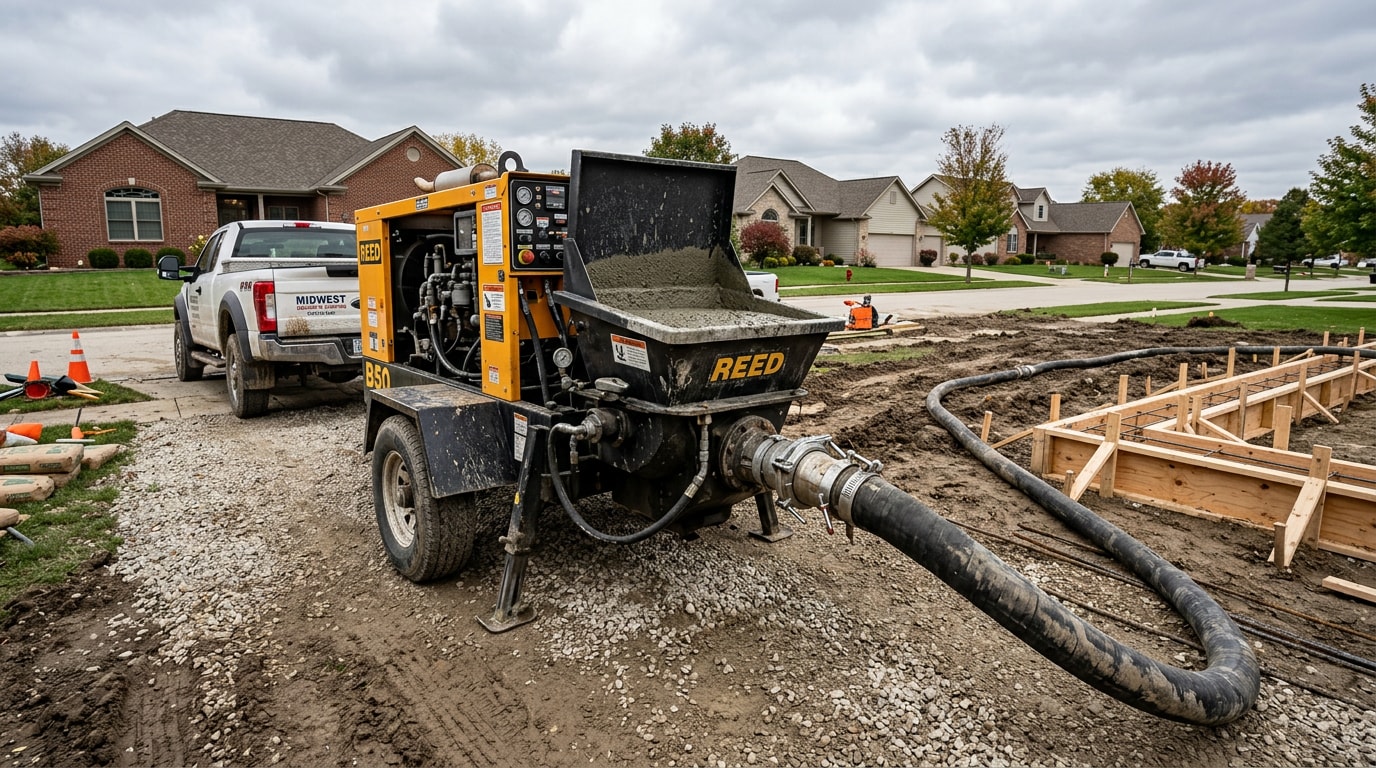
A concrete line pump in Fishers, IN moves ready-mix through flexible ground hose instead of an overhead boom arm, which is why it's the default pick for fenced backyards, pool decks, and narrow side-yard pours across Hamilton County. Pick the wrong pump and you pay for idle truck time, a blocked hose, or a crew standing around with wheelbarrows. Here's how a line pump actually works, what it takes to size the job correctly, and when a boom pump still wins.
Line Pump vs. Boom Pump: What's the Difference?
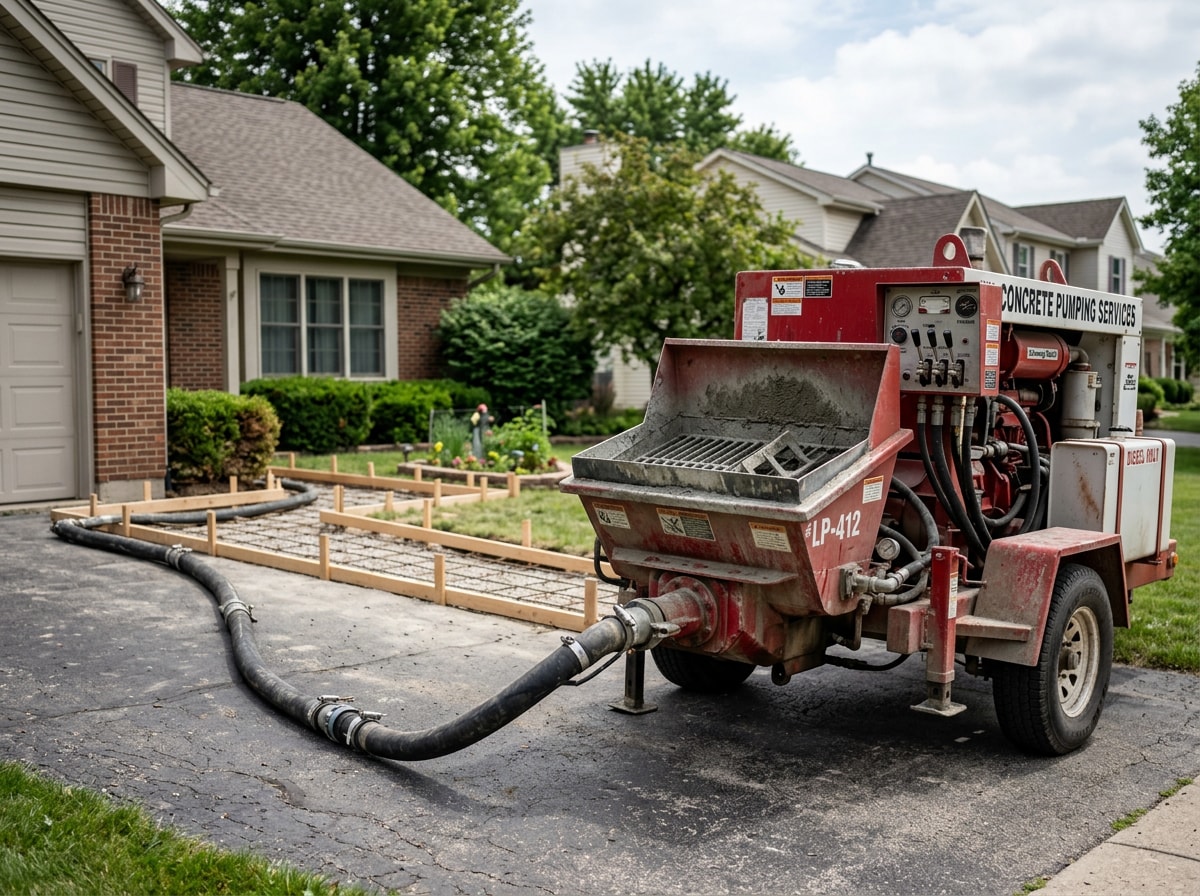
A line pump, also called a ground pump or trailer pump, is a type of concrete pump that uses hoses, commonly referred to as a "line pump," mounted on a truck or placed on a trailer . Your crew manually attaches and repositions the hose sections as the pour moves. A boom pump instead uses a hydraulic articulating arm to swing concrete overhead, and boom pumps are capable of pumping at very high volumes and are less labor intensive to operate when compared to line or other types of concrete pumps .
The trade-off is access. Hose pumps are used for smaller volume concrete placing applications such as swimming pools, sidewalks, single family home concrete slabs and most ground slabs, and their hoses allow for easier delivery to harder to reach backyards . A 50-ton boom truck simply can't set up in a lot of Fishers subdivisions, including tighter infill lots near Geist Reservoir and newer sections of Saxony, where setbacks leave little room for outriggers.
| Factor | Line Pump | Boom Pump |
|---|---|---|
| Setup space | Fits tight lots, side yards, fenced areas | Needs open area for outriggers |
| Reach direction | Primarily horizontal via hose | Vertical and horizontal via steel arm |
| Crew needs | Hose must be moved by hand | Boom repositions itself, fewer hands on hose |
| Best job size | Residential slabs, patios, footers | Large commercial pours, multi-story work |
| Typical use case | Driveways, pool decks, basement slabs | Foundations needing height or long reach |
Why Crews Choose a Line Pump Over Wheelbarrows
Hand-placing concrete is slow and physically brutal on a crew. A line pump delivers a steady stream exactly where it's needed, which means fewer laborers standing around a wheelbarrow route and a faster finish on everything from a driveway pour to a backyard slab.
The safety case matters too. Back disorders are one of the leading causes of disability for people in their working years and afflict over 600,000 employees each year , and manual materials handling is the principal source of compensable injuries in the American work force, with four out of five of these injuries affecting the lower back , according to OSHA's technical manual. Swapping wheelbarrows for a pump hose shifts that physical load from your crew's backs to equipment.
Line Pump Specs: Hose Size and Output
Line pump fleets vary by provider, but hose diameter and pump output are the two numbers that actually determine whether a unit fits your job.
- Hose diameter: Residential line pumps commonly run 3 to 5-inch outlets. A DY Concrete Pumps CTY-100 trailer unit, for example,
has a 5-inch outlet , which is typical for mid-size residential and light commercial work.
- Output:
That same CTY-100 model delivers a rod side output of 103 cubic yards per hour, while the piston side output is 70 cubic yards per hour , giving a sense of what a well-maintained trailer pump can push on a good day.
- Smaller trailer units: Compact hydraulic line pumps built for tighter residential work, like the EZG Hog Pump,
deliver up to 18 cubic yards per hour with a 2-inch line , confirming that output scales a lot with hose size, not just engine horsepower.
Ask any provider for their actual spec sheet before booking. A unit rated for 18 cubic yards per hour on a 2-inch line isn't going to keep up with a 60-yard commercial pad, no matter how good the operator is.
What Is a Line Pump Best For?
A line pump is best suited for tight-access pours, smaller-volume jobs, and backyard or interior work where a boom truck won't fit or isn't worth the setup cost. Think fenced pool areas, narrow side yards, or lots with limited street frontage, all common in Fishers, IN neighborhoods built out over the last two decades.
Here's how the job breaks down by project type:
Residential Concrete Pumping
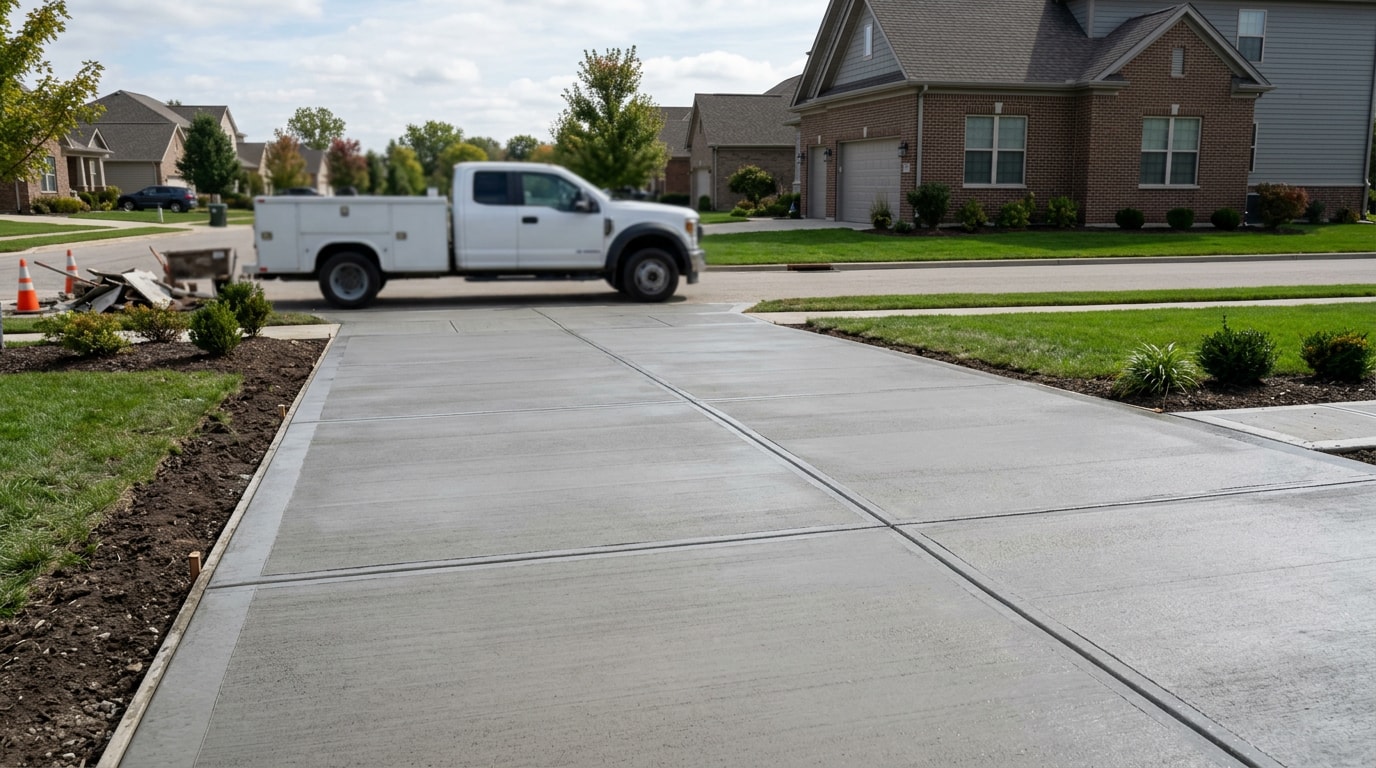
Residential work covers basement slabs, footers, slab-on-grade, pool decks, patios, sidewalks, and the standard driveway pour. A line pump handles each efficiently because most residential lots don't have clearance for a boom truck's outriggers. For a deeper look at sizing, permits, and contractor selection on a slab project, see our guide on concrete slabs in Fishers, IN.
Commercial Concrete Pumping
Commercial jobs bring larger footprints, tighter schedules, and stricter workability requirements to keep a continuous pour consistent. Line pumps work well when a retail pad, warehouse addition, or parking-structure footing has limited crane or boom access. Crew coordination matters more here, since the pump operator has to sync pacing with the finishing crew to avoid cold joints.
Agricultural Concrete Pumping
Farm projects bring long travel distances between the mixer truck and the pour site, plus uneven ground around barns and outbuildings. Because a line pump can run long hose sections from one staging point, a crew can often complete equipment-building or grain-facility footings across a wide farm footprint without repositioning the truck.
How Far Can You Line Pump Concrete?
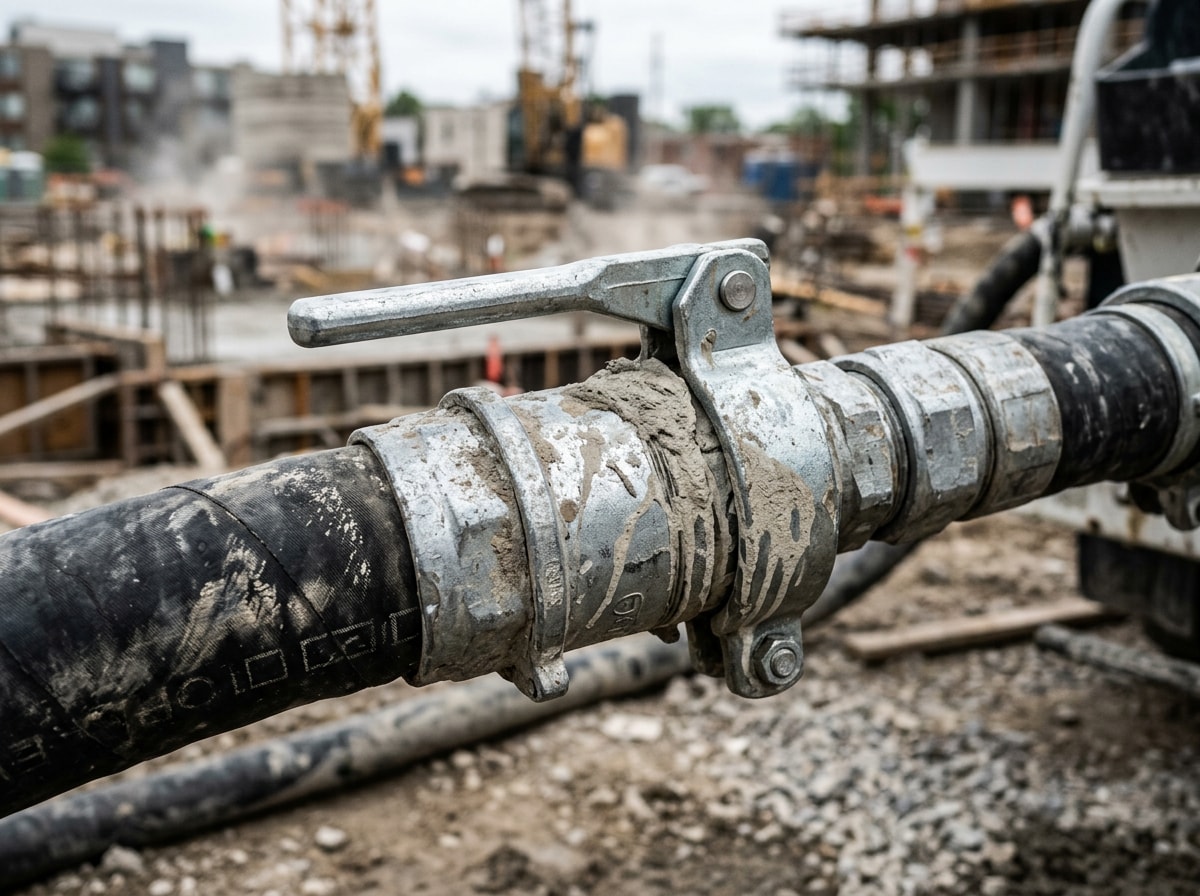
Reach depends entirely on hose diameter, mix design, and how many bends are in the line. One trailer-mounted unit, the EZG Hog Pump, is rated for a pumping distance of 800 feet horizontally and 200 feet vertically , which shows how far a well-matched line and pump combination can realistically travel on a single setup. Most residential jobs need nowhere near that, but it matters on larger farm or commercial sites where the truck has to stage far from the pour.
Bends cost you pressure fast. A sweep 90-degree bend with a one-meter radius creates as much pressure loss as nine feet of straight pipe, while a short 90-degree bend creates the same pressure as three and a half feet of pipe , according to the American Concrete Pumping Association's operator study guide. A crew that routes hose with fewer, wider bends keeps output higher and reduces the odds of a blockage.
Once a pour needs real height, not just horizontal distance, a boom pump becomes the practical choice. The American Concrete Pumping Association also publishes safety guidance specific to hose handling that's worth reviewing before any large pour, line or boom.
What Kind of Concrete Mix Does a Line Pump Need?
Line pumps generally need a slump in the 4 to 6-inch range to flow through smaller-diameter hose without segregating or clogging. Too stiff a mix causes blockages; too wet a mix risks segregation and a weaker finished surface.
Air content matters too, and it's an easy detail to overlook. It's best to avoid vertical or steep downward boom sections and to be cautious with high slump and particularly with high cementitious content mixtures , per the National Ready Mixed Concrete Association's guidance on pumped concrete. The goal is to keep a continuous, flowing stream of concrete inside the pump boom or line from the first bucket to the last. A good provider coordinates directly with your ready-mix supplier to confirm the batch meets pumpability requirements before the truck ever leaves the plant, and for slabs poured in cooler months, our concrete curing guide for Carmel, IN covers how temperature swings affect set time once the pour is done.
(Note: for curing timelines specifically, see our dedicated Carmel curing guide linked in Related Reading below.)
How to Choose a Line Pump Contractor in Fishers, IN
Equipment matters, but who's running it matters more. Before you book, ask for:
- Proof of ACPA-certified operators. Certified operators have completed safety and technical training specific to pumping equipment, which isn't the same as general construction experience.
- Current insurance and licensing. A pump failure or hose incident on your property can create liability exposure if the crew isn't properly covered.
- A written spec match. Confirm hose diameter, rated output, and reach against your actual pour volume and site access, not just a verbal estimate.
- References from similar jobs. A contractor who regularly pumps tight residential lots will size the job differently than one used to open commercial sites.
If your project also needs the slab, driveway, or patio surface prepped, cleaned, or coated before or after the pour, that's where concrete surface preparation comes in, and it's worth scheduling in the same planning conversation as your pump booking.
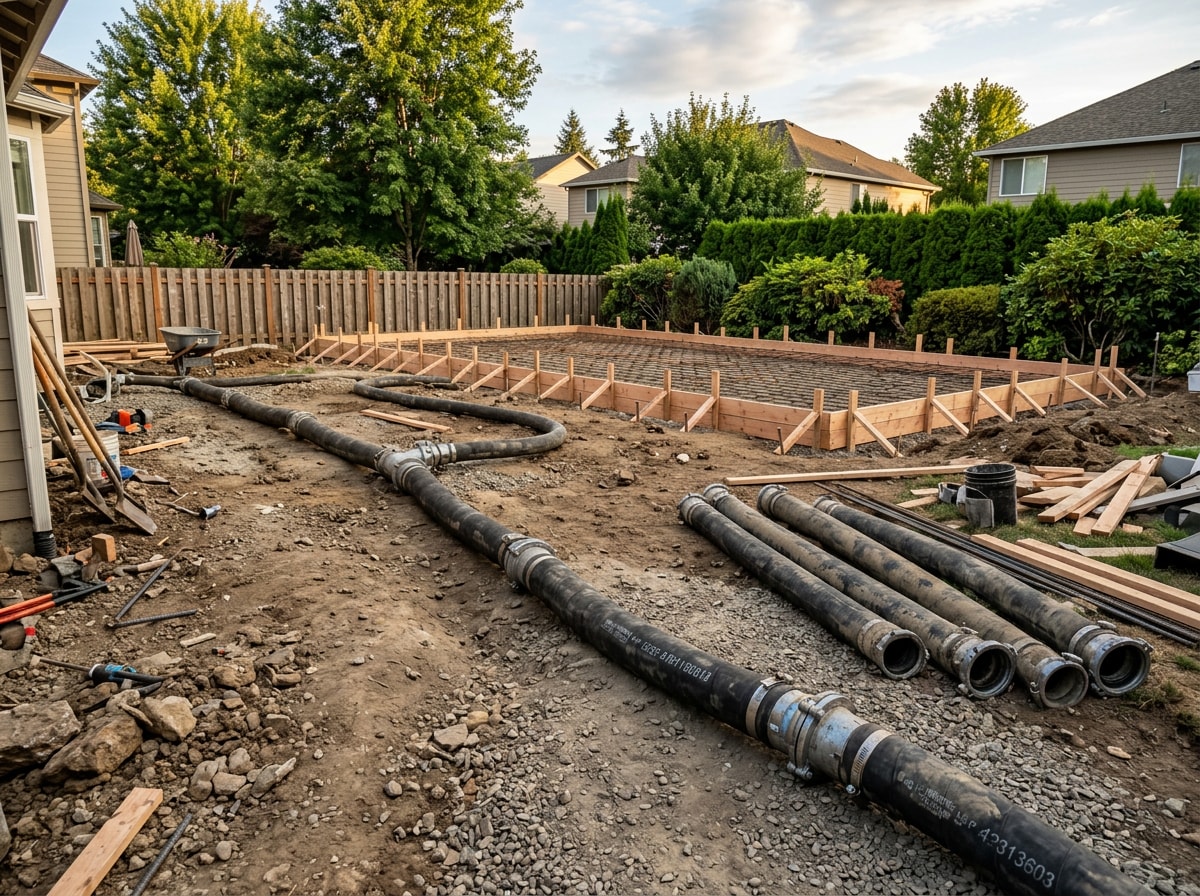
Browse our project gallery to see finished concrete and surface prep work around the Indianapolis area, or visit our homepage for the full service lineup. Ready to plan your pour or line up surface prep around it? Get a free estimate and we'll help you figure out what the job actually needs.
FAQ
What's the real difference between a line pump and a boom pump?
A line pump moves concrete through hand-positioned hose along the ground. A boom pump moves it through a hydraulic arm that swings overhead. Line pumps fit tight lots; boom pumps move more volume with less labor on bigger, more open sites.
What is a line dragon?
A line dragon is a remote-controlled concrete placing and pulling system that lets one operator guide the hose end across a pour area without extra crew physically dragging it. It speeds up finishing on larger flatwork pours where precise, hands-free placement matters.
How much does a concrete line pump cost in Fishers, IN?
Pricing depends on pour volume, hose length needed, site access, and whether there's a minimum-yardage charge. Rather than guess, request a written estimate that spells out the base charge, per-yard rate, and any travel or setup fees before the truck is booked.
What is the maximum height a concrete pump can reach?
Boom pumps reach much higher than line pumps. Putzmeister's 70Z-Meter model has a vertical reach of 227 feet 4 inches on its largest truck-mounted boom. A line pump isn't built for height at all; it's strictly a horizontal, ground-level tool, which is why the boom-versus-line decision usually comes down to site layout, not just budget.
Do I need a permit for a concrete pour in Fishers, IN?
Most new slabs, driveways, and additions in Fishers require a building permit through the local building department, and requirements vary by project type and size. Our concrete slabs in Fishers, IN guide covers permit specifics and contractor selection in more detail.
Who is the biggest concrete pumping company in the United States?
The industry includes several large national operators with extensive fleets across multiple states. That scale works well for massive infrastructure projects, but for a Fishers driveway, patio, or farm slab, a local provider who knows the area's soil, access points, and permitting process is usually the better fit for your timeline and budget.