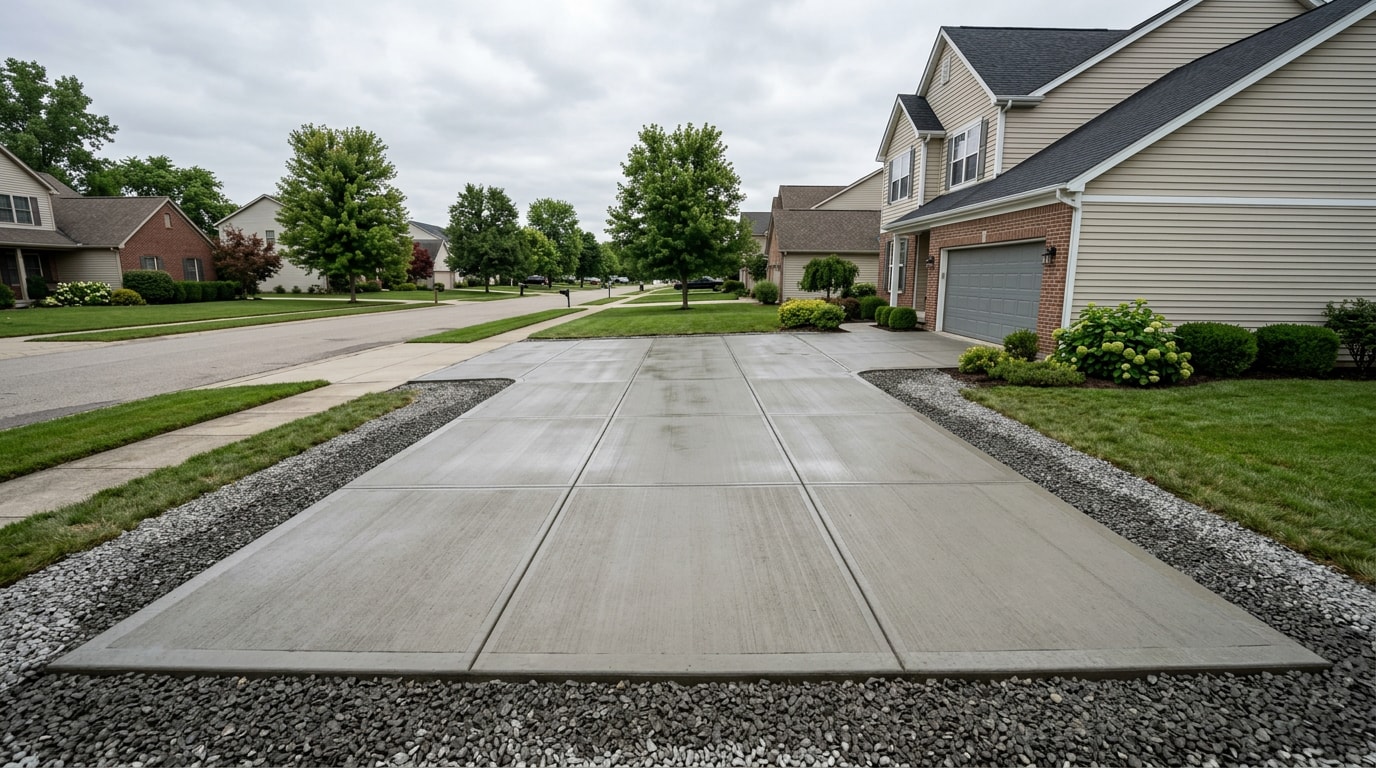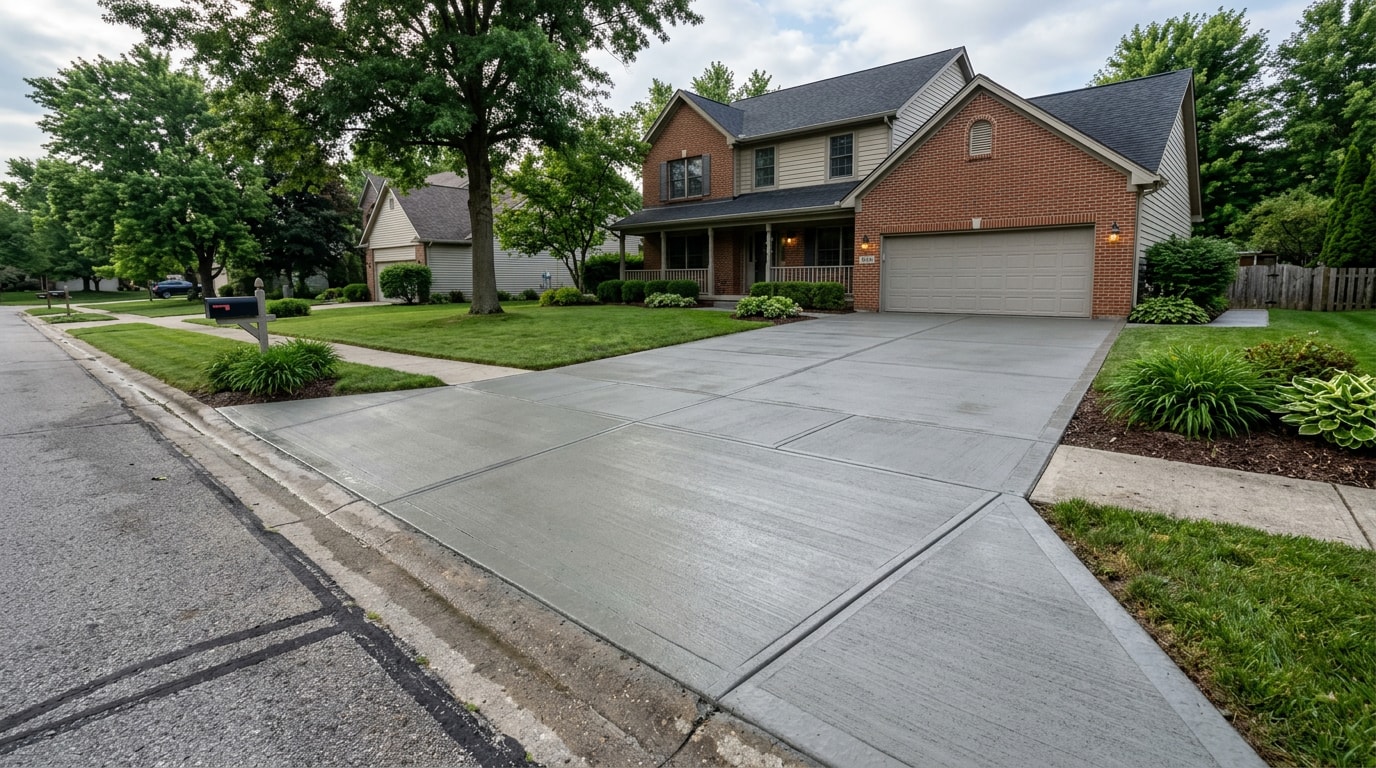
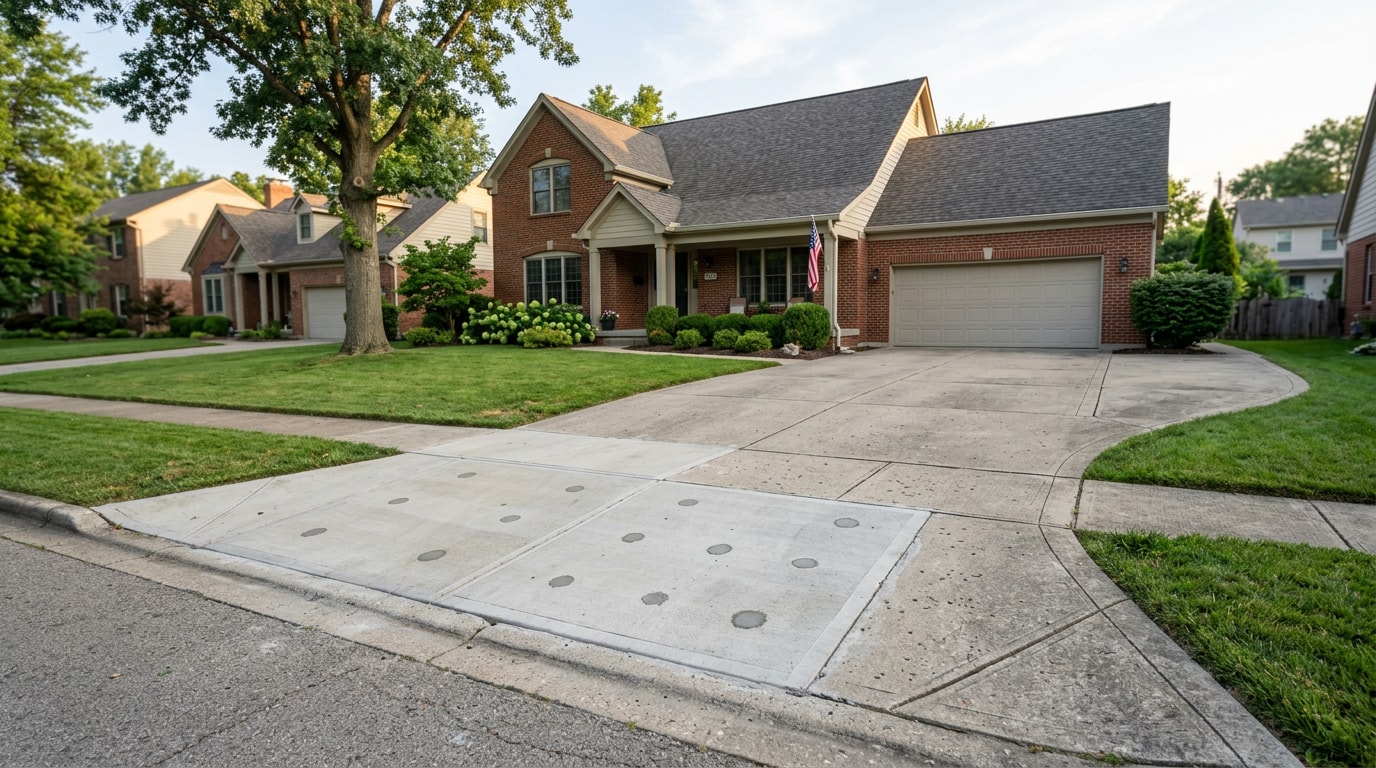
Concrete lifting in Indianapolis, IN raises a sunken driveway, patio, or sidewalk back to level without the mess or expense of a full tear-out. Indianapolis's freeze-thaw winters and clay-heavy soil make settled slabs one of the most common concrete repairs in the metro. Here's how the two main methods actually compare on cost, cure time, and how long the fix holds up.
Why Concrete Settles in Indianapolis, IN
Most sunken slabs trace back to the same cause: soil moving underneath the concrete. Indianapolis sits on heavy clay that swells when wet and shrinks when it dries, and that cycle repeats every year across our Indianapolis, IN service area.
Shrinking and swelling soils can damage homes, roads, utilities, and septic systems, and Americans spend more than $2 billion a year repairing damage from expansive soils. Add Indiana's winter freeze-thaw cycle on top of that movement, and a slab that was level in October can have a visible dip by March.
A dipped section near a garage apron or front step is usually the first sign that soil has eroded or compacted unevenly below the concrete. Left alone, that gap tends to widen rather than close on its own.
Signs You Need Concrete Lifting
Sunken concrete usually announces itself before it becomes a real hazard. Watch for:
- Uneven slab joints where one panel sits noticeably higher than its neighbor
- A driveway apron pulling away from the garage
- Water pooling in the same spot after every rain
- Cracks that keep spreading instead of staying the same size
- A porch or patio slab that rocks slightly underfoot
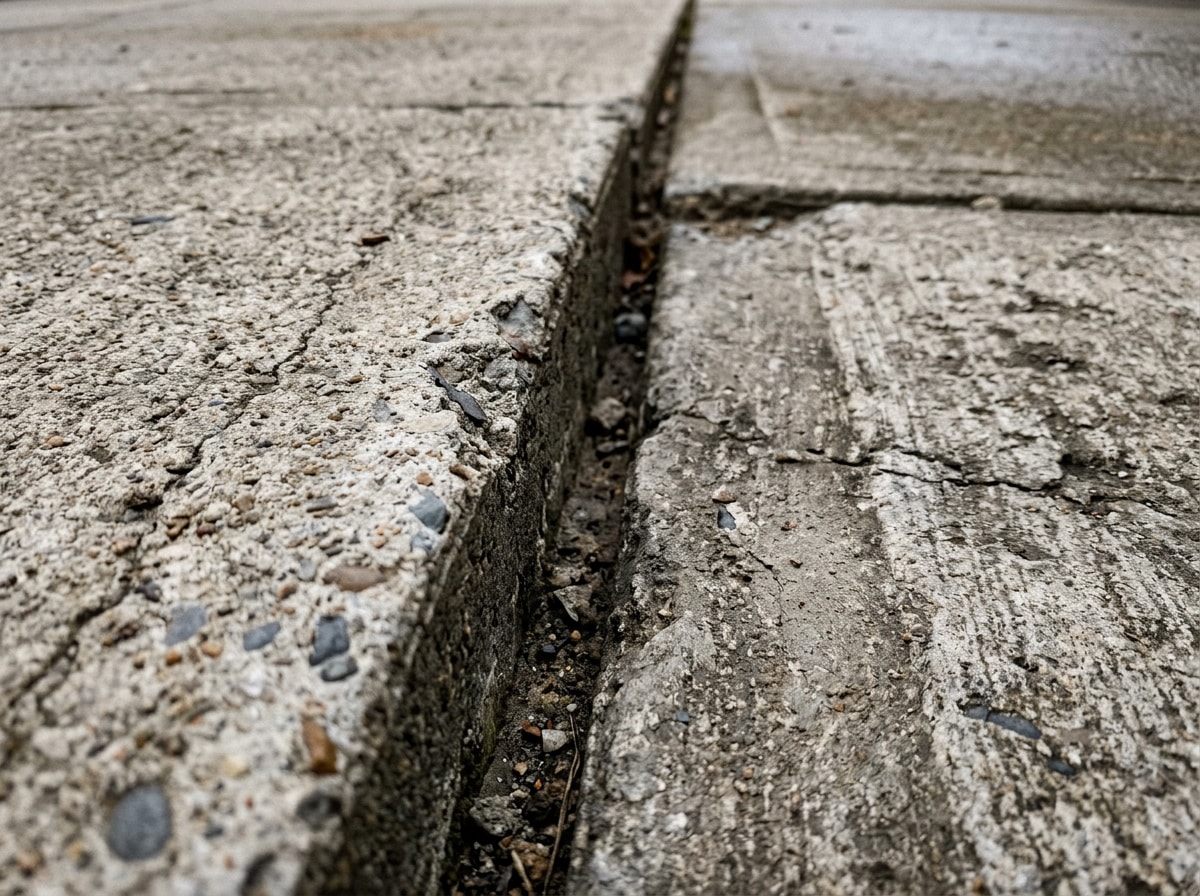
To gauge severity before calling a contractor, slide a quarter into any gap between slabs. If it fits with room to spare, or a ruler shows more than an inch of height difference between panels, the settling has progressed enough to warrant professional lifting.
This isn't just cosmetic. Uneven walking surfaces are a well-documented fall risk, and more than one out of four older people falls each year , according to CDC fall-prevention data. A trip-hazard driveway or walkway adds real risk for kids, guests, and aging parents, not just an eyesore.
Mudjacking vs. Polyurethane Foam: How Concrete Lifting Works
Nearly every Indianapolis contractor uses one of two methods. ACI Concrete Terminology defines slabjacking as the process of either raising concrete pavement slabs or filling voids under them, or both, by injecting a material under pressure. This is the industry's own technical definition, laid out in the American Concrete Institute's slabjacking field guide, and it covers both of the methods below.
Mudjacking drills a pattern of holes (roughly 1 to 2 inches across) into the slab and pumps a cement, sand, and soil slurry underneath. The slurry fills voids and raises the concrete back toward grade.
Polyurethane foam injection uses smaller, dime-sized holes and a lightweight, high-density foam that expands within minutes to lift and stabilize the slab from below.
Both methods typically finish in hours, not days. For a single sidewalk, porch, or driveway section, most residential jobs go from quote to lifted slab the same day.
| Factor | Mudjacking | Polyurethane Foam |
|---|---|---|
| Material | Cement, sand, and soil slurry | High-density expanding polyurethane |
| Hole size | 1–2 inches | 5/8 inch or smaller |
| Cure time | 24–48 hours before heavy use | 15 minutes to a few hours |
| Upfront cost | Lower per square foot | Higher per square foot |
| Typical lifespan |
5 to 10 years on average
| Longer-term, but varies by soil and drainage | ||
|---|---|---|
| Best for | Budget-conscious repairs, stable soil | Long-term fix, wet or unstable soil |
What Does Concrete Lifting Cost in Indianapolis, IN?
Concrete lifting costs $4–9 per square foot for mudjacking and $8–25 per square foot for polyurethane foam lifting, installed, based on HomeGuide's 2026 price tables. On top of that, most lifting contractors also set a job minimum of about $300 to $700 , so even a single sunken sidewalk square costs at least that much.
Here's how that breaks down by project size:
| Project | Typical Size | Mudjacking | Polyurethane Foam |
|---|---|---|---|
| Steps or stoop | 40 sq ft |
$300–500
|
$320–1,000
| Sidewalk | 100 sq ft |
$400–900
|
$800–2,500
| Patio or porch | 150 sq ft |
$600–1,400
|
$1,200–3,800
|
For a bigger job, like a sunken 10x20 ft driveway section, expect about $800–1,800 to mudjack or $1,600–5,000 to foam-lift, against $1,500–3,400 to tear out and replace . That last number matters: lifting is almost always cheaper than replacement, but on a badly deteriorated slab, replacement sometimes wins once you add up repeated lifting visits.
The exact price depends on slab size, how far it's settled, site access, and the contractor's own site visit. Request a free estimate to get exact pricing for your project.
Which Method Lasts Longer?
Polyurethane foam is hydrophobic, so it resists Indiana's wet weather without absorbing water or breaking down the way a cement-based slurry can over time. It's also lighter, which means it adds less stress to a porch, walkway, or patio base than a heavier mud mix.
Mudjacking's cement slurry is more prone to washing out in poorly drained soil, which is part of why mudjacking results last 5 to 10 years on average rather than longer. Neither method fixes a drainage problem on its own. If water keeps collecting against a foundation or slab edge, regrading or adding a drain usually needs to happen alongside the lift. We've seen the same pattern show up in driveway settling elsewhere in the metro, including in our Concrete Driveway Repair in Carmel, IN guide.
What Happens After the Slab Is Lifted
Lifting solves the height problem, but it doesn't clean or restore the surface itself. Years of settling usually leave behind stained, pitted, or flaking concrete around the lifted area. Before sealing or resurfacing a leveled slab, the surface typically needs a proper clean to pull out embedded grime, old sealer, and efflorescence so new coatings actually bond.
That's where our crews at Scott's Mobile Blasting come in on a lot of post-lift projects: a thorough concrete surface preparation pass or light concrete sandblasting pass gets a newly leveled driveway or patio ready for sealant, paint, or an epoxy coating. Skipping this step is a common reason a freshly lifted slab still looks patchy months later. See our projects for examples of before-and-after surface work on concrete around Indianapolis.
FAQ
What Types of Concrete Slabs Can Be Leveled?
Nearly any residential slab qualifies, including driveways, sidewalks, patios, garage floors, pool decks, and porch steps. If the slab is structurally sound but has settled or sunk, it's typically a good candidate for lifting rather than full replacement.
How Long Does Concrete Lifting Last?
Results vary by soil, drainage, and the method used. Mudjacking results last 5 to 10 years on average , and often needs attention sooner where drainage is poor. Polyurethane tends to hold up longer since it resists water and won't add weight to weak soil, but neither method is a permanent fix if the underlying drainage issue goes unaddressed.
Is Mudjacking a Permanent Fix for Sunken Concrete?
No. Mudjacking lifts the slab effectively and typically lasts 5 to 10 years , but it doesn't correct the soil erosion that caused the settling in the first place. Improving drainage around the slab extends results regardless of which method you choose.
How Long Does Concrete Lifting Take?
Most residential jobs finish in a few hours to a single day. Polyurethane foam cures within minutes to a few hours, so the surface can usually handle foot traffic the same day. Mudjacking needs roughly 24 to 48 hours before it can safely support vehicle weight.
Does Homeowners Insurance Cover Concrete Lifting?
Usually not. Standard homeowners policies typically treat gradual soil settling as routine maintenance, not a covered peril. Coverage sometimes applies if the damage stems from a specific covered event, like a burst pipe eroding the soil, so check your policy or ask your agent before assuming it's out of pocket.
Ready to stop stepping over a sunken slab? Get a free estimate and we'll help you figure out whether lifting, resurfacing, or a bit of both gets your concrete looking right again.