Concrete fence posts in Fishers, IN have to go deeper than most new homeowners expect, because Hamilton County's clay soil grips frozen water and heaves anything set above the frost line. Get the depth wrong and a six-foot privacy fence can visibly lean within a year or two. This guide covers real footing depths, permit notes, cost ranges, and what to do when older concrete posts turn stained or chalky instead of tearing them out.
How Deep Should Concrete Fence Posts Be in Fishers, IN?
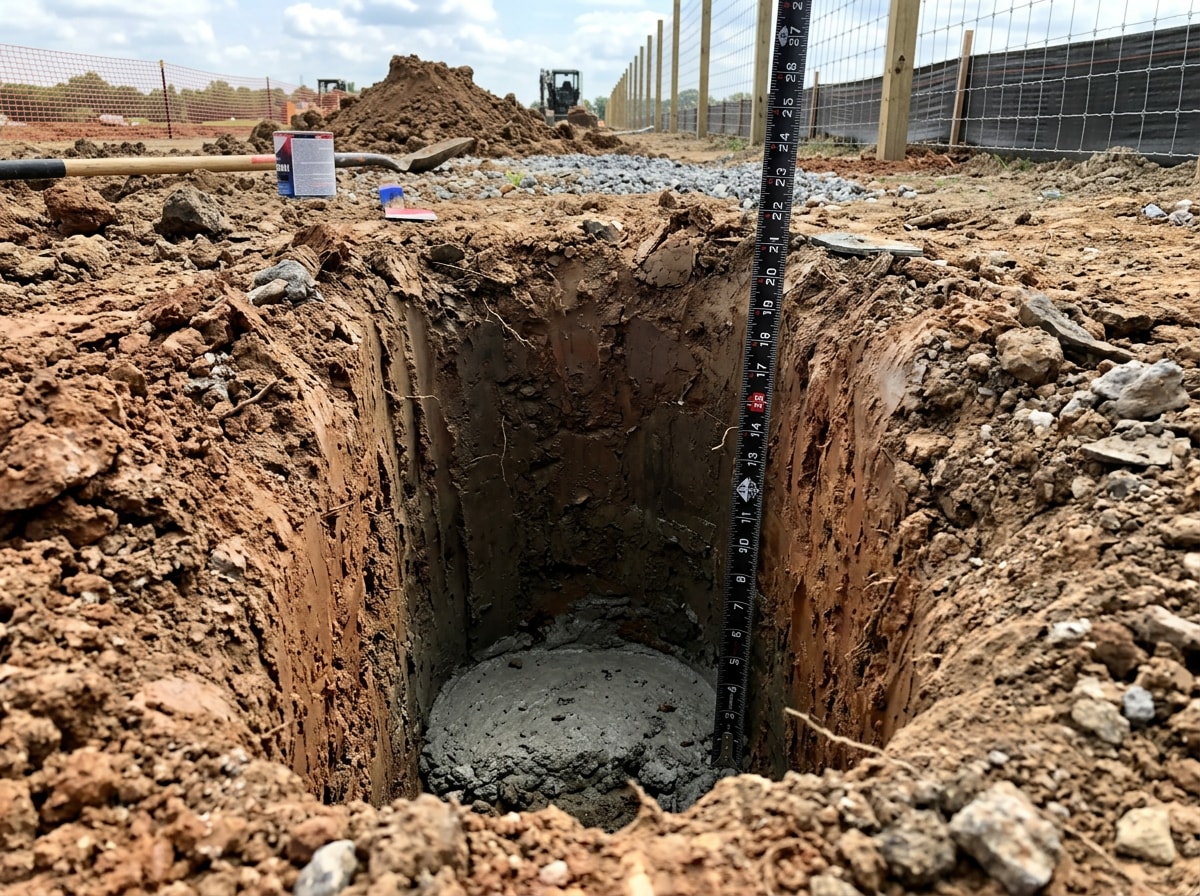
Indiana sets minimum footing depth by county, not statewide. Under Table R301.2(1) of the Indiana Residential Code, Hamilton County's minimum structural foundation depth is 30 inches, the same row used for custom home foundations in the area.
That number is written for load-bearing foundations, not fences. A fence post doesn't carry a roof or floor, so many jurisdictions don't technically force fence footings to hit the full frost-protection depth the way a house footing must. In practice, that distinction matters less than it sounds.
Hamilton County's clay soil holds moisture and forms ice lenses, rigid layers of ice that physically lift whatever sits above them. A post set at 18 or 24 inches in clay can still heave over a few winters, permit or no permit. That's why most local installers set posts well past the 30-inch code minimum, commonly in the 36- to 42-inch range, as a practical buffer against repeat freeze-thaw cycles.
Depth isn't the only variable. A few things move the number up or down:
- Fence height — taller panels catch more wind load and need more buried post.
- Soil type — clay needs more depth than sandy or well-drained loam.
- Gate and corner posts — these take more lateral stress and often go deeper than line posts.
- Drainage — a gravel base under the footing helps water (and ice) move away from the post instead of pooling against it.
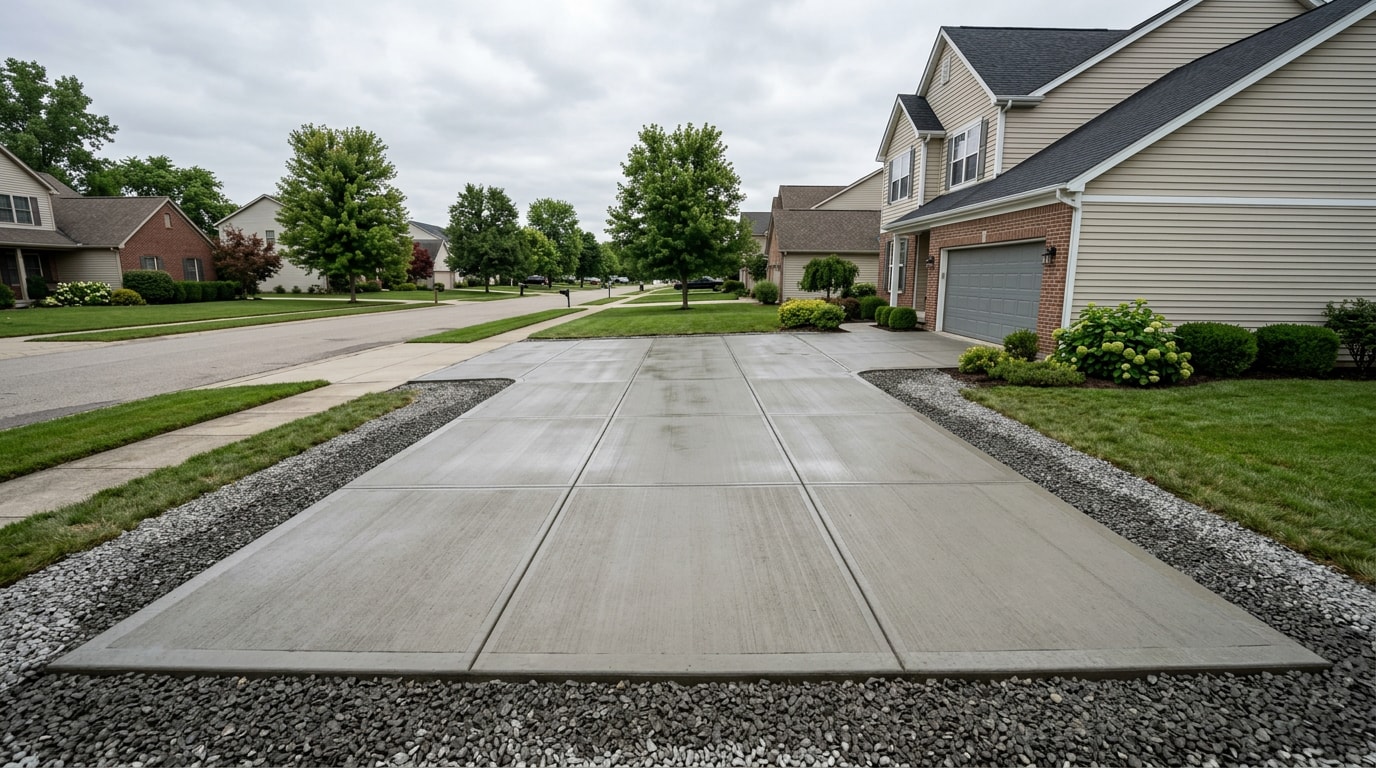
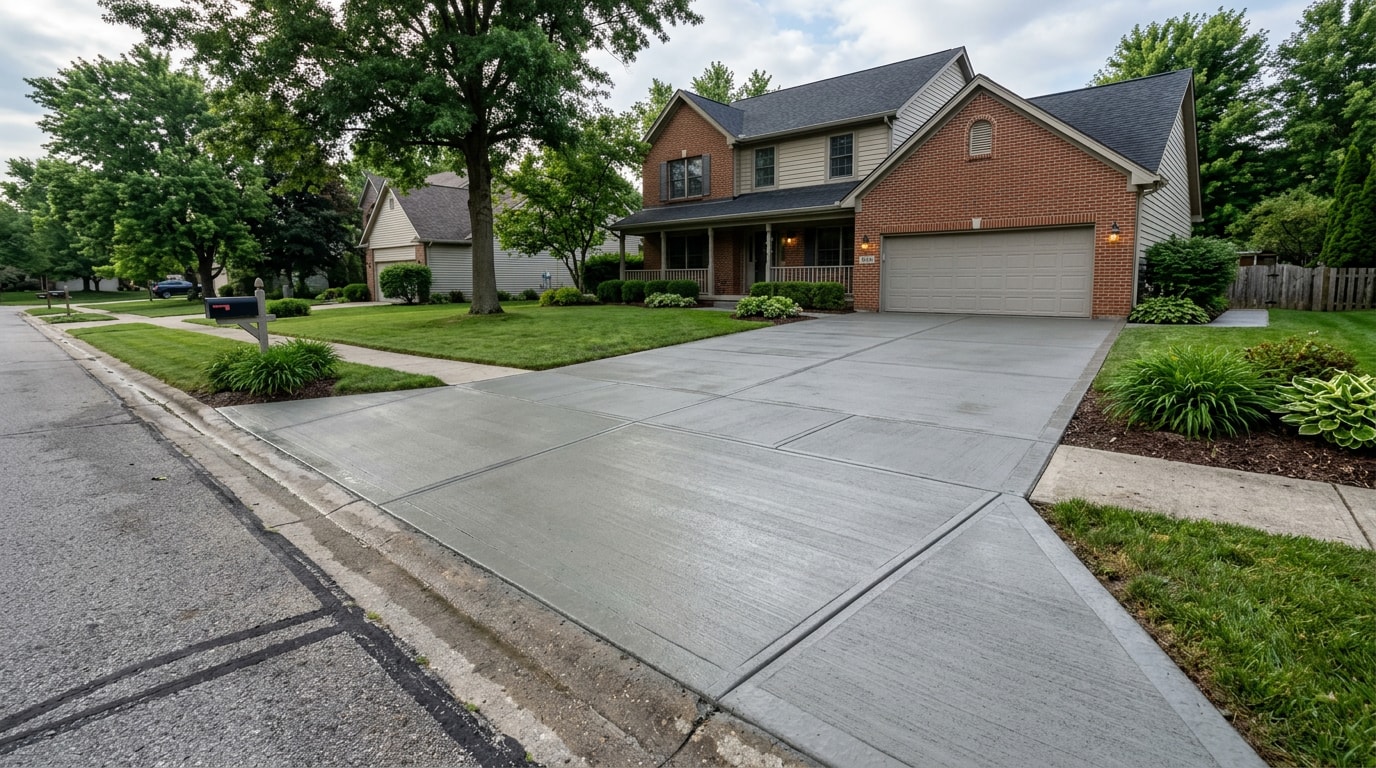
Freeze-thaw cycling doesn't only threaten fence posts. The same mechanism cracks and lifts driveways and patios across Hamilton County; our spalling concrete guide for Westfield, IN walks through how that damage shows up and what it costs to fix.
What Are Concrete Fence Posts?
"Concrete fence posts" gets used two different ways, and the confusion trips up a lot of first-time buyers.
Some are precast concrete posts manufactured as a single solid unit, cast at a plant and delivered ready to set. Others are standard wood or metal posts anchored by a poured concrete footing around the buried portion. Both get called "concrete fence posts" in casual conversation.
Precast concrete comes in slotted posts for sliding in panels, morticed posts for rail-and-picket designs, and lighter hollow-core versions meant to cut shipping and handling weight. Most residential installs in Fishers use the second approach instead: a treated wood or metal post set in a concrete footing. It costs less upfront and is far easier to repair if one post cracks or shifts than swapping a full precast unit.
Permits and HOA Rules for Fences in Fishers, IN
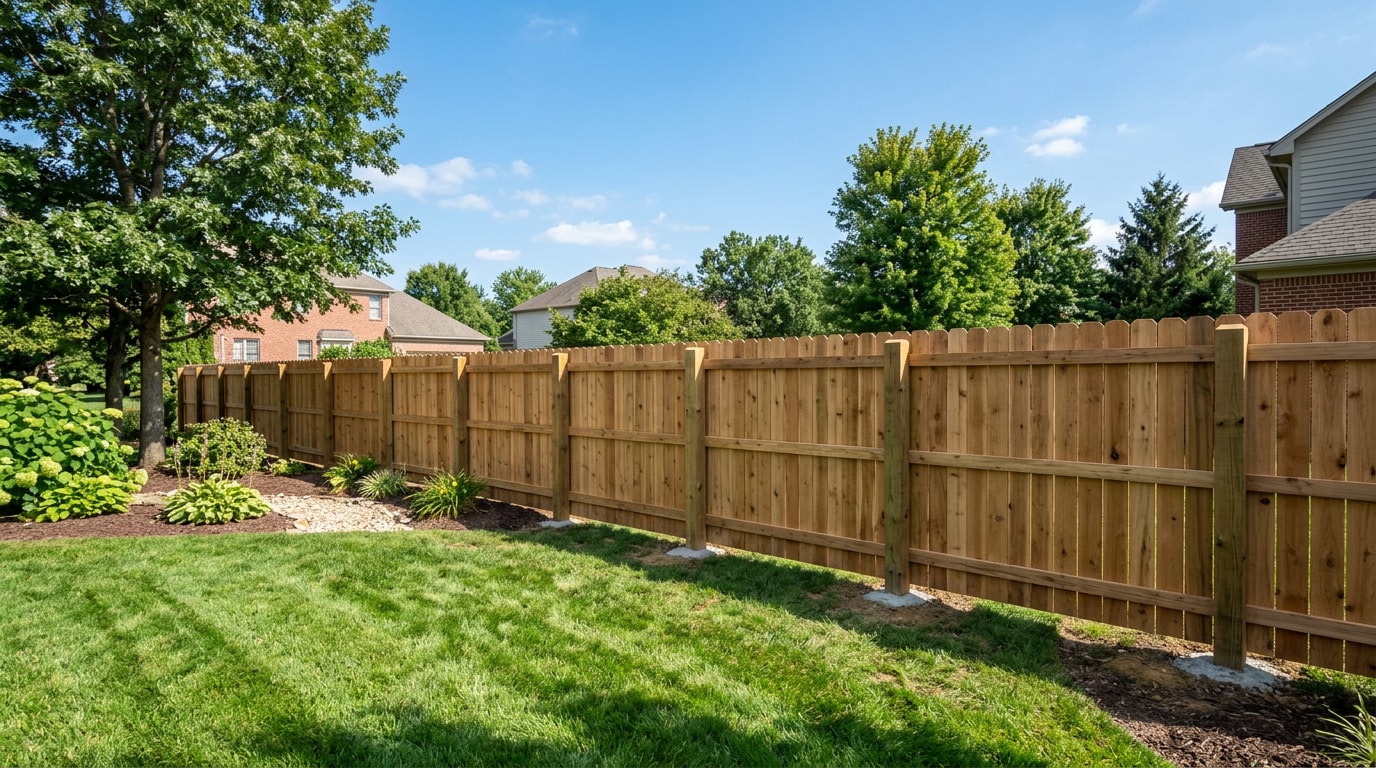
Fishers regulates fence height, yard placement, and in some cases material type through its Unified Development Ordinance, administered by the city's Planning & Zoning Department. Requirements have changed in recent years and vary by zoning district, so confirm current rules before you order materials rather than relying on what a neighbor's fence looked like five years ago.
HOA review is the part people underestimate. Many Fishers subdivisions require a separate architectural approval for fence style, height, and material, and that process commonly adds two to four weeks before a crew can legally start digging. Check your covenants first.
What a Concrete Footing Actually Does
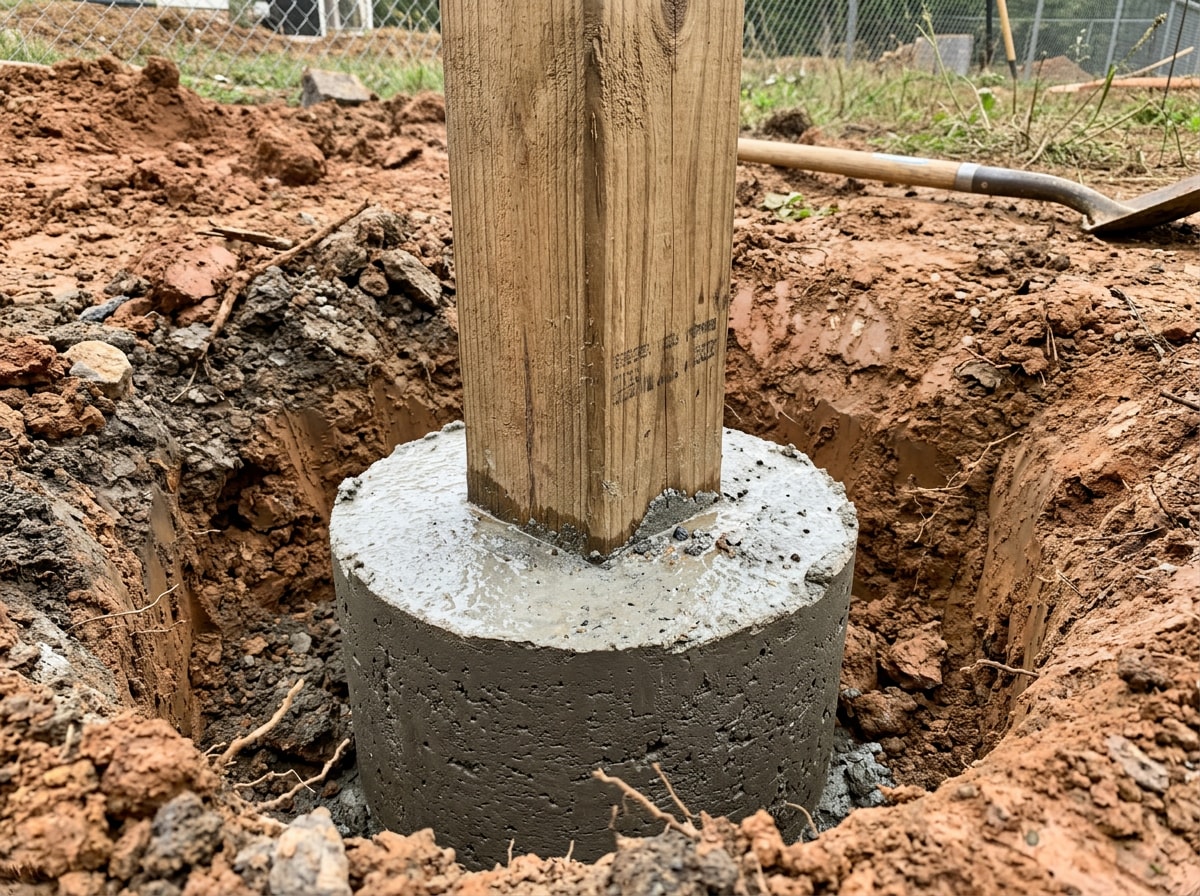
A concrete footing is the poured mass that surrounds the buried portion of a post, acting as an anchor rather than just filler around a hole. Its job is simple: spread the post's load across a wider area, resist lateral push from wind or fence panels, and keep the post from shifting as the soil around it moves.
Without an adequate footing, even a correctly spaced fence line can lose stability post by post as soil movement works at each one individually over time.
Concrete vs. Wood and Metal Fence Posts
Concrete brings real trade-offs compared to wood and metal, and they're worth weighing honestly before committing.
Advantages
Concrete holds up to decades of weather exposure without the rot, insect damage, or warping that eventually catches up to wood. Maintenance stays minimal, no staining schedule, no sealing cycle, and the material doesn't flex or splinter under normal use. For homeowners prioritizing decades of durability over a lower sticker price, concrete is hard to beat on raw longevity.
Disadvantages
Upfront cost runs noticeably higher than wood or chain-link, and installation labor is more demanding since precast posts are heavy and often need equipment to set correctly. Fewer repairs and no replacement cycle tend to even out the whole-life cost, even when the initial invoice looks steeper.
One footing detail worth knowing: a rigid concrete collar gives frost something solid to grip and push upward, while a compacted gravel base lets surrounding soil shift without lifting the post itself. That's why good drainage around any footing, concrete or gravel, matters as much as the depth number.
Concrete Fence Post Costs in Fishers, IN
Material pricing for concrete fence posts typically runs higher per unit than wood, and professional installation labor adds a significant share of the total once excavation and footing work are included.
| Option | Material Cost | Installation | Best For |
|---|---|---|---|
| Hollow-core precast | Lower of the two concrete types | Lighter, easier handling | Budget-conscious precast buyers |
| Solid-core precast | Higher, heavier unit cost | Requires equipment | Maximum durability and wind resistance |
| DIY post-form + wood post | Lowest cash outlay | Owner-installed, time-intensive | Hands-on homeowners with time |
| Professional concrete-footed post | Mid-to-high, labor-inclusive | Crew-installed, code-aware | Most Fishers residential projects |
For installation benchmarks and workmanship standards, the American Fence Association publishes industry guidance worth checking against any quote you receive. If you'd rather skip averaging national price tables, a free estimate gets you project-specific numbers for your address.
Maintenance and Restoring Older Concrete Fence Posts
Concrete fence posts need less upkeep than wood, but they aren't maintenance-free. Walk the fence line once or twice a year and check for:
- Leaning posts or gaps opening at the base
- Hairline cracks in the footing
- Soil erosion pulling away from a post
- Gates that no longer swing or latch correctly
Catching these early usually means a quick repair instead of a full post replacement.
Here's something most fencing guides skip: concrete posts that have been in the ground for 15 or 20 years often look far worse than they actually are. Efflorescence (that chalky white mineral bloom), algae staining, and old paint buildup sit on the surface, not in the structural core. In our own work prepping concrete around Hamilton County, we regularly see precast posts and footings that get media-blasted back to clean, bare concrete instead of torn out and replaced. It's the same logic behind concrete surface preparation on driveways and patios, applied to a smaller, vertical surface.
If you're weighing a full-strip restoration versus replacement, concrete sandblasting is worth a phone call before you budget for new posts. Scott's Mobile Blasting serves Fishers and the rest of Hamilton County with mobile equipment that comes to your property, no hauling posts to a shop required.
FAQ
How deep should concrete fence posts be in Fishers, IN?
Hamilton County's structural footing minimum is 30 inches under the Indiana Residential Code, but fences carry no building load, so that figure isn't always strictly enforced for them. Most local installers still set posts 36 to 42 inches deep in clay soil as insurance against frost heave.
Do I need a permit for a fence in Fishers, IN?
Fishers regulates fence height, placement, and material through its Unified Development Ordinance, and HOA covenants often add a second layer of approval. Rules and exemptions change, so confirm the current requirements with the city's Planning & Zoning Department before you dig.
How long do concrete fence posts last?
Concrete fence posts generally last 30 to 50 years or more with proper drainage around the base. Sealing small cracks early and keeping soil from pooling against the footing prevents water intrusion that can shorten that lifespan.
Is concrete or gravel better for a fence post footing?
Concrete resists lateral wind load better, which matters for tall privacy panels and gates. Gravel allows surrounding soil to shift without lifting the post itself, which some installers prefer for straight line posts in heavy clay. Many footings combine a gravel drainage base under a concrete collar to get both benefits.
Are concrete fence posts better than wood or steel?
Concrete is rot-proof and stiffer than wood or thin steel, but it costs more upfront and weighs significantly more to handle. The better choice depends on your budget, wind exposure, soil conditions, and how long you want the fence to last without touching it again.
How much do concrete fence posts cost?
Per-post material costs vary by whether you choose hollow-core precast, solid-core precast, or a DIY post-form approach, with professional installation adding labor and excavation on top. A project-specific quote is the most reliable way to pin down your actual number.
Can an old concrete fence post be cleaned instead of replaced?
Often, yes. Surface staining from efflorescence, algae, or old paint usually sits on top of sound concrete and can be removed by media blasting rather than requiring full post replacement. A quick inspection tells you whether the post itself is still structurally sound underneath the staining.
---
This guide was written by the team at Scott's Mobile Blasting, a Hamilton County mobile sandblasting and concrete surface preparation company that regularly cleans and restores concrete surfaces, including fence post footings, driveways, and patios affected by freeze-thaw damage. Have a concrete fence post or footing that needs cleaning instead of replacing? Get a free estimate.