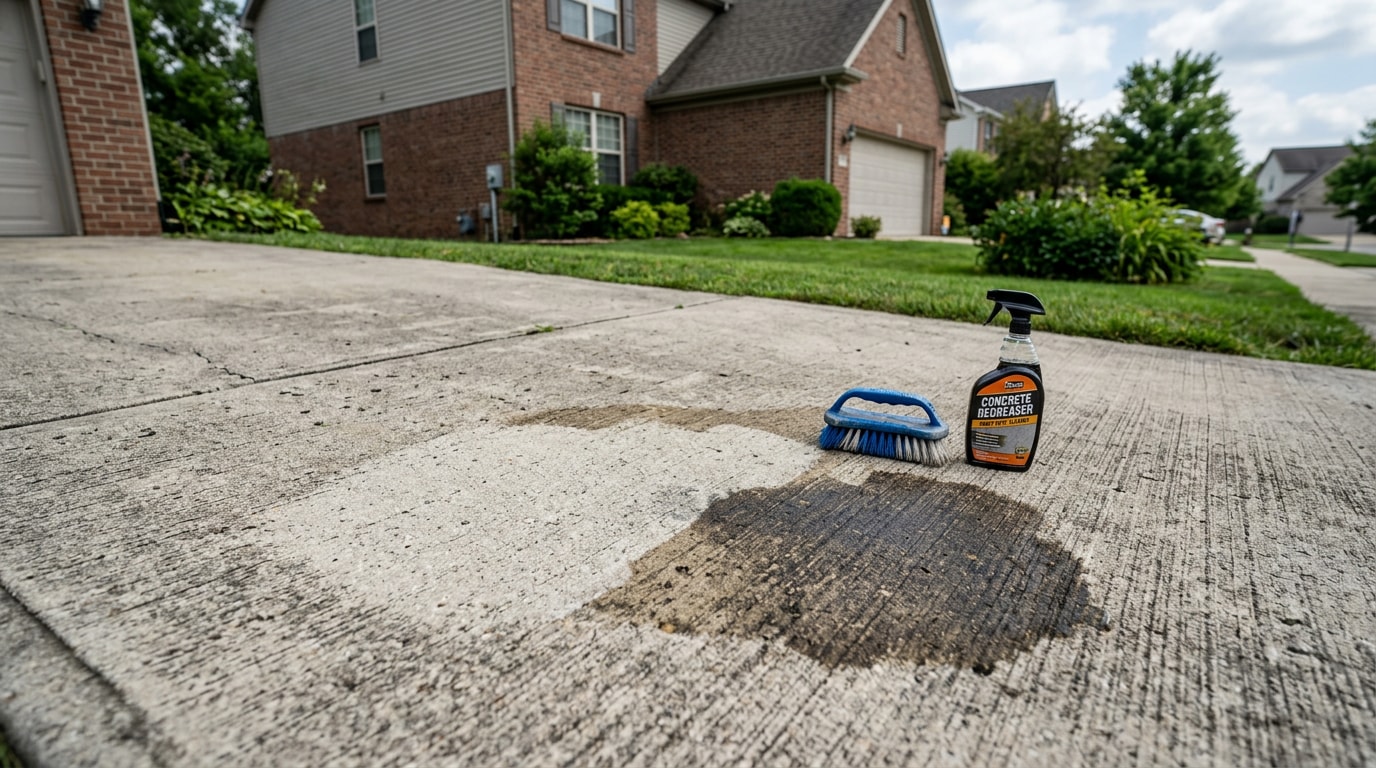
The right concrete cleaner for oil stains in Westfield, IN depends on one thing: how long that drip has been sitting on your slab. A fresh drip from this morning needs a totally different fix than the blotch that's been under your truck since last spring. Here's how to match the method to the stain and actually get it out.
What's the Best Concrete Cleaner for Oil Stains?
There's no single product that handles every stain. Match your cleaner to the stain's age using this quick reference, then jump to the detailed steps below.
| Stain Age | Best First Move | Typical Dwell Time | Notes |
|---|---|---|---|
| Fresh (hours old) | Absorbent (cat litter, baking soda) + dish soap | 30 min–overnight | Scrub with warm water after absorbing |
| A few days old | Water-based concrete degreaser | 10–20 min | Avoid acidic formulas; they can etch the slab |
| Weeks to months old | Gel/paste degreaser | 4–24 hours | No scrubbing needed; dries to a powder |
| Set deep into the slab | Poultice (absorbent powder + solvent) | 24–48 hours | May need 2–3 rounds for full fade |
Why Oil Soaks Into Concrete and Won't Just Wipe Off
Concrete is full of microscopic pores, and oil uses those pores like tiny highways, pulling itself below the surface through capillary action instead of sitting on top where a rag could wipe it away. That's concrete porosity, and it's the root cause behind nearly every stubborn oil stain in Hamilton County driveways.
A fresh drip sits mostly on the surface. Give it a few warm afternoons and engine heat, and it pushes deeper into the slab. Central Indiana's freeze-thaw cycles open up those pores even more over a winter, which is part of why a stain that looked faint in November can look darker by March. That distinction between fresh and set-in oil matters for every method below.
Gather These Supplies Before You Start
Having everything on hand before you start saves a second trip to the garage mid-project:
- Absorbent material (cat litter, baking soda, or sawdust)
- Stiff-bristle scrub brush
- A concrete-safe degreaser
- Garden hose or pressure washer
- Gloves and eye protection
Cold temperatures slow down degreaser chemistry, so a warmer afternoon works better than a January cleanup. Wear eye protection any time you're applying a chemical cleaner. OSHA's standard on eye and face protection requires protection whenever a worker is exposed to liquid chemical splash, which applies just as much in a driveway as in a shop.
Step-by-Step: Matching the Cleaner to Your Stain
Removing Fresh Oil Stains from Concrete
Absorb a fresh spill before it has a chance to soak in. Pour cat litter, baking soda, or sawdust directly over the spot and let it sit for several hours to pull the oil up and away from the surface.
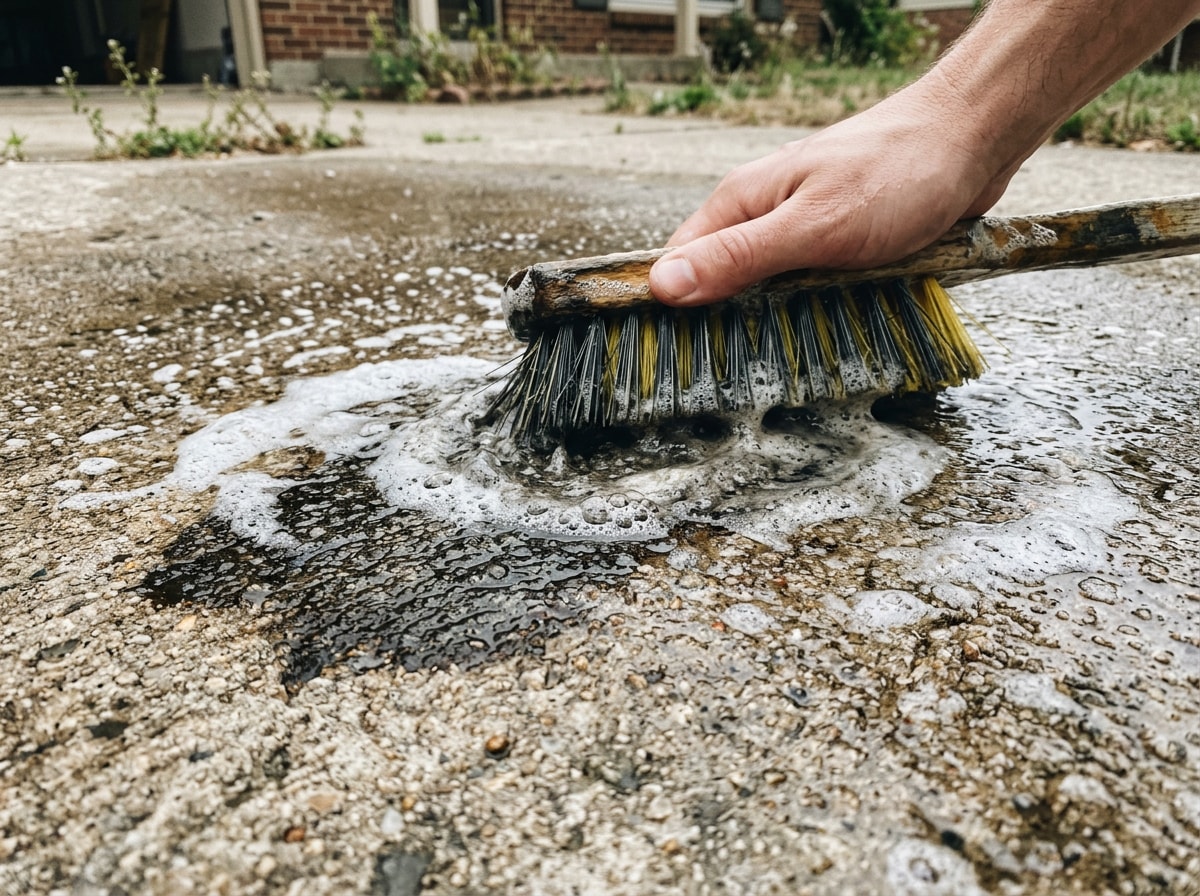
Sweep away the absorbent, then scrub with dish soap and warm water using a stiff brush. This is gentle enough for polished or decorative concrete and often fully resolves a stain caught within the first day or two.
Baking Soda and Vinegar for a Natural Option
For cleaning near grass, garden beds, or pets, baking soda and vinegar offers a gentler alternative to harsh chemicals. Sprinkle baking soda over the stain, pour vinegar on top, and let the fizzing reaction loosen the oil's grip on the concrete.
This works best on lighter, surface-level stains rather than deeply set ones. It's a smart first try when runoff into landscaping is a concern.
Concrete Degreaser for Set-In Stains
Once a stain has had a few days to settle in, it needs a dedicated concrete degreaser. Look for a water-based, non-acidic formula labeled safe for concrete; acidic cleaners can etch the surface and cause more cosmetic damage than the stain itself.
Apply it per the label, give it the full recommended dwell time, then scrub with a stiff brush before rinsing thoroughly. Don't expect one application to lift a set-in stain completely. Two or three rounds is common.
Heavy-Duty Gel Cleaner for Deeply Set Stains
When a degreaser alone isn't cutting it, a gel-based oil and grease remover is the next step up. These dry into a powdery shell that physically lifts oil out of the pores as it cures, rather than relying on scrubbing alone. Spread it thick, let it sit per the label (often several hours to overnight), then scrape, sweep, and rinse.
Cleaning Oil Stains from Polished Concrete
Polished concrete needs a gentler touch than a standard driveway. A microbial-based oil remover, which uses bacteria to break down petroleum over several days, is generally safer than harsh scrubbing or wire brushes on decorative surfaces. Wire brushes and abrasive pads can scratch or dull a polished finish permanently, turning a stain problem into a bigger cosmetic issue. Test any product on a hidden corner first.
Pressure Washing Plus Degreaser for a Full Driveway Clean
For whole-driveway maintenance rather than a single spot, pairing a concrete-safe detergent with a pressure washer gets even coverage and lifts grime along with oil residue. Keep the nozzle in a moderate residential range; too much pressure risks etching or pitting the surface. If you'd rather not run heavy equipment yourself, our power washing service handles this safely on driveways, patios, and garage floors around Westfield.
Use a Poultice to Draw Out Deep, Set-In Oil Stains
When scrubbing and ordinary degreasers don't fully clear a stain, a poultice is the next tool for oil that's soaked deep into the slab. The technique has been used on stained masonry for decades: an absorbent powder mixed with a solvent into a paste pulls the staining material back out of the pores as it dries, which is also the basis for the federal government's own technical procedure for poulticing stains from concrete.
Mix diatomaceous earth or baking soda with a solvent to form a thick paste. Spread it about a quarter-inch thick over the stain, cover it loosely, and let it dry undisturbed for 24 to 48 hours.
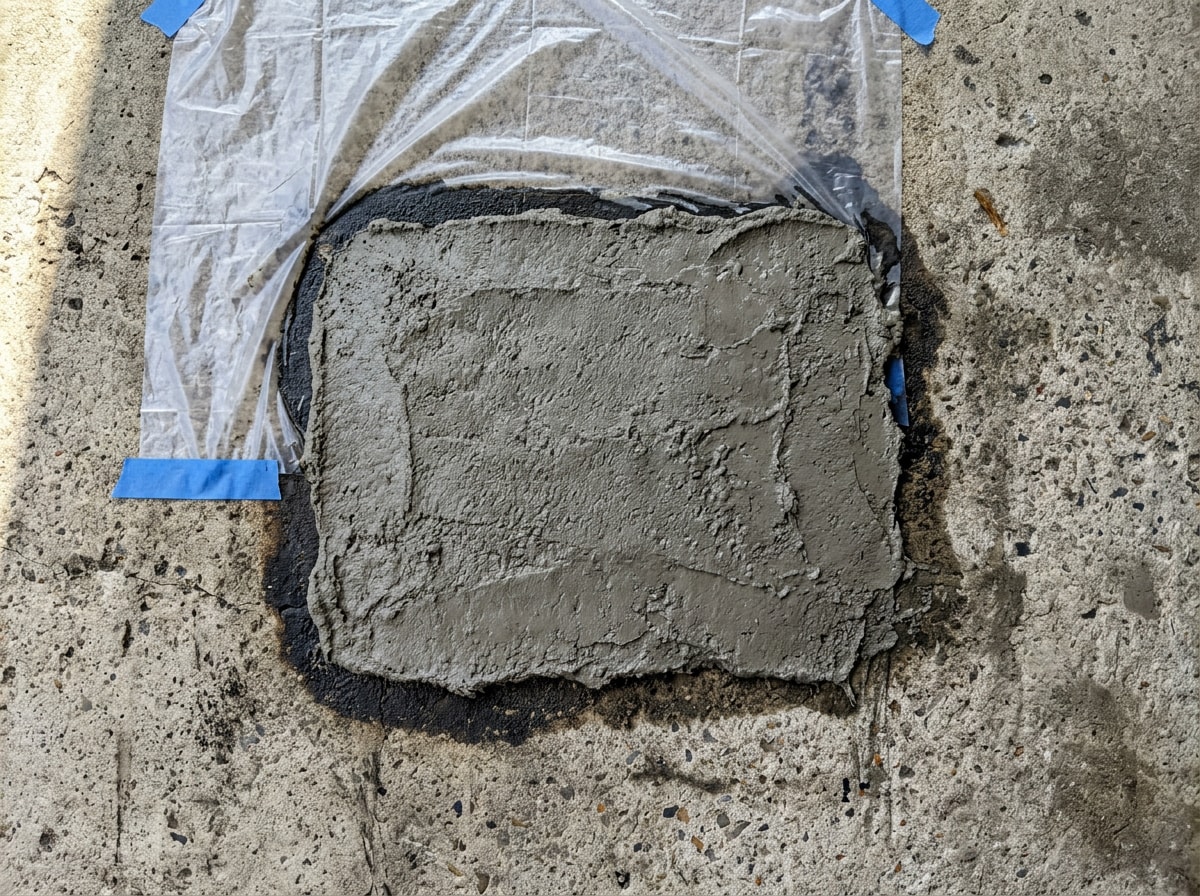
Scrape away the dried poultice and rinse the area. Deeply penetrated stains often need two or three rounds before you see a noticeable fade, so set realistic expectations before starting. For a deeper breakdown of this process, our guide on how to remove oil from concrete in Zionsville, IN covers additional solvent options and dwell-time troubleshooting.
Preventing Future Oil Stains on Your Driveway
A quality driveway sealant is one of the best long-term defenses against future oil penetration, since it blocks the pore structure that lets oil migrate below the surface in the first place. Reapplying sealant every two to three years keeps that barrier intact.
Beyond sealing, routine maintenance like sweeping debris and rinsing spills quickly makes a real difference. Addressing vehicle leaks promptly, with a drip pan or a quick repair, is the biggest single step toward preventing stains before they start. It's also worth noting that spilled oil washed into a storm drain travels untreated into local waterways. The EPA's own stormwater best management practices for vehicle maintenance recommend absorbing and disposing of spills rather than hosing them toward the street, which protects Westfield's creeks as much as it protects your slab.
If the staining is widespread, came with a home you just bought, or keeps reappearing no matter what you try, a professional assessment can save a lot of weekend labor. See our concrete cleaning service for driveways, patios, and garage floors, or browse recent projects to see results on surfaces similar to yours. We work throughout the Westfield, IN area and the surrounding Indianapolis suburbs, and in our own cleaning jobs we've seen the same pattern over and over: the oldest, darkest stains are almost always the ones homeowners tried to scrub away with dish soap alone for months before calling in a degreaser or poultice. Get a free estimate if you'd rather hand the job to a crew that does this daily.
Learn more about what we do on our homepage.
FAQ
What Is the Best Way to Remove Oil Stains from Concrete?
It depends on stain age: absorb and wash fresh spills with dish soap, use a concrete degreaser for set-in stains, and move to a poultice for deep, long-term staining. Matching the method to the stain's age is the real key to success.
Does WD-40 Remove Oil Stains from Concrete?
WD-40 can help loosen fresh oil on the surface, but it's a solvent, not a cleaner, so it needs to be followed with dish soap or a degreaser and a thorough rinse. It won't do much on oil that's already set deep into the slab.
Does Dawn or Dish Soap Get Oil Out of Concrete?
Dish soap works well on fresh, surface-level stains because it's a surfactant that bonds to oil and washes it away with water. It's gentle enough for polished concrete but usually isn't strong enough for stains more than a few days old.
Does Brake Cleaner Get Oil Stains Out of Concrete?
Brake cleaner can dissolve some oil on concrete, but it's a strong solvent not designed for this use, and runoff can carry contaminants into soil or storm drains. A purpose-built concrete degreaser is generally the safer, more effective choice.
Does CLR Remove Oil Stains from Concrete?
CLR is formulated for calcium, lime, and rust deposits, not petroleum-based stains, so it won't perform well on oil. A dedicated degreaser or concrete cleaner built specifically for oil stains will outperform it every time.
Can I Remove Old Oil Stains from My Driveway Myself?
DIY methods can fade old oil stains significantly, especially with repeated poultice treatments, but stains that have sat for years may never fully disappear without professional-grade equipment. If DIY cleaning isn't getting results, professional help is worth considering.
How Often Should I Seal My Driveway to Prevent Oil Stains?
Most homeowners should reseal driveway surfaces every two to three years, depending on traffic and weather exposure. A fresh sealant layer is one of the most reliable ways to keep oil stains from taking hold again.