The 8x8x16 concrete block price in Indianapolis, IN runs about $1.75 to $3.75 per block at retail, with pallet and contractor pricing landing lower. National pricing guides rarely account for Midwest freight lanes, winter plant slowdowns, or how close you are to a masonry yard, all of which move the number here. This guide breaks the price down by unit, pallet, and installed wall so you can budget before you call a supplier.
What an 8x8x16 Concrete Block Actually Is
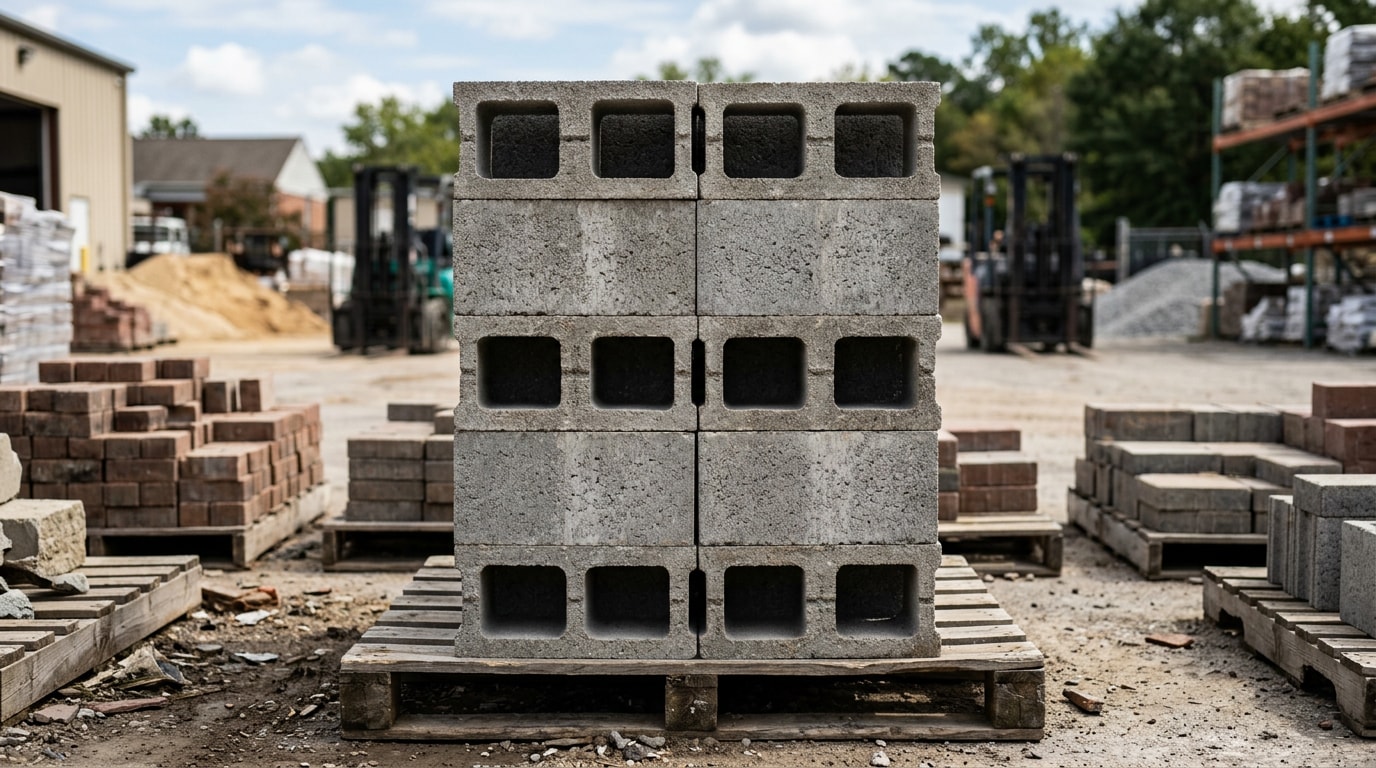
An 8x8x16 concrete block, also called a CMU or cinder block, is a hollow masonry unit with a nominal size of 8x8x16 inches. Its actual dimensions measure 7-5/8 inches by 7-5/8 inches by 15-5/8 inches, leaving room for a standard 3/8-inch mortar joint.
Most 8x8x16 blocks are hollow, two-cell units rather than solid. That keeps weight manageable while still allowing rebar and grout for structural reinforcement. Standard units weigh roughly 28 to 35 pounds each, while lightweight versions run closer to 22 pounds.
Block sold for loadbearing walls is manufactured to meet ASTM C90, the industry specification covering minimum compressive strength, water absorption limits, and dimensional tolerance for concrete masonry units. If you already have a block wall on your property, our Concrete Blocks in Zionsville, IN guide covers installation, repair, and surface prep in more detail.
How Much Does a Standard 8x8x16 Concrete Block Cost?
A standard 8x8x16 concrete block costs between $1.75 and $3.75 in the Indianapolis area. The low end reflects pallet or contractor pricing; the high end reflects single-unit purchases at a retail counter.
Rather than quoting a generic national average, here's what we found checking live listings at the two biggest home-center chains with stores throughout the Indianapolis metro:
| Retailer | Product | Price per Block |
|---|---|---|
| Home Depot | Oldcastle 8x8x16 hollow block | $2.17 |
| Home Depot | Southwest Block 8x8x16 hollow block | $2.43 |
| Menards | 8x8x16 regular (hollow) construction block | $2.48 before rebate |
| Menards | 8x8x16 solid construction block | $3.79 before rebate |
| Menards | 8x8x16 void-cube block, 60-unit bundle | $1.98 before rebate |
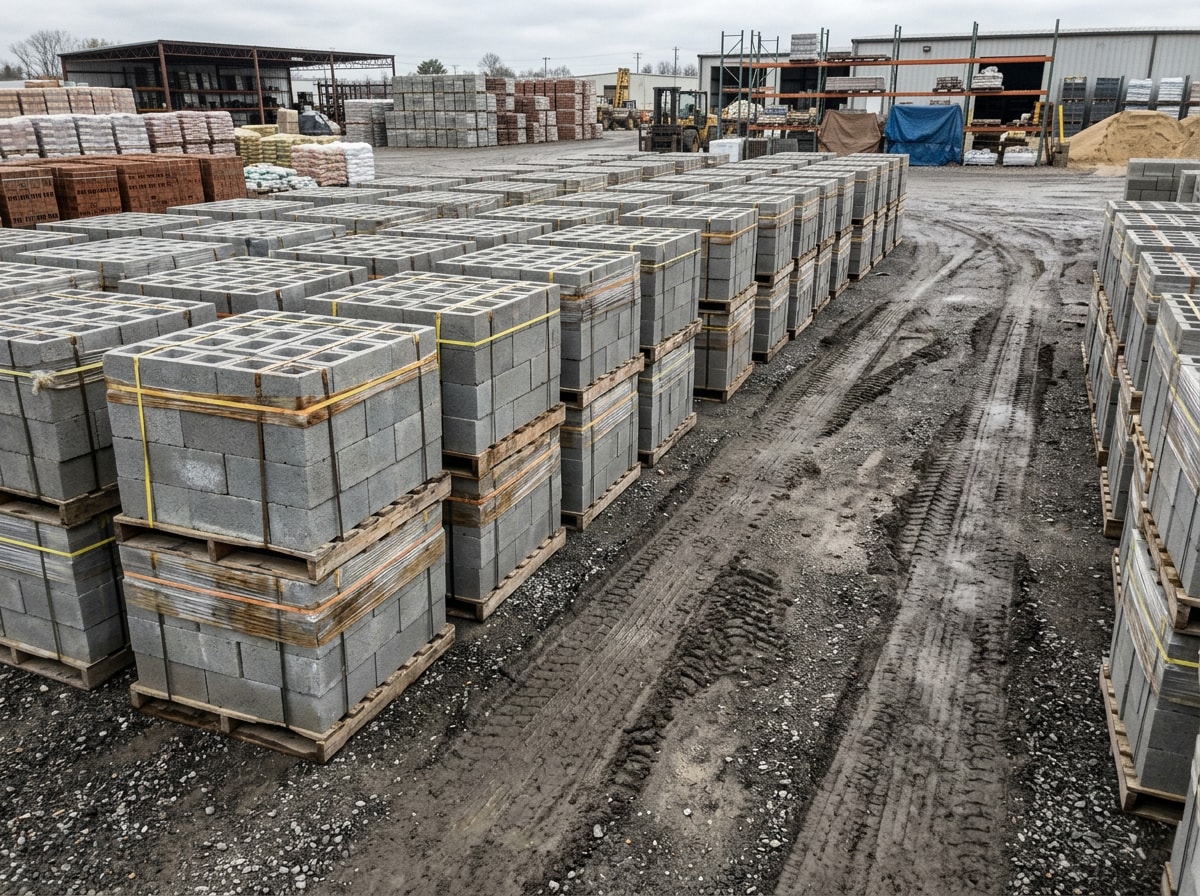
Big-box retailers price by the single unit and rarely negotiate, which works fine for a small patch job but gets expensive fast on anything larger. A dedicated masonry supply yard will almost always beat these per-unit rates once you're buying more than a few dozen blocks, especially if you pick up a pallet instead of ordering one unit at a time.
Concrete Block Pricing by Size and Classification
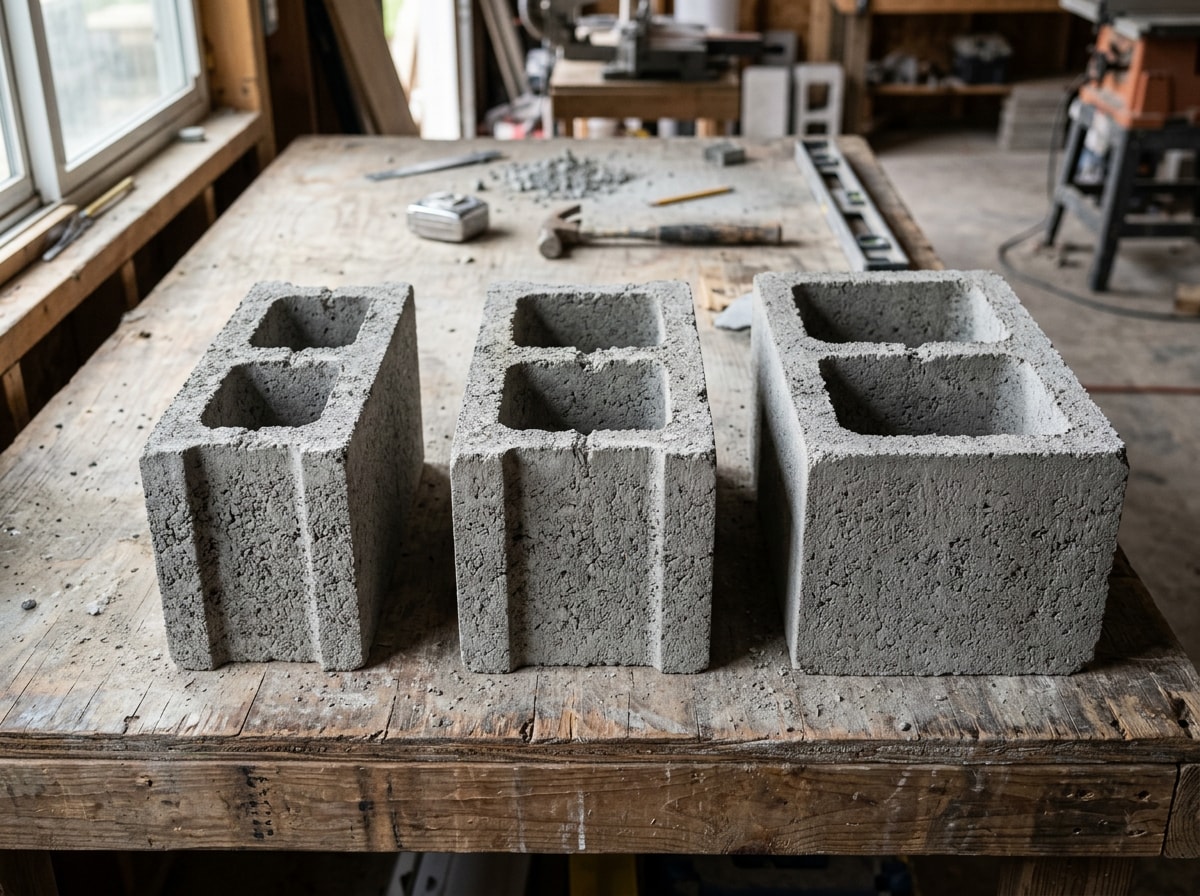
The 8x8x16 is the most common CMU size, but it isn't the only one. Price per unit shifts with thickness and finish. A 4x8x16 partition block typically costs less than an 8-inch unit, while a 12x8x16 structural block costs more due to the added material volume.
| Block Type | Typical Price per Unit |
|---|---|
| 4x8x16 (partition) | $1.25 – $2.25 |
| 8x8x16 (standard) | $1.75 – $3.75 |
| 10x8x16 | $2.25 – $4.25 |
| 12x8x16 (structural) | $2.75 – $5.00 |
| Split-face block | $3.00 – $6.00+ |
Lightweight block, made with expanded shale or slag aggregate, usually costs more per unit than standard-weight block but saves money on labor since crews lay more pieces per hour. Split-face block carries the steepest premium because of the extra texturing step in manufacturing.
Pallet and Bulk Pricing
Buying by the pallet is where most Indianapolis contractors and serious DIYers actually save money. A standard pallet of 8x8x16 block holds anywhere from 90 to 108 units depending on the supplier's stacking method. A full pallet typically runs $180 to $380 before delivery or core deposit fees.
That works out to a bulk discount of roughly 10% to 20% compared with buying the same quantity one block at a time at retail.
How Many Blocks, and Dollars, Per Wall
Standard 8x8x16 block coverage works out to about 1.125 blocks per square foot of wall, once you account for the mortar joint. For a 100-square-foot wall, that's roughly 113 blocks before waste.
Add a 5% to 10% waste factor for cuts, breakage, and corners, and you land closer to 120 blocks for that same section. At an Indianapolis average of $2.50 per block, materials alone for that wall come out to around $300, not counting mortar, rebar, grout, or footing costs.
Installed Cost: What Masons Charge
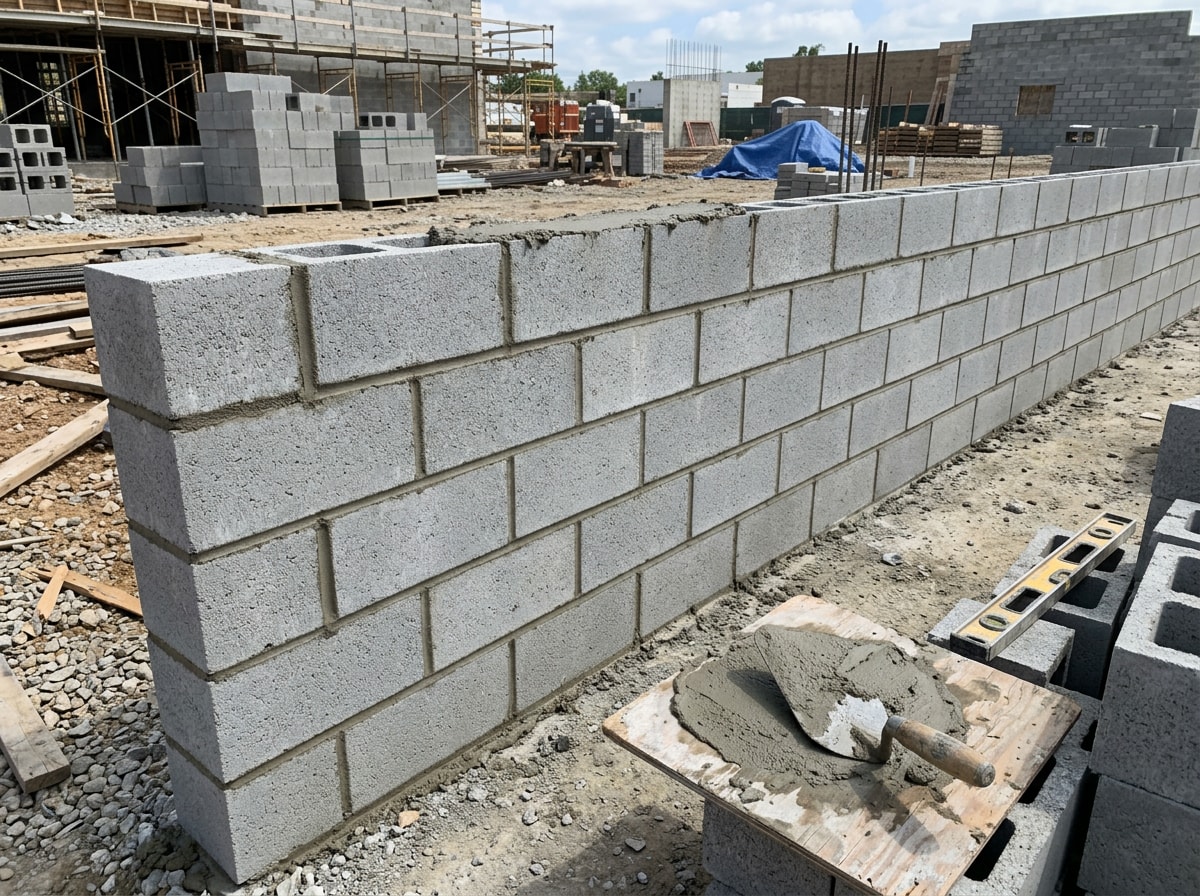
Material cost is only part of the real number. Installed cinder block wall cost in the Indianapolis area generally runs $13 to $24 per square foot once labor, mortar, and equipment are factored in. That range lines up with what multiple national masonry cost guides report for standard block walls, though your actual bid will depend on wall height, access, and local crew availability.
A typical two-person mason crew can lay 100 to 150 blocks per day depending on wall complexity and access. That's why labor, not block price, usually makes up 60% or more of a finished project's total cost. Wage data backs this up: the U.S. Bureau of Labor Statistics reports a 2025 median pay of $58,270 per year, or $28.02 per hour, for masonry workers nationwide, and Indiana crews generally price in that same range or slightly above it.
Always ask whether a quote is turnkey (materials, labor, and cleanup) or material-only. The gap between those two numbers is where most budget surprises happen.
Regional Price Factors in Indianapolis
Indianapolis sits in a favorable spot for concrete block pricing compared with coastal metros, largely because of its proximity to Midwest cement and aggregate plants along the I-70 and I-65 corridors. That proximity keeps base material costs lower than in regions that have to truck aggregate longer distances.
Local prices still move with the seasons. Many Central Indiana block plants slow production in deep winter months, which can tighten supply and nudge prices up slightly heading into spring building season. Delivery adds its own layer of cost, too. Most masonry yards charge a surcharge beyond a set delivery radius, and that fee climbs further if a flatbed or Moffett forklift delivery is required to offload a pallet at a site without a loading dock.
The Concrete Masonry and Hardscapes Association (the successor to the National Concrete Masonry Association) publishes technical references on CMU shapes, sizes, and specifications if you want to see how standard sizing and classifications apply to your project.
Ways to Pay Less
A few straightforward habits can shave real money off an 8x8x16 block order, while a few common oversights quietly add it back.
- Buy in late fall or winter. Masonry demand drops once outdoor building season slows, which tends to bring softer pricing and better contractor availability.
- Budget for the footing, not just the block. Many first-time buyers price the wall itself but forget the poured concrete footing underneath it. Skipping this in a budget is the single most common masonry estimating mistake.
- Account for pallet core deposits. Most suppliers charge a refundable pallet or core deposit on top of the block price. Forgetting to return the pallet for the refund inflates the perceived cost of an order.
- Compare lightweight vs. normal-weight block. Normal-weight block costs slightly less per unit, but lightweight block can lower overall labor costs since it's faster to set. For large walls, the labor savings sometimes outweigh the small per-unit price difference.
- Plan for flatbed or Moffett delivery fees. Sites without a loading dock or forklift often need a flatbed truck with a Moffett forklift to unload pallets safely. This fee surprises plenty of DIY buyers who only budgeted for the block itself.
Where to Buy: Best Deals Near You
Indianapolis shoppers generally choose between two paths: big-box home improvement stores or dedicated local masonry supply yards. Big-box stores offer convenience and consistent single-unit pricing, which works fine for small repair jobs.
Local masonry yards usually beat big-box pricing once you're buying a pallet or more, and many offer will-call pickup if you phone ahead with your quantity. It's worth calling two or three yards for a will-call price before committing, since quoted pallet rates vary by supplier and by how far you are from their delivery radius.
Once a block wall is built, cured, and ready for staining, painting, or sealing, surface prep matters as much as the block price did. Our Concrete Surface Preparation service handles cleaning and profiling block walls across the Indianapolis metro so coatings and sealers actually bond instead of peeling within a season. We've prepped block walls for paint and sealant jobs throughout Indianapolis, Carmel, Fishers, Westfield, and Zionsville, and the biggest cost driver we see isn't the block itself, it's skipping proper prep before coating goes on.
Visit our homepage for current Indianapolis-area service details, or check our Indianapolis, IN service area page for local project examples. Ready to talk through a wall or surface-prep project? Get a free estimate and we'll walk through the scope with you.
FAQ
How much does an 8x8x16 concrete block cost?
An 8x8x16 concrete block typically costs between $1.75 and $3.75 in the Indianapolis area, depending on whether you buy single units at retail or order by the pallet from a local masonry supplier.
How many 8x8x16 cinder blocks come in a pallet?
A standard pallet of 8x8x16 cinder blocks holds roughly 90 to 108 units, depending on the supplier's stacking configuration. A full pallet usually costs $180 to $380 before delivery or deposit fees.
How much is 8-inch block at Lowe's or Home Depot?
Home centers generally price a standard 8-inch hollow block between $2.15 and $2.45 per unit, with solid or specialty units running higher. Local Indianapolis masonry yards frequently beat that price on pallet orders.
Is it cheaper to buy concrete block from a home center or a local masonry supply yard?
A local masonry supply yard is almost always cheaper once you're buying more than a handful of blocks, since pallet and bulk pricing isn't typically available at big-box stores. Home centers remain convenient for single-unit, small-repair purchases.
What's the difference between a cinder block and a concrete block (CMU)?
"Cinder block" is an older term for masonry units made with cinder or coal-ash aggregate, which is rarely used today. Modern units sold as 8x8x16 blocks are concrete masonry units (CMUs) made with stone or sand aggregate, though most suppliers still use the terms interchangeably.
What's the best time of year to buy block for a lower price?
Late fall and winter tend to bring softer pricing and better contractor availability, since masonry demand drops once outdoor building season slows. Locking in a supplier quote during this window can mean real seasonal savings on both block and labor.